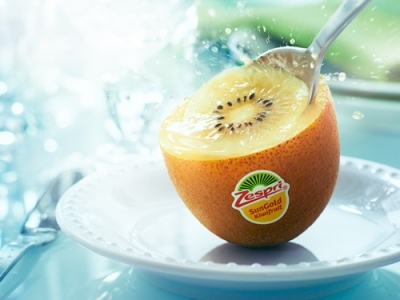
Gold kiwifruit has transformed the industry in the last 15 years, says Zespri chief operating officer Simon Limmer.
Zespri's overall sales are projected to reach $3.3billion in 2020; they are sitting at $1.9b now for the season ended March 31 (2015-16). Results should show $1.7b out of New Zealand production and about $2b from non-NZ.
New PVR (plant variety rights) Greens and a red variety will be transformational, Limmer says. Investment in new varieties has been made for 12-15 years and will lead the way for kiwifruit.
The Green market has been relatively stable, from about 50m trays in 2000 to a projected 80m in 2020.
All the growth is in the new Gold variety, G3, known as SunGold in the marketplace. By 2020 there will be a projected 180m trays; this season the forecast is 140m trays but the final figure could be more.
"Gold really did transform our world a few years ago," he says.
"The introduction of new varieties is attracting new consumers... they are complementary in having the Green Gold story. When people prepare a fruit bowl they want to have a bouquet of colours."
G3 also has agronomic benefits typically yielding about 15,000 trays/ha versus the previous Psa-susceptible Gold variety Hort16a which yielded about 11,000 trays/ha and Green Hayward which yielded about 8000 trays/ha a few years ago but now has higher yields.
"The newer varieties are more productive and probably cheaper to grow. They tend to have benefits significant both in the market and the orchard," Limmer says.
It takes 10-15 years to develop a new variety. Zespri released three new varieties in 2010: Gold 3, Gold 9 and Green 14. G9 didn't make it; it wasn't keeping in the storage chain. Thankfully G3 was, he says.
A PVR Green variety has enormous opportunities.
Ninety five percent of kiwifruit consumed globally is the Hayward green variety.
"It is a bit of a Clydesdale: it grows pretty successfully, but it is relatively variable from a quality perspective. You get good tasting Hayward, you get quite average tasting Hayward. Unfortunately what many world consumers get is pretty poor."
Limmer says Zespri has high standards, but much of the Hayward around the world compromises the category.
"If we can get a consistently high tasting Green product which is yielding really well, and position it in the market successfully then that has enormous opportunity for us; we are working hard on that."
He says the new variety will probably be a complement for Hayward, which does really well at the back end of the season. Products which "open up the season" would be valuable.
Reds present opportunities. They are already in the market particularly in China.
"Zespri hasn't commercialised the reds; we have a number of reds in our programme; we are working to get a red into... production."