DairyNZ Resilient Pastures Trial Expands Across North Island
Farms across the upper North Island are trialling different pasture mixes as part of a research programme that aims to build greater resilience into farming systems.
 increase font size
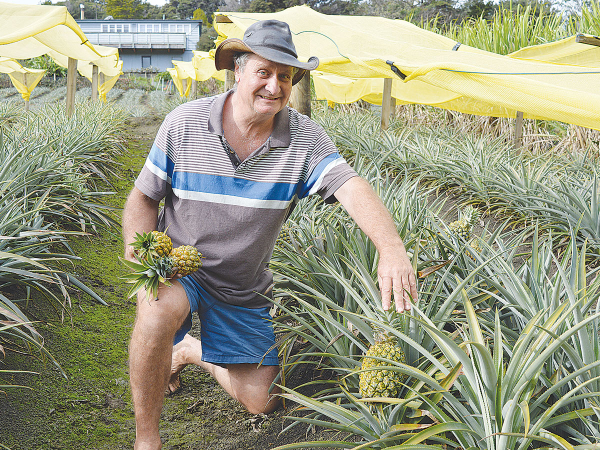 Northland grower Owen Schafli believes he has New Zealand's only commercial pineapple plantation.
When Owen Schafli and his family - wife Linda and son Colin - decided to grow pineapples in Parua Bay, Northland 10 years ago, people were laughing.
"They said to me, 'no one has ever grown pineapples here before', and basically wrote me off," Owen Schafli told Hort News.
Today, he is having the last laugh. In summer, the family company Geneva Farms peak harvests 350 Queen variety pineapples a day, on what Schafli believes is New Zealand's only commercial pineapple plantation. During the cooler winter months, the daily harvest drops to around 50.
He says, after trialling pineapples for two years, they realised they could tolerate the climate.
"That's when we put in our first section of pineapples. We have now been growing them and expanding our commerical crop for seven years. We will only break even in two years' time."
The difference between Schafli's pineapples and those of the larger overseas growers is that when the commercial growers' pineapples reach a certain size they are sprayed with the hormone Ethephon, which induces them to flower over a six-week period and therefore all ripen at the same time.
"Mine are not sprayed, so I have them fruiting throughout the year," he explains.
Schafli's farm has 22,000 plants - mostly the Queen variety, a small gourmet fruit that is sweet and deep golden yellow with an edible core. The Cayenne variety is mostly imported into NZ.
The fruit is sold at the local farmers market and sell very well. Schafli has clients who buy one of two pineapples from him every week.
They are sold between $5 ad $10 each, depending on size, or two for $15.
He told Hort News the Northland weather is good for pineapple growing but a prolonged drought can affect fruit quality.
Last year's crippling dry, between November 2020 and January this year, did some damage to his crop.
"They can take a bit of drought but during the summer period they need a bit of rain."
A South African immigrant, Schafli moved to New Zealand with his family in 2008. After two years in Hamilton, they bought a 6.8ha property at Whangarei Heads to grow bananas and pineapples.
He says growing pineapples isn't for the fainthearted.
"The pineapples are hand planted and it is hard work but it keeps me fit and healthy. And it's not a produce that will make you rich quickly."
The pineapples are spray free, they all flower at once and take six weeks to mature. Peak harvesting season is around April and May.
It's taken seven years for Owen and Linda Schafli to build up numbers of their Queen pineapples from suckers. Pineapples will grow from suckers that sprout from the side of a mature plant.
While bananas and pineapples are flourishing, Schafli has also been experimenting with other tropicals - such as dragon fruit, papaya, sugarcane and coffee.
Bananas have been their cash crop, but they don't have enough plantable land for them to be commercially viable.
"We decided to focus on pineapples once we knew they consistently fruited well here. They make the best economic use of our small sloping property."
Schafli sees a fast-growing demand for locally grown tropical fruits.
"We're investigating supplying pineapples to local restaurants and cafes, and later may look at other outlets around the country," he told Hort News. "People are really enthusiastic about exploring new food options we can grow here in Northland, and we encourage anyone to experiment at home."
Farms across the upper North Island are trialling different pasture mixes as part of a research programme that aims to build greater resilience into farming systems.

OPINION: Since when did one and one make three? Who didn't smell an elephant-sized rat when our leaders decided to give $60 million to save the cement factory in Northland?
New Zealand needs to make sure that it continues to focus on its own food security, according to HortNZ board member and blueberry grower Dermott Malley.
A five-year study has found that the cost of reducing emissions without technology may be significant and unsustainable for Northland dairy farmers.
Northlanders scooped the pool at this year's prestigious Ahuwhenua Trophy Awards - winning both the main competition and the young Maori farmer award.



Federated Farmers says it welcomes Labour's commitment to reviewing the Sharemilking Agreements Act, calling on other major parties to do the same.
For Canterbury dairy farmers Sian Meijer and Rick Wobben, wearable technology has become one of their most valuable on-farm tools - helping manage 1850 cows across an expansive, high-performing dairy operation while improving efficiency, mating outcomes and day-to-day decision making.
Fonterra has unveiled its annual results for the 2026 financial year, posting $27 billion in revenue and close to $20 billion returned to New Zealand farmer owners and unit holders.
The first major update to the Dairy Cattle Code of Welfare in more than a decade has been released, marking what DairyNZ describes as an important step in ensuring animal welfare standards continue to evolve alongside scientific evidence and on-farm realities.
Ravensdown shareholders have elected Jane Montgomery and Kate Acland to the Ravensdown Board for three-year terms, following a closely contested director election.
Federated Farmers says new legislation replacing the Resource Management Act will cut red tape, unlock investment and help grow New Zealand's export-led economy, after the Planning Bill and Natural Environment Bill passed their third reading in Parliament yesterday.