Ministry for the Environment to sponsor Ballance Farm Environment Award
The Ministry for the Environment is joining as a national award sponsor in the Ballance Farm Environment Awards (BFEA from next year).
 increase font size
 Secretary for the Environment Vicky Robertson warns highly productive land is at risk of becoming unavailable for growing fruit and vegetables due to housing developments.
Much of New Zealand’s best vegetable growing soils are being eaten away by housing and lifestyle blocks, which will increase people’s food bills, a new report warns.
The Our Land report – by Statistics NZ and the Ministry for the Environment (MfE) – says the area of the country’s most highly productive land that is unavailable for growing food because it’s been lost to housing increased by 54% between 2002 and 2019.
Secretary for the Environment Vicky Robertson warns that without action, fresh fruit and vegetables could get even more expensive.
“Highly productive land is at risk of becoming unavailable for agriculture due to housing developments,” she says. “Our exports and domestic food production currently rely on the small amount of highly productive land we have.”
Robertson says continuing to grow food in the volumes and quality New Zealanders have come to expect, depends on the availability of land and quality of the soil.
“Once highly productive land has been built on, we can’t use it for production.”
The report points to ongoing development of flat, fertile land on the outskirts of Hamilton, Tauranga, Nelson, Christchurch and Auckland, saying flat-land housing is a cheaper proposition for developers than building on hilly, less productive soil.
It’s not only traditional subdivisions that are crowding out food growing. Residential development of lifestyle blocks is also fragmenting fertile land, especially in Canterbury, the report says. In 2019, an Environment Aotearoa report said lifestyle blocks nationally had been growing at an average of 5,800 new blocks a year since 1998.
The Government has consulted on a National Policy Statement that would direct councils to better protect top-notch soil when considering zoning and development. MfE says this is expected by the end of the year.
The Our Land report calls for increased urban density to meet demand for new housing, without pushing food crops further away from population centres.
Horticulture NZ has called on the Government to urgently act to protect land for food production, in the wake of the report.
“This situation simply isn’t good enough, considering that the primary production sector is the backbone of the New Zealand economy and only 15% of land is suitable for food production,” Horticulture NZ chief executive Mike Chapman says.
“The Government must act now to retain remaining highly productive land. Once houses have been built on it, that soil is lost forever.”
Chapman warns that this is an issue that has the potential to comprise New Zealand’s ability to feed itself, fresh healthy food.
“You only have to drive south out of Auckland to see that this very thing is happening to the highly productive, unique soils around Pukekohe, just as it is happening across the country.”
Chapman believes that unless something done is to arrest the continuing loss of land for food production, locally grown produce is under threat.
“If New Zealand is not careful, buying healthy, locally grown fruit and vegetables will become even harder,” he warns.
Chapman says the Government needs to act now to protect our ability to grow healthy, nutritious fruit and vegetables in New Zealand.
The Ministry for the Environment is joining as a national award sponsor in the Ballance Farm Environment Awards (BFEA from next year).

Horticulture New Zealand says that while it welcomes plans to extend planning permissions for post-cyclone rural recovery work in Hawke’s Bay, Tairāwhiti Gisborne needs to be included in that work.
OPINION: The old saying ‘Everyone wants to go to Heaven, but nobody wants to die’ seems to apply to the wailing coming from public service entities facing cuts under the new Government’s belt tightening.
The Ministry for the Environment (MfE) has found itself in a stoush with NZPork over the controversial National Policy Statement for Highly Productive Land (NPS-HPL).
Food Waste Action Week 2024 is encouraging New Zealanders to ‘Choose What You’ll Us’, highlighting the benefits of buying loose fruit and vegetables.



LIC shareholders have elected a new North Island representative to the co-operative's Board, along with five representatives to its Shareholder Reference Group (SRG), following the company's Annual Meeting held in Invercargill.
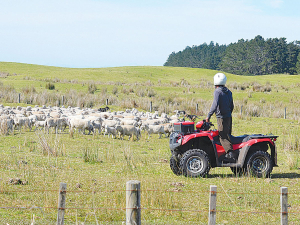
Farmers across parts of Southland and South Otago are continuing to deal with difficult conditions after a prolonged run of wet weather, with pressure building around feed supply, stock management, pasture damage, farm infrastructure and everyday workloads.
Federated Farmers says it welcomes Labour's commitment to reviewing the Sharemilking Agreements Act, calling on other major parties to do the same.
For Canterbury dairy farmers Sian Meijer and Rick Wobben, wearable technology has become one of their most valuable on-farm tools - helping manage 1850 cows across an expansive, high-performing dairy operation while improving efficiency, mating outcomes and day-to-day decision making.
Fonterra has unveiled its annual results for the 2026 financial year, posting $27 billion in revenue and close to $20 billion returned to New Zealand farmer owners and unit holders.
The first major update to the Dairy Cattle Code of Welfare in more than a decade has been released, marking what DairyNZ describes as an important step in ensuring animal welfare standards continue to evolve alongside scientific evidence and on-farm realities.