New Zealand Apple Industry Enjoys Second Strong Season In A Row
The chief executive of Apples and Pears New Zealand, Danielle Adsett, says fruit quality this year is phenomenal and the sector is hitting crop estimates, which is great for growers.
 increase font size
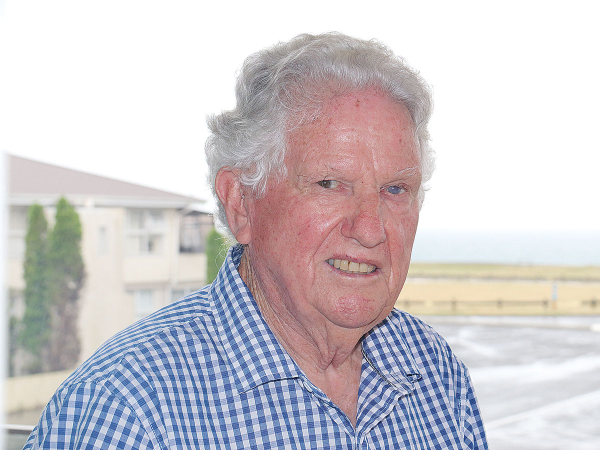 John Paynter reckons he had a premonition about the ferocity that Cyclone Gabrielle would unleash on the region a year ago.
The Yummy Fruit Company's John Paynter heard the news of the impending cyclone.
He immediately sent a text message to son Paul - who is the general manager of the company and was in Auckland on his way home from an overseas trip.
Paynter says he told Paul the Esk Valley, where the company had about 120,000 apple trees, was going to flood.
Yummy Fruit lost all their apple trees in the Esk Valley in the flood that came, covering them with up to two metres in silt - making the land unfit to plant new trees.
Paynter says people had talked about devastating floods that hit the Heretaunga Plains back in the late 1800's when people and livestock were swept out to sea. But no one imagined what Gabrielle unleashed in 2023.
"We had seven metres of water go through the Esk Valley, five metres through the Pakowhai area and three or four metres through Meeane," Paynter told Hort News.
"The damage was unthinkable and at the time we had no idea of what the results would be.
"We were left wondering how to deal with this massive volume of silt which was set and thick and looked incredibly formidable."
Paynter says, to date, they have taken 1000 truckloads of silt from a 14.5ha block. On other orchards where the silt wasn't so deep they have used a dutch spader machine to mix the silt in the rows into the soil between the trees, in the hope the land will be fine in the future.
In other areas, they won't complete the cleanup and remediation for another year.
"But we are surprised beyond belief that most of the apple trees have miraculously survived and we are likely to get a much better crop than we expected," he says.
Their stone fruit operation did not fare well either. According to Paynter, they lost about 50% of their stone fruit which is a major blow to the company.
Driving through the Pakowhai area, Paynter says scars of Cyclone Gabrielle remain.
In orchards which lost all their trees, some of the smaller owner operators have walked off their land, leaving derelict homes to rot away.
Others are growing squash to get a cash crop, and by mixing silt and soil are hoping to build up fertility for replanting trees if they can afford to do so. He says in time there will be a need to amalgamate some of the smaller orchards into larger more economic units. He says there needs to be some sort of programme to facilitate this.
Paynter notes that some orchards have passed their use-by date anyway and in the long-term new varieties of apple trees will make for more profitable operations that will benefit the industry as a whole. He says in other cases, where up to 30% of the trees in a block are no longer viable, the whole block will be replanted.
Paynter told Hort News the magnitude and impact of Cyclone Gabrielle cannot be underestimated because of the loss it caused to individuals, companies and the economy of the Hawke's Bay region. He says orchardists in their 70s and 80s who have lost their homes and their future income are suffering and helping them out is critical.
Paynter adds that looking back at the way the cyclone was handled by the authorities, it's fair to say some things were handled well and others not so well. But no one could have estimated the scale of this event.
"When you go out into the fields today and sky is blue and the grass is green, it's hard to believe the magnitude of water that was flowing across these lands a year ago," he says.
The chief executive of Apples and Pears New Zealand, Danielle Adsett, says fruit quality this year is phenomenal and the sector is hitting crop estimates, which is great for growers.
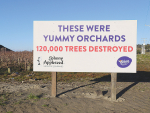
Nearly three years on from Cyclone Gabrielle, Hawke's Bay apple orchardist Paul Paynter says they are still doing remedial work around their orchards and facing financial challenges.
A Hawke's Bay apple grower says it's no longer profitable for him to export apples to the US because of the 15% tariff imposed on them by Donald Trump.
If there was a silver lining in the tragedy that was Cyclone Gabrielle, for New Zealand Young Grower of the Year, Grace Fulford, it was the tremendous sense of community and seeing first-hand what good leadership looks like.
Listed carpet manufacturer, Bremworth is undertaking a $6 million expansion at its Napier plant more than two years after the site was heavily damaged by Cyclone Gabrielle.
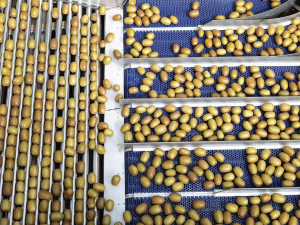
More signs of a booming kiwifruit sector.
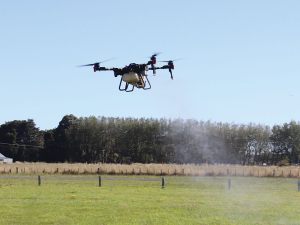
OPINION: David Seymour and James Meager's plan to make it easier for farmers and orchardists to operate drones can best be described a 'courageous' move.
New Zealand wool is reaching new heights as air filtration companies move away from synthetic products to biodegradable alternatives.
Opuha Dam's ability to protect South Canterbury communities from major flooding has taken a significant step forward, with Opuha Water Limited (OWL) successfully commissioning a new outlet valve capable of releasing record volumes of water from the dam ahead of a weather event.
There's been widespread support from the primary sector for the Government's announcement on changes to freshwater farm plans that come under the Natural Environment Bill, which is now set to replace the existing RMA.
A partnership between state-owned enterprise Pāmu (Landcorp Farming Limited) and charity Meet the Need is putting more than quality New Zealand beef into food bank parcels this year.