AHAP Progress Report Shows NZ Horticulture Building Real Momentum
According to a progress report on the Aotearoa Horticulture Action Plan (AHAP), New Zealand's horticulture sector is making real progress on the big issues facing growers.
 increase font size
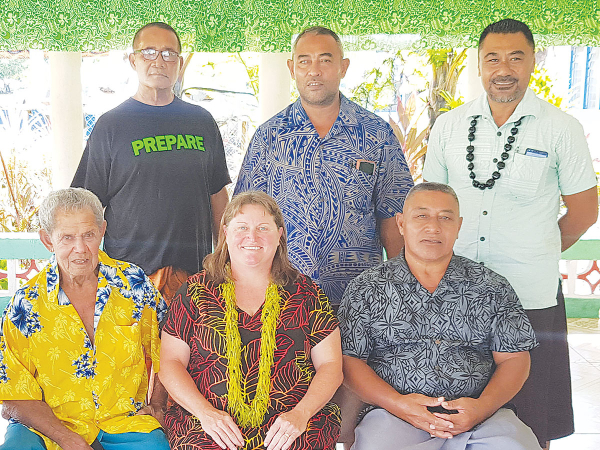 Lee Du Preez (front centre) meets Matai (chiefs) of some of the Samoan villages which are home to RSE workers employed by Southern Cross Horticulture in New Zealand. Photo Supplied.
Horticulturists wanting to employ overseas workers under the Recognised Seasonal Employer (RSE) scheme should learn about, understand and support their workers' home cultures.
That's the advice of Bay of Plenty-based kiwifruit orchardist Lee Du Preez, who is also people and business develpment at Southern Cross Horticulture (SCH). She says the company has been visiting Pacific Island communities for seven years - since even before it started employing workers under the RSE scheme.
Du Preez says this has enabled SCH to create a well-rounded RSE programme that caters for their workers individual cultures.
"This in turn helps SCH to create a 'home away from home' feel and a sense of belonging for our RSE while they are with us in NZ. It also steers the multiple offshore community upliftment projects which we create, drive and sponsor." She says SCH teams go to the islands to meet with key stakeholders - from government ministers to village chiefs, councils and communities. They also regularly visit their workers and their families once they are back home, to celebrate their achievements, assist with their reintegration into the community and provide support for their continuing community projects.
Du Preez recently spoke at the RSE conference, part of the inaugural Horticulture week in Christchurch, which brought together the annual conferences of the RSE employers, Horticulture NZ and NZ Apples and Pears.
She explained that a first step of SCH's recruitment process was to travel up to the Pacific Islands, to introduce themselves and talk with and experiencethe local communities, to gain an understanding of their cultural practices, religions, and daily lives.
"Being an RSE employer was about forging a wider partnership with the Pacific," Du Preez says.
She added that the company's purpose was to develop world-class crops through a skilled dedicated team which shared the company values.
"Fundamentally enhancing lives is really what we're about," she added. "Our quest to becoming an RSE employer was more around getting a firsthand understanding of what it’s like to live in these countries that we will be recruiting from – how those people face adversity in an island that’s sinking 13 metres every year with no fresh running water, limited employment opportunities, and limited opportunity for education.”
Du Preez says SCH has sponsored a number of schools and kindergartens in the Pacific with support including educational supplies and sporting equipment.
“In a country where they don’t have shops often, they don’t have access to educational supplies. Things like a paintbrush, you just cannot find in some of these islands.”
Du Preez believes the impact of climate change is now a huge part of life in the Pacific, giving one example of an RSE recruit who had been housing 15 members of his family in a tent on a site now completely under water.
“So, his goal for being an RSE was to build solid housing that could last through the climate change,” she told the conference “It’s very rewarding to see just how many lives we can change through the scheme.”
Growing future leaders is a vital part of the programme both in the islands and while the workers are in New Zealand.
“One of the things we really enjoy doing with our RSE, is all of the cultural days that we have to honour them and to thank them for what they bring to us,” Du Preez added. “They educate us and our team a lot and they educate our New Zealand team and we embrace that. The health and well-being of our RSE is first and foremost.”
Speaking to Hort News after her presentation, Du Preez wasn’t sure how common it was for other employers to support Pacific communities in a similar fashion.
“We were one of the earlier adopters in that space. I don’t know how many employers actually do this, but I know that it’s just part of what we do.” She believes going to the islands is integral to a successful RSE programme.
“Enhancing lives actually means taking the time to invest in their community to understand their needs. You’re not just employing the RSE worker. You’re actually employing their family and their communities.”
SCH currently has 176 RSE workers on the books and has applied for more.
According to a progress report on the Aotearoa Horticulture Action Plan (AHAP), New Zealand's horticulture sector is making real progress on the big issues facing growers.
We are encouraged that employers are already engaging with two new visas for seasonal workforce recruitment.
When Ben Enock came to New Zealand for vineyard work in 2007, his primary aim was to pay for his children's education at home in Vanuatu.
Over 1,000 Recognised Seasonal Employer (RSE) workers in the Hawke’s Bay have now been immunised against measles.
New Zealand Apples and Pears wants the new government to urgently deal with the Recognised Seasonal Employment (RSE) scheme.



Testing confirms H5 bird flu in a single northern giant petrel, found dead on a remote Cape Palliser beach in the Wairarapa, says Dr Mary van Andel, the Ministry for Primary Industries' (MPI) Chief Veterinary Officer.

"What's for dinner?" may sound like a simple question, but for many Kiwi parents, answering it has become a job in itself.
Fifty Eight years ago, on the 16th of August 1968, August Claas, the founder of the harvesting company and father of Helmut Claas, personally presented a Claas Senator combine harvester to Scottish farmer John Steven.
New Zealand consumers are paying more for beef mince than ever before, with the average retail price now sitting above $24 per kilogram, according to Rabobank.
State farmer Pamu has delivered its strongest operating result on record.
Celebrating 50 years in the rural landscape of Central Canterbury and beyond, Ashburton-based Carrfields, has been the exemplar for all aspects of modern agriculture via its extensive range of services including supply, growing, agronomic advice and marketing.