Hawke's Bay Fruit Growers Urged to Prepare for El Niño
Hawke's Bay fruit growers are being reminded of the need to prepare for whatever the El Niño weather system may bring in the coming months.
 increase font size
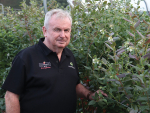
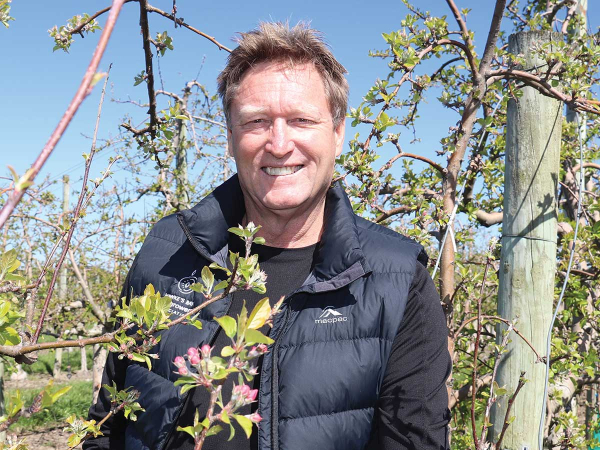 Hawkes Bay Fruit Growers Association president, Brydon Nisbet.
Three and a half years on from when Cyclone Gabrielle hit Hawke's Bay, some orchardists in the region are still receiving counselling to help them deal with the trauma they suffered.
Hawke's Bay Fruit Growers Association president Brydon Nisbet says neither he nor any of those in the orcharding business will forget that day. Many are still rebuilding their businesses and lives and need psychological support, along with financial support.
Nisbet had an orchard in one of the worst hit areas, Puketapu, where the Tutaekuri River broke through the stop banks and wiped out or damaged multiple orchards, including a large kiwifruit orchard owned by the Ngāi Tukairangi Trust. When he finally got to Puketapu, Nisbet says he was devastated by what he saw, but he says his roll as the association president meant his focus was to lead the charge to get other orchardists and the region as a whole back on their feet.
"It was hard to say exactly how many orchardists were affected, with some having their orchards smashed to pieces; others had trees buried in silt, some had water go through their properties and others just had surface flooding," he told Hort News.
"Undoubtably, those closest to the rivers and in specific areas such as the Esk Valley and Puketapu got hit the worst," he says.
As well as advocating for the needs of growers, Nisbet says his association organised key events that brought growers together to share their problems and find ways of dealing with some of the terrible situations they were experiencing.
"That is why we've employed a psychiatrist, to be available to help people, and realising that often it takes time for people to come to the realisation of problems they face. To this day, some people are still seeking counselling," he says.
While much of the 600ha of land damaged to various degrees by Gabrielle has been replanted, the financial impacts are ongoing, and it will be years before some get back to the position they were in before the cyclone struck.
Nisbet says those that lost trees have had to reorder, and this has taken time with some orchardists only now replanting and putting in the structures to support the trees.
Nisbet says some people are thinking about putting in new infrastructure, such as hail netting, particularly if they have replanted high value trees.
Nisbet says overall growers are now doing well and returns have been good.
He says there are lots of new plantings of apples with both large corporates and medium-to-small growers all looking to expand.
Some of this has come about because of the downturn in the wine industry where vines are being ripped out and replaced by apple trees.
The closure of the McCain's vegetable processing plant has seen cropping farmers look for new options.
"Just recently, I had a sheep and beef and cropping farmer ring me inquiring about the opportunities to get into orcharding," Nisbet says.
Another major group entering the apple growing business is a contingent of Indian growers.
According to Nisbet, many are locals who have worked their way up through the industry, while others have come from outside the district.
"Some of their operations are very large and they are leasing land to grow their businesses. I am aware of one that is over 500 hectares and is a mixture of apples and stone fruit. This is good for the industry because it's creating employment and revenue," he says.
Nisbet says many of these orchards have sprung up in the last five years.
He says the hope is that this will help offset some of the losses faced by growers who were caught up in the collapse of the company Kiwi Crunch, which he says cost about 200 people their jobs.
He says the collapse of Kiwi Crunch was disappointing to say the least.
Nisbet says the outlook for the region is positive with apples, cherries and summer fruit all doing well. But hanging over growers is rising costs - the likes of fuel, chemicals and labour - not to mention weather and apprehension about what might occur in regard to the regulatory environment post the election.
"But at a macro level, Hawke's Bay apple growers are positive about their industry and their future," says Nisbet.
Hawke's Bay fruit growers are being reminded of the need to prepare for whatever the El Niño weather system may bring in the coming months.
The chief executive of Apples and Pears New Zealand, Danielle Adsett, says fruit quality this year is phenomenal and the sector is hitting crop estimates, which is great for growers.
Nearly three years on from Cyclone Gabrielle, Hawke's Bay apple orchardist Paul Paynter says they are still doing remedial work around their orchards and facing financial challenges.
If there was a silver lining in the tragedy that was Cyclone Gabrielle, for New Zealand Young Grower of the Year, Grace Fulford, it was the tremendous sense of community and seeing first-hand what good leadership looks like.
Listed carpet manufacturer, Bremworth is undertaking a $6 million expansion at its Napier plant more than two years after the site was heavily damaged by Cyclone Gabrielle.


Hawke's Bay fruit growers are being reminded of the need to prepare for whatever the El Niño weather system may bring in the coming months.
Three and a half years on from when Cyclone Gabrielle hit Hawke's Bay, some orchardists in the region are still receiving counselling to help them deal with the trauma they suffered.
South of the central Hawke’s Bay town of Waipukurau is Taniwha Station – a highly successful 550ha bull beef farming operation.
Beef + Lamb NZ funded research has shown that some simple changes to pasture management could help farmers make better use of rainfall and build resilience before dry conditions hit.
OPINION: There could hardly be a more appropriate theme for a conference than the one chosen by the red meat sector - Navigating Volatility.
When Northland leather worker Vernon Suckling started making horse saddles 50 years ago, quad bikes and side-by-side vehicles were unheard of.