Seeka Posts Record $62m Profit as Zespri Lifts 2026 Forecast
More signs of a booming kiwifruit sector.
 increase font size
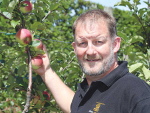
 Seeka chief executive Michael Franks says harvest 2022 kiwifruit yields were down across the industry, impacting revenues from its core post-harvest business.
Listed produce grower and exporter Seeka says a substantial drop in kiwifruit volumes this year may push the company towards an operating loss.
In a note to the New Zealand Stock Exchange last month, Seeka chief executive Michael Franks says early season kiwifruit volumes packed by the company are well down on estimate - reflecting climatic events, including an atypically mild winter followed by a severe late frost, cyclone and more recently, hail.
Yields are well down on expectation, Franks adds.
"Overall, the company estimates that total volumes could be down by 20% on the previous year and may result in a forecast operating loss for the current year," he says.
"The company has proactively reduced costs, slowed its capital expenditure programme and continued with its asset reviews."
Seeka advises that it is too early to accurately estimate full year guidance and will update the market on earnings when there is greater certainty of the current year's financial outlook.
"Once the harvest is complete, the market will be updated."
Seeka is already reeling from a challenging 2022. While revenue last year was up 13% to $348 million, net profit plunged 56% compared to 2021 to $6.5m.
The company and its supplying growers grappled with Covid-19, extreme labour shortages, shipping disruptions, lower kiwifruit yields and poor fruit quality - all impacting returns.
At its annual meeting two weeks ago, chairman Fred Hutchings describes 2022 as "a very difficult year".
Hutchings says the company was up to 1,100 people short during peak operations. This was compounded by increased costs related to Covid-19, lower kiwifruit market returns from Zespri and higher fruit loss at Opotiki Packing and Coolstorage (OPAC) which it acquired in 2021.
Franks says harvest 2022 kiwifruit yields were down across the industry, impacting revenues from Seeka's core post-harvest business. Kiwifruit storage performance, both onshore and offshore, further impacted returns to the company's orchard operations.
"Despite the challenging season, Seeka achieved an increase in revenues to $348 million as we attracted new growers to our business," he adds.
"Packing operations, however, peaked during the Omicron wave and the industry was severely short staffed. Higher labour costs and lower yields impacted margins and contributed to a drop in EBITDA to $46 million and a net profit after tax of $6.5 million."
Franks says since the harvest, Seeka has fully reviewed its supply chain operations from the orchard to load-out. He adds the company is focused on achieving excellence in fruit handling in 2023.
"We are anticipating an improved labour supply with a large increase in RSE workers from the Pacific and Malaysia, and a normalisation of travel."
Franks believes the completion of a highly automated pack line in the Bay of Plenty, and automation projects at Gisborne and at its largest site near Te Puke, will lift post-harvest capacity, improve fruit handling and significantly reduce the demand for packhouse labour.
Franks says since Cyclone Gabrielle the company has been inspecting post-harvest sites and supplying orchards to assess the potential impact on harvest 2023.
"While we did not see any significant damage to our post-harvest facilities, we anticipate that the full impact on the crops will remain unknown until the fruit is harvested."
Seeka's core Bay of Plenty kiwifruit growing region was spared the worst of the weather and was not materially impacted.
The Hawke's Bay, Gisborne, Coromandel and Kerikeri regions had varying degrees of impact, with Hawke's Bay being worst hit. Approximately 5% of Seeka's kiwifruit supply is grown in the Hawke's Bay region.
More signs of a booming kiwifruit sector.
Seeka chief executive Michael Franks says while it's still early days in terms of the kiwifruit harvest, things are looking pretty good.
Our job is not to panic but to professionally manage our way through this predicament.
Fruit trader Seeka posted a record profit and returns to shareholders in 2025.
Kiwifruit and fresh produce handler Seeka will be bouncing back strongly from a big financial loss in 2023.


Farmer-owned fertiliser company, Ballance Agri Nutrients is welcoming National’s plan to negotiate security agreements with key supplier countries to protect New Zealand-bound products from export restrictions and greater supply chain certainty.

Carrfields has announced the appointment of Stu Hall to the newly created role of chief operating officer, Carrfields Ltd, reflecting the continued growth of their agribusinesses and the need to ensure the company has the leadership capacity and support in place as it pursues the emerging opportunities ahead.
New Zealand's role is not to compete with Indian growers, according to NZ Apples and Pears.
The potato industry is celebrating the success of two rising stars - James Blair, the 2026 Young Grower of the Year and runner-up and innovation award winner, Amber Davy.
Twenty-eight emerging leaders from across the horticulture sector spent two days last month learning valuable skills and connecting with industry experts.
There are five entrants in this year’s Young Horticulturist of the Year, competing in a series of technical, practical, business and leadership challenges.