Diplomatic Incident
OPINION: Your old mate hears an international incident is threatening to blow up the long-standing Anzac alliance as Kiwis and Aussies argue over who wants new Australian resident and former NZ Prime Minister Jacinda Ardern.
 increase font size
 The move follows a 2015 agreement to phase-out calving induction nationally.
The Australian Dairy Industry Council is targeting a 2016 limit for routine calving induction of 15% of cows per herd.
The move follows a 2015 agreement to phase-out calving induction nationally.
Australian Dairy Industry Council (ADIC) chair Simone Jolliffe says this will apply to all farms unless an exemption is granted.
"Exemptions may be granted either by implementing a herd fertility management plan or by obtaining dispensation for exceptional circumstances beyond the control of the herd manager," she said.
A panel will consider requests for exemptions and grant approvals as appropriate.
She says progress will be monitored and reviewed until the phase-out is achieved and no routine induction -- without exemption for exceptional circumstances -- is done.
"We want to be proactive on measures to support excellent animal welfare and to meet the expectations of the community, customers and consumers," Jolliffe says.
"Failure to meet these obligations risks the introduction of onerous and unrealistic regulations and/or damage to our reputation and markets."
She says the ADIC recognised that the target would involve much management change for some farmers.
"We will work with farmers, vets and their advisers to ensure annual targets are achieved."
The approach resembles the NZ strategy where routine calving induction was phased out over time with progressively reduced annual limits.
ADIC is especially concerned about late-calving induction.
"Late inductions (within 4-6 weeks of the due calving date) provide no overall reproductive benefit for the herd and should not be performed except for the welfare of the cow or her calf," she said.
"Early pregnancy testing is required by these practices to make sure late inductions are not occurring."
OPINION: Your old mate hears an international incident is threatening to blow up the long-standing Anzac alliance as Kiwis and Aussies argue over who wants new Australian resident and former NZ Prime Minister Jacinda Ardern.

OPINION: Your old mate hears that at a recent China Business Summit, PM Christopher Luxon delivered a none-too-subtle "could try harder" report card on the red meat industry regarding its exports to China - particularly when compared to Australia.
More Australian states are embracing virtual fencing technology, opening growth opportunities for Kiwi companies like Halter.
Fonterra says its ongoing legal battle with Australian processor Bega Cheese won’t change its divestment plans.
Farmers in the Australian state of New South Wales will soon be able to use virtual fencing and herding technology to boost farm productivity.



Ballance Agrinutrients chief executive Kelvin Wickham says despite a tough year, he is pleased the business has returned to profit.
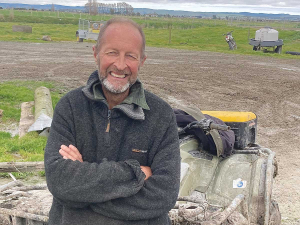
When Northland farmer Mark Cameron entered parliament six years ago, the Beehive was a lonely place.
Speculation of a possible joint move by Fonterra and a2 Milk to buy Synlait raises a much bigger strategic question, says agribusiness expert Dr Nic Lees.
I think it's going to greatly weaken National at the election. That's the view of a former senior National MP on the recent attempted coup against Prime Minister Christopher Luxon.
Despite political shenanigans in Wellington, farmers are confident that Resource Management Act (RMA) reforms will get over the line in this term of Parliament.
New Zealand's pest problem has reached crisis point, according to Federated Farmers' second National Pests Survey, which shows farmers are spending more money and effort on control — yet pest numbers keep climbing faster than they were two years ago.