
Ford Vehicles Now Compatible With HVO Renewable Diesel
Continued fluctuations in fuel costs are putting pressure on many businesses, driving a significant spike in interest for electrified options like hybrids and alternative power sources.
 increase font size
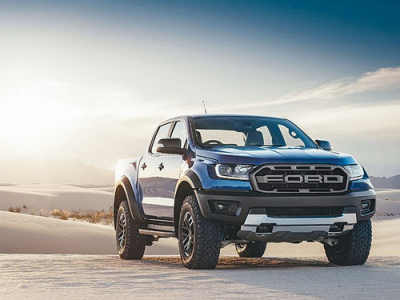 Ford Ranger Raptor.
The Ford Ranger ute has been remarkably successful since its launch, but until now, wanabee Ranger owners who wanted to stand out were largely limited to the Wildtrak models or some localised customisation.
That will change with the spring arrival of the recently announced Ford Ranger Raptor, which the company says will reflect the use of utes as going far beyond the workhorse to a multi-use lifestyle vehicle.
Destined to be the hero model of the Ranger offering in New Zealand, the Raptor builds on the qualities of the American F Series Raptor, but with local development in the You Yangs Proving Grounds in Australia.
First impressions of the truck point to its off-road aspirations -- aggressive stance, bold FORD lettering up front, HID headlights, daytime running lights and beefy, composite bumpers front and rear. Each corner is set on a 33-inch diameter BF Goodrich All-Terrain tyre, and each flank has extra heavy-duty Ranger Raptor specific running boards.
Power is provided by a new generation, 2.0L, bi-turbo diesel pushing out 157kW and 500Nm torque, mated to a 10-speed automatic transmission, with paddle shifters behind the steering wheel.
The powertrain also has Ford’s Terrain Management System (TMS) that offers six modes to deal with a variety of terrain, including low and high rear wheel drive and a locking rear differential. The TMS also introduces the Baja Mode for ultimate off-road performance.
That off-road ability is what the Raptor is about, given its long suspension travel with Fox Shox dampers, aluminium control arms, HD skid plates and underbody protection.
The overall layout sees wider front and rear track widths, a greater ride height, increased approach and departure angles and the ability to ford up to 850mm of water.
At the business end, a 1560 x 1745mm rear tray has plenty of space for work and play, and 2500kg towing capacity should be useful for both. Two recovery hooks at the rear rated to 3.8 tonnes and a pair at the front rated to 4.5 tonnes should take care of getting extracted or extracting others from unplanned adventures.
In the cabin, car-like luxury is seen in technical suede seat coverings accentuated with leather and dramatised with blue stitching.
Notable safety features include Ford Stability Control incorporating a roll mitigation function, electronic stability control for difficult cornering or braking, trailer sway control, hill start assist, hill descent control, load adaptive control and a rear-view camera.
Expect to see the Raptor hit New Zealand shores in the thirdter 2018, with a starting price of $84,990+ orc.
Continued fluctuations in fuel costs are putting pressure on many businesses, driving a significant spike in interest for electrified options like hybrids and alternative power sources.
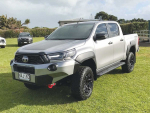
With Ford holding the reins of the ute market since about 2014, it was always going to be a case of when – not if – Toyota NZ would deliver a model to compete.
The latest addition to the long running Ford Ranger line-up, is the return of the FX4.
The Ford Ranger Raptor is not the truck you buy for heavy work; payload and towing capacity are significantly less than a standard Ranger or any other working-clothes ute. But that's not the point.
The modern trend to fewer cubic centimetres and more gear ratios continues as car manufacturers chase better fuel economy and lower emissions.


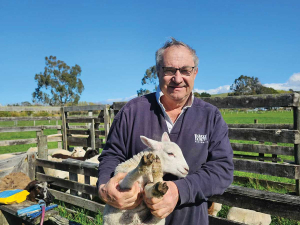
Decades piloting planes has ensured vet and farmer David Hayes is focused on safety. So, after a serious accident while welding on farm, he is sharing his experience so others can learn from it.

Canterbury milk processor, Synlait Milk has confirmed Leon Fung as its chief executive officer.
OPINION: Making it easier to collect rainwater and use it to grow crops and livestock is a no brainer.
As part of its Election 2026 coverage, Rural News asked political parties how they would help pull the arable sector out of the doldrums. Here's what they said:
Farmers are being encouraged to rethink how they manage waste on farm with the launch of ruralwastesorted.co.nz, a new website bringing together practical tips, real farmer experiences and resources.
New Zealand Winegrowers (NZW) is celebrating the India-New Zealand Free Trade Agreement (FTA) coming into force today, bringing New Zealand wine improved access to one of the world’s fastest-growing economies.




