Hitting heifer liveweight targets
Early December marks a key transition for many dairy farmers, as weaned replacement heifers head off-farm to grazing.
 increase font size
 Wade Bell
Many farmers are experiencing lower stored feed reserves on hand and some are considering growing or increasing their on-farm maize crop grown.
It's not uncommon for farmers to be able to grow maize silage that yields 18-24 tDM/ha for around 25-35c/kgDM in the stack on paddocks that need renewing. Growing costs can be reduced even further by growing maize in an effluent paddock, which can significantly reduce (or in some cases eliminate) fertiliser input requirements.
This drops the cost of maize to 18-25 c/kgDM. That looks pretty attractive compared to buying in alternative feed sources that can range from 50-100 c/kgDM. However, this analysis only tells part of the story when growing maize on farm, and there are other considerations that can influence the return from your maize crop.
First, you need to ask whether the area you want to grow your crop on really needs renovating. The reason for this is that if the paddock is already high producing, the difference in the total extra drymatter production gained by growing maize will be less, increasing the cost per kgDM (Table 1).
Table 1: Value of maize grown on low vs high pasture producing paddocks
| Poor Performing paddock | High performing paddock | ||
| Maize yield | tDM/ha | 20 | 20 |
| Less: Pasture production during maize cropping period | tDM/ha | 4 | 7 |
| Equals: Total extra feed produced | tDM/ha | 16 | 13 |
| Cost to grow and harvest maize silage1 | $/ha | 16 | 13 |
| Cost of additional feed supplied |
Furthermore, you will have missed the long-term opportunity to increase pasture production by renovating the poorest performing paddocks on the farm.
Second, maize growing costs can be reduced significantly if you can grow it on highly fertile effluent paddocks.
Dairy effluent typically has higher concentrations of nitrogen and potassium, which maize can utilise to achieve maximum yields (12kg of N and 10kg of K per 1 tDM maize silage yield). With maize being a deep-rooted crop, it is perfectly suited to utilise this free source of nutrients and reduce the growing costs per kgDM (Table 2).
Table 2: Cost of maize grown on low v high fertility paddocks
| Maize silage yield (tDM/ha in the stack) | |||||||
| Yield | 16 | 18 | 20 | 22 | 24 | 26 | 28 |
| Cost on low fertility paddocks ($kgDM)2 | $0.40 | $0.34 | $0.30 | $0.27 | $0.24 | $0.22 | $0.20 |
| Cost on high fertility paddocks ($kgDM)2 | $0.29 | $0.25 | $0.22 | $0.20 | $0.18 | $0.16 | $0.15 |
Finally, while maize yield and costs are very important, so too is having flexibility around the timing of when you sow and harvest your maize crop.
Consider maize hybrids that suit your environment and the nature of your seasonal feed supply and demand requirements.
For example, being able to sow your crop three weeks later when pasture is growing at 64kg DM/ha/d, equates to 20 tDM of additional pasture silage from 15ha. Alternatively, being able to harvest three weeks earlier could help you to bridge any autumn shortfall of feed you might have normally expected. Talking to your local Pioneer representative will help you establish the best hybrid option for your location and on-farm requirements on farm.
Wade Bell is Genetic Technologies farm systems manager. Contact him at This email address is being protected from spambots. You need JavaScript enabled to view it.
Early December marks a key transition for many dairy farmers, as weaned replacement heifers head off-farm to grazing.
With spring underway, maize growers across New Zealand are preparing for planting.
I recently had the pleasure of attending an AgFirst event in Hamilton where the results of the 2024-25 Waikato-Bay of Plenty Dairy Financial Survey were shared. Based on a 136ha farm milking 379 cows, average farm profit before tax was $405,892, an incredible 286% increase on the 23-24 season.
Over the past few months, I’ve had the privilege of speaking with many farmers at events and one-on-one.
As I write this article, we have just had our first frost in the Waikato, a change in weather signalling that winter is upon us.


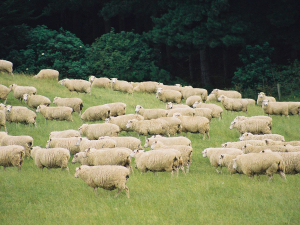
New research suggests sheep and beef farmers could improve both profitability and emissions efficiency by increasing lamb weaning weights, with only marginal changes in total greenhouse gas emissions.

With six months until the election, Federated Farmers says the Government is running out of time to deliver its long-promised reform to the country's freshwater system.
Herd improvement company LIC has entered the Indonesian market.
Two forestry companies have been sentenced for road failures that led to the death of Coromandel truck driver Greg Stevens.
The situation in the Middle East has been a major influence on markets over recent months and the market for key farm inputs continues to move at pace, with pricing and availability shifting quickly across several key products, according to a major stockfood seller.
Rural Women New Zealand (RWNZ) has signed on to a formal complaint filed with the United Nations requesting an investigation into whether the government's changes to New Zealand's pay equity laws amounts to systemic discrimination against women.