Push Feed Forward: Spring Nitrogen Tips for a Dry Summer
If you're thinking about investing in ways to push feed forward, this is the year to do it.
 increase font size
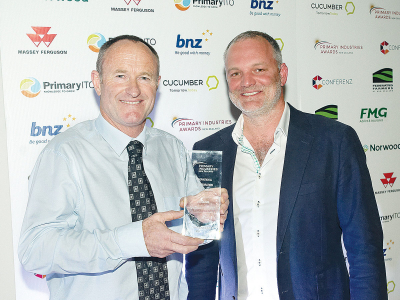 Mark Brown, Ecotain (left) with Norwood CEO, Tim Myers.
The New Zealand seed company Agricom last week won a major national prize for its Ecotain environmental plantain.
This was the Primary Industries New Zealand, Innovation and Collaboration Award. The plant also won second place in the Primary Industries Science and Research Award contest.
The company’s sales and marketing manager, Mark Brown, applauded the recognition of the collaboration in developing Ecotain, a forage herb able to reduce nitrogen leaching on livestock farms by up to 89%.
Agricom says its discovered specific lines of plantain (a common roadside weed) which reduced nitrogen leaching from the urine patch of cattle.
After ten years of R&D, with funding from Callaghan Innovation, the company set up the Greener Pastures Project, joining its expertise to that of Massey and Lincoln universities and NZ Plant & Food Research to support the results scientifically.
“We acknowledge Plant & Food Research and Massey and Lincoln universities,” said Brown. “NZ has at least 6.5 million dairy cows, so managing nitrogen leaching and the flow-on effect on waterways is a big challenge.”
Ecotain enables farmers to reduce nitrogen leaching while maintaining productivity, he said. “It allows them to simply make a change to the composition of their pastures.”
To help farmers to prepare farm environmental plans, Agricom intends to get Ecotain recognised in the Overseer farm nutrient measuring tool.
The plant can be used in a pasture as a special purpose crop with clover, or in a grass/ clover/Ecotain mixed pasture system. It can also be oversown into existing pasture.
Including 20% to 30% Ecotain in a pasture can reduce nitrogen leaching by up to 74%, Agricom says. Pastures containing 42% Ecotain are said to have shown leaching reductions of 89%.
If you're thinking about investing in ways to push feed forward, this is the year to do it.
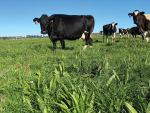
A four year trial has reaffirmed that mixing plantain into dairy pastures can help reduce nitrogen losses to freshwater while maintaining milk production and profitability, say researchers.
Pasture renewal is the process of replacing older, less productive pastures with a completely new pasture.
The winner of the Farmax Emerging Rural Professional of the Year says that without pastoral farming, New Zealand will lose its competitive edge.
Federated Farmers has released the finalists for the Primary Industries Awards, to be presented in Wellington on July 1.



A seasoned horticulturist has been appointed to deliver the Apple Action Plan, a key initiative of the India-New Zealand Free Trade Agreement.
New Zealand's citrus growers have been told to compete on the value built into their fruit rather than the volume they grow.
Hawke's Bay fruit growers are being reminded of the need to prepare for whatever the El Niño weather system may bring in the coming months.
Three and a half years on from when Cyclone Gabrielle hit Hawke's Bay, some orchardists in the region are still receiving counselling to help them deal with the trauma they suffered.
South of the central Hawke’s Bay town of Waipukurau is Taniwha Station – a highly successful 550ha bull beef farming operation.
Beef + Lamb NZ funded research has shown that some simple changes to pasture management could help farmers make better use of rainfall and build resilience before dry conditions hit.