fbpx
Print this page
Friday, 01 December 2023 11:55

Treating cows safer, faster

Written by  Jessica Marshall
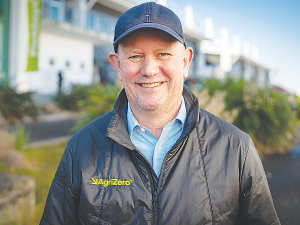
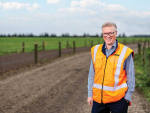
Kieran Bourke with the Ekochute he brought from Ireland. Kieran Bourke with the Ekochute he brought from Ireland.

A New Zealand dairy farmer who was recently in Ireland says the two countries are facing similar challenges.

Kieran Bourke, a South Taranaki dairy farmer farming at Bourke Clonlara in Pihama, was recently on a family holiday in Ireland with his wife Claire and their three children, Sienna, Fergus, and Declan.

Bourke says the market challenges faced by Kiwi farmers are like those faced by Irish farmers on both the market side and the environmental side.

“Their fertiliser use is a lot higher than a typical kiwi farm, but that is currently being squeezed downward,” he told Dairy News.

He says Irish farmers produce at a higher cost than New Zealand farmers, with a heavy reliance on government, subsidies and grants.

“With milk prices affected by high inflation in both New Zealand and Ireland, farmers need competitive advantage to remain as productive as possible.”

Bourke says that prior to leaving New Zealand, he had spotted an Ekochute online and had contacted the owner Francis Burns in County Donegal intending to purchase it.

“So, one morning the whole family set off on a six-hour journey from Cork to the factory of Eko Hoofcare, the manufacturers of the Ekochute,” he says.

Having brought the Ekochute back to New Zealand, Bourke says the biggest difference is that he’s able to treat cows safer and faster on-farm as it’s user friendly.

The chute has automated shutting, a self-locking head bar, double belly bands to support the cow, and front and rear leg supports that are safer for the operator and cow. It also has a fully enclosed base.

“Like most farms in New Zealand, we used to just treat the lameness when it happened,” he says. “We would mark the cows with overgrown hooves or repeated lameness before the professional trimmer would come in and do up to 100 cows.

“However, now that we have easy to use, safe equipment, we can do hoof trimming ourselves and we are slowly adopting preventative trimming as the norm. It’s become a pleasure rather than a chore.”

He says it’s difficult to carry out effective treatment if you don’t have the right equipment to do it. “If you’re wanting to be able to trim hooves comfortably and safely, then invest in an Ekochute manual crush,” Bourke says. “Unlike other chutes, it wasn’t designed by an engineering company, but by a professional hooftrimmer, Francis, who could see better equipment would make the job a lot easier and more efficient.”

Bourke will be hosting a Zoom webinar on preventative hoof trimming for NZ farmers at 7.30pn on 4 December. To express interest, head to: https://form.jotform.com/Francis_Burns/PreventingLamenessWebinar.

More like this

New Michelin Tyres for Slurry Tankers and Trailers

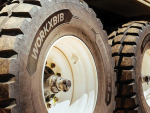
Global tyre manufacturer Michelin has extended its agricultural trailer tyre range, with the introduction of its new WorkxBib series, designed for tipping trailers, slurry tankers and manure spreaders.

JCB Lifts Investment After Hydrogen Engine Milestone

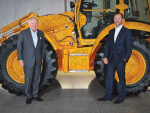
Following the record-breaking success of its hydrogen-powered Hydromax, JCB is ramping up its investment in the business, key to the first major change at the executive level of the business, with George Bamford stepping up to the post of joint chairman, alongside his father Lord Bamford.

Massey Ferguson to Add Compact Tractors in ITL partnership

Massey Ferguson has announced a strategic supply partnership with International Tractors Limited (ITL), a manufacturer of low-horsepower and compact tractors, with recognised brands such as Sonalika and Sollis, to expand its portfolio with a new tractor range.

Case IH Wins EIMA Award for Optum Suspension System

With the biannual Italian EIMA machinery Expo less than a month away, Case IH has taken out a Technical Evolution award for the Advanced Vehicle Suspension system available on its Optum 360–440 series tractors.

The Advanced Vehicle Suspension system, available on Optum 360, 390, and 440 models, responds to changing conditions, automatically adjusting how the suspension reacts to absorbs shocks and controlling vehicle movement.

In operation, sensors monitor the vibrations transmitted from the tractor chassis to the operator cabin, allowing the system to adjust suspension damping in real time. The control system incorporates key priorities, such as comfort at lower speeds and stability as speed increases, while also reacting to factors such as lower tyre pressures, where the tyres absorb more of the initial shock.

Case IH said as suspension requirements change throughout the working day, as tractors move between the paddock and road transport, the system manages suspension response in the background as tasks, speeds and conditions change, leaving the operator without the need to make manual adjustments.

Richard Hollins, Optum series tractors global product manager, said: “Pioneering technology must earn its place in the working day. Farmers and contractors will judge an investment by what it delivers, including manageable ownership costs, dependable up-time and the versatility to tackle different jobs. With AVS, we are putting intelligent control to work for comfort and stability, without giving the operator another setting to manage.”

Organised by FederUnacoma, the Italian Agricultural Machinery Manufacturers Federation, the contest has been part of EIMA since 1986, with the Technical Evolution distinction awarded to products that introduce original improvements to solutions already manufactured or patented.

www.caseih.com

Featured

Editorial: Support Dairy

OPINION: Political parties are getting plenty of advice and recommendations from sector groups as the election approaches.

National

Machinery & Products