Boosting Crop Production by Spreading Effluent
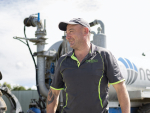
Tararua district farmer Jamie Harris milks around 400 cows using a split calving system on his farm, Crossdale Dairies.
 increase font size
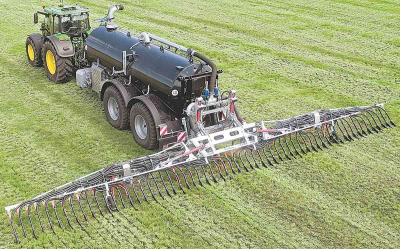 Vogelsang Blackbird spreader.
Kiwi dairy farmers tend to be lagging behind the northern Europeans in their handling of dairy effluent.
The Europeans realised long ago that efficient effluent use would go far in replacing bought-in fertilisers.
For ten years the Euro’s have also quit traditional splash-plate application, now instead favouring dribble bar or trailing shoe applicators.
These help reduce the amount of nitrogen lost to the atmosphere as ammonia, while also addressing the problems of odour and complaints from neighbours.
German specialist Vogelsang, a big player for years, has taken another step in placement accuracy, so reducing crop contamination and improving plant uptake of nutrients.
New skid technology for its Blackbird trailing shoe linkages embodies a beak-like point said to ensure an even flow of slurry while also penetrating the soil surface more easily.
The Blackbird series also uses its maker’s precision distributor/macerator — the ExaCut ECQ, located at the centre of the boon structure. Its large internal diameter and oversized distributor plates keep the slurry moving, under control and distributed more accurately.
The unit also has a large maintenance port at its heart, allowing access to all internal components so that servicing can be done without dismantling the distributor, the outlet cover or the outlet hoses and feed lines.
Also, because the rotor runs at lower speed, it needs 50% less power, and exerts less pressure on the cutting blades and inside the distributor, all these factors extending the service life of the unit.
Hose layouts are modified to prevent the typical ‘v-shaped’ spread pattern as work begins.
Tararua district farmer Jamie Harris milks around 400 cows using a split calving system on his farm, Crossdale Dairies.
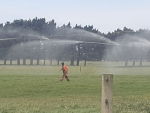
Water management is an integral component of sustainable farming practices, according to Watermetrics.
Two farmers and two farming companies were recently convicted and fined a total of $108,000 for environmental offending.
A Taupiri farming company has been convicted and fined $52,500 in the Hamilton District Court for the unlawful discharge of dairy effluent into the environment.
Founded in Germany as recently as 1977, today, the Fliegl Group employs more than 1100 workers, offering an expansive range of transport solutions, from their base in Bavaria.



LIC shareholders have elected a new North Island representative to the co-operative's Board, along with five representatives to its Shareholder Reference Group (SRG), following the company's Annual Meeting held in Invercargill.
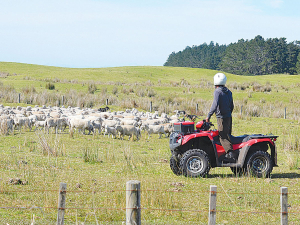
Farmers across parts of Southland and South Otago are continuing to deal with difficult conditions after a prolonged run of wet weather, with pressure building around feed supply, stock management, pasture damage, farm infrastructure and everyday workloads.
Federated Farmers says it welcomes Labour's commitment to reviewing the Sharemilking Agreements Act, calling on other major parties to do the same.
For Canterbury dairy farmers Sian Meijer and Rick Wobben, wearable technology has become one of their most valuable on-farm tools - helping manage 1850 cows across an expansive, high-performing dairy operation while improving efficiency, mating outcomes and day-to-day decision making.
Fonterra has unveiled its annual results for the 2026 financial year, posting $27 billion in revenue and close to $20 billion returned to New Zealand farmer owners and unit holders.
The first major update to the Dairy Cattle Code of Welfare in more than a decade has been released, marking what DairyNZ describes as an important step in ensuring animal welfare standards continue to evolve alongside scientific evidence and on-farm realities.