
Rabobank Launches HortPathways for Emerging Hort Leaders
Twenty-eight emerging leaders from across the horticulture sector spent two days last month learning valuable skills and connecting with industry experts.
 increase font size
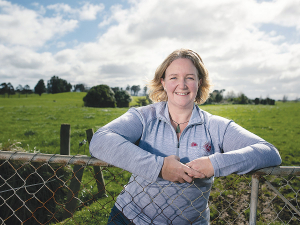
 Emma Higgins.
A weaker New Zealand dollar may help offset the decline in Global Dairy Trade prices, but the reasons behind the lower dollar are more significant to dairy, says Rabobank dairy analyst Emma Higgins.
Both she and ASB’s senior economist Nathan Penny say ongoing trade friction and the growing US-China trade war contributed to last week’s GDT Event result.
That result, where the average price index slid 5% to US$3232/tonne was “ugly”, says BNZ senior economist Doug Steel. Whole milk powder (WMP) took the biggest decline with a drop of 7.3% to US$2905/t.
Higgins says this decline coincides with Fonterra’s announcement of May 2018 collections, which were up almost 7% for the month. And Fonterra has re-affirmed its “ambitious” expectations for 1.3% growth in milk production this season, to 1525 million kgMS.
Higgins says the weaker Kiwi dollar seen since the announcement of opening forecasts may help to offset the decline in prices, although individual company FX hedging policies may limit the benefit. But the reasons behind it are more worrying.
“Clearly, the ongoing trade frictions are having an impact on sentiment and therefore prices in the latest GDT Event,” she says.
Geopolitical volatility continues. The next round of trade war implications looked set to play out late last week, with the introduction of new trade tariffs by China and Mexico likely to be imposed on the US from July 6, 2018.
ASB’s Penny says the dairy auction price fall reflects nervousness stemming from increased trade tension between the US and China. Ironically the increased Chinese tariffs on US exports will actually make NZ products cheaper by comparison.
“For now though, dairy buyers are more nervous about the fallout from the increasing trade tensions and the potential impact this could have on dairy demand.”
Currencies for key dairy buyers have fallen: the Chinese yuan is down about 3% since the last auction and Chinese stock markets have been hit.
BNZ’s Steel points out that while WMP fell 7.3% at last week’s auction, longer dated prices fell by at least 11%.
“These are material declines and bigger falls than was anticipated on the day -- an ugly result,” he says. Prices are nearly 9% lower than a year ago.
“It is also important to note that the NZD has weakened over recent weeks, offering support to prices expressed in NZ dollars – the ones that matter for milk price. NZD/USD was down more than 2% since the previous mid-June auction, taking the edge off the drop in international prices,” he notes.
The RBNZ included lower dairy prices in its May monetary policy statement, but with WMP at an average of US$2905/t, prices have dipped below the RBNZ’s medium term view of US$3000/t.
News that Fonterra milk collections were up 6.6% year on year in May shouldn’t have surprised anyone, says Steel. But coupled with product volume picking up seasonally on the auction platform – up 22% on last auction -- the strong milk growth headline may have checked some buyers’ enthusiasm, Steel says.
Other factors may have been the EU continuing to unwind its massive stockpile of skim milk powder, India re-entering the world market and renewed weakness in international grain prices.
Meanwhile, some growth concerns in China and a softer Chinese yuan may have curbed Chinese demand.
“There appeared no sign of extra Chinese demand for NZ or EU product as a result of the prospect at week’s end of higher Chinese tariffs on US product (in retaliation to US tariff threats).”
BNZ is sticking with its $6.60/kgMS forecast, but with the risk tilted to the downside.
“It is worth noting that prices often drop in June and July on seasonal grounds so we wouldn’t over-react to one auction result especially with recent signs that global milk supply growth has been generally underwhelming,” Steel says.
Twenty-eight emerging leaders from across the horticulture sector spent two days last month learning valuable skills and connecting with industry experts.

A 'tsunami' of milk from key exporting countries is winding down and this may be good news for New Zealand dairy farmers.
Milk powder prices are keeping farmgate prices up, helping processors offset the dip in milk fat prices.
Chinese beef trade quotas and a looming suspension of Brazilian beef imports into the European Union are expected to reshape global beef trade flows over the remainder of 2026, with implications for New Zealand exporters, according to Rabobank's Q3 Global Beef Quarterly report.
New Zealand consumers are paying more for beef mince than ever before, with the average retail price now sitting above $24 per kilogram, according to Rabobank.



As part of its Election 2026 coverage, Rural News asked political parties how they would help pull the arable sector out of the doldrums. Here's what they said:
Farmers are being encouraged to rethink how they manage waste on farm with the launch of ruralwastesorted.co.nz, a new website bringing together practical tips, real farmer experiences and resources.
New Zealand Winegrowers (NZW) is celebrating the India-New Zealand Free Trade Agreement (FTA) coming into force today, bringing New Zealand wine improved access to one of the world’s fastest-growing economies.
New Zealand’s red meat sector has welcomed the India-New Zealand Free Trade Agreement taking effect, which removes India’s 33% tariff on New Zealand sheepmeat.
More than 95 per cent of New Zealand’s forestry and wood exports to India can now enter tariff free as the New Zealand-India Free Trade Agreement comes into force today.
Federated Farmers is backing Feilding High School’s call to keep Agriculture and Horticultural Science as a standalone subject in Year 11.