What Would Synlait Be Worth to Fonterra or a2 Milk?
Speculation of a possible joint move by Fonterra and a2 Milk to buy Synlait raises a much bigger strategic question, says agribusiness expert Dr Nic Lees.
 increase font size
 Australian UHT milk on sale in China.
China is likely to remain the largest export market for New Zealand dairy products – but watch out for competition from Australia, a new report warns.
The immense size of the Chinese market and increasing westernisation of consumer diets means it will remain our largest market.
“However, NZ dairy producers are likely to endure increasing competition from other dairy-producing nations attempting to expand their share of the Chinese market,” says a report on the NZ ‘Cheese, butter and milk powder manufacturing industry’ by business research company IBIS World.
“For example, dairy producers in Australia are likely to increase their focus on the Chinese market over the next five years, as tariffs are gradually reduced as part of a free-trade agreement signed between Australia and China in 2015.
“Given Australia’s reputation as a producer of high-quality agricultural products, Chinese consumers are likely to view products exported from Australia similarly to those produced in NZ, which may increase competition and constrain industry revenue growth from this market over the period.”
Annual revenue for the NZ cheese, butter and milk powder industry stands at a yearly $17.2 billion. Annual growth from 2018-23 is forecast at 1.5% versus annual growth from 2013-18 of 0.5%.
Profit margins in the cheese, butter and milk powder industry are projected to rise over the next five years.
“Recovering prices in export markets should allow processors to lift their margins, particularly on non-commodity products like premium cheeses and specialty butters.
“However, margins on some products, such as bulk-packaged milk powder, are likely to remain fairly stable over the period. The high volumes of stockpiled milk powder in key markets will likely take years to depleted, meaning prices for these products are likely to take longer to recover than other dairy product prices.”
Fonterra is likely to remain the dominant player in the industry, given its immense size compared with other players, the IBISWorld report says.
“However, a small proportion of dairy cattle farmers are likely to sell their interests in the co-op in pursuit of better prices and contract terms.
“This will reduce the supply of raw milk to Fonterra and is expected to constrain the co-op’s growth over the next five years. The trend of dairy farmers turning away from Fonterra is likely to continue to entice potential players to enter the industry. Consequently, enterprise numbers are forecast to increase over the five years to 2022-23, although at a slower rate than over the past five years.”
Industry employment is also forecast to rise slowly.
Speculation of a possible joint move by Fonterra and a2 Milk to buy Synlait raises a much bigger strategic question, says agribusiness expert Dr Nic Lees.

In the past, much has been made of the concept of farm to fork, but an Australian expert in food science and marketing with experience in the dairy industry, Dr Angeline Achariya, says the reverse of this slogan is critical to win modern day consumers.
A four year trial has reaffirmed that mixing plantain into dairy pastures can help reduce nitrogen losses to freshwater while maintaining milk production and profitability, say researchers.
Fonterra has opened its upgraded Chengdu Application Centre, bringing New Zealand dairy expertise closer to customers in one of China's fastest-growing regions.
Tatua chair Stephen Allen says he leaves the co-op with a deep sense of gratitude for the people who have contributed to its success.

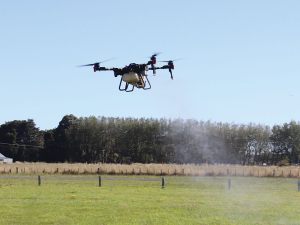
OPINION: David Seymour and James Meager's plan to make it easier for farmers and orchardists to operate drones can best be described a 'courageous' move.

New Zealand wool is reaching new heights as air filtration companies move away from synthetic products to biodegradable alternatives.
Opuha Dam's ability to protect South Canterbury communities from major flooding has taken a significant step forward, with Opuha Water Limited (OWL) successfully commissioning a new outlet valve capable of releasing record volumes of water from the dam ahead of a weather event.
There's been widespread support from the primary sector for the Government's announcement on changes to freshwater farm plans that come under the Natural Environment Bill, which is now set to replace the existing RMA.
A partnership between state-owned enterprise Pāmu (Landcorp Farming Limited) and charity Meet the Need is putting more than quality New Zealand beef into food bank parcels this year.
The Opportunity Party has faced criticism during the election campaign that its policies are too urban-focused and offer little for rural communities.