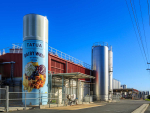
Ah Tatua, You've Done It Again!
Waikato milk processor Tatua has again declared a record milk payout to farmer shareholders, leaving other processors in the dust.
 increase font size
 Fonterra’s Palmerston North plant has a unique combination of a commercial heat pump and solar thermal plant to help reduce gas consumption and emissions output.
Fonterra has launched a unique hybrid emissions reduction solution at its Palmerston North manufacturing site.
The co-op’s first high temperature heat pump and solar thermal plant combination is up and running at Fonterra Brands manufacturing site, where much of the fresh white milk for the North Island is produced.
The heat pump converts excess heat from chillers and compressors into a heat source. This reduces the natural gas required by the site and is expected to remove 495 tonnes CO2e annually – the equivalent of taking 140 cars off the road.
This marks the fourth site within a year to upgrade energy infrastructure to help Fonterra reach its scope 1 and 2 target of 50% emissions reduction by 2030 (from a 2018 baseline).
Fonterra Palmerston North site manager Graham Thomson says the co-op is really excited about this unique combination of a commercial heat pump and solar thermal plant helping reduce gas consumption and emissions output.
The project received co-funding from the Energy Efficiency Conservation Authority’s Government Investment in Decarbonising Industry (GIDI) fund and will help inform future decarbonisation projects at Fonterra.
Fonterra is undertaking a major decarbonisation effort.
It expects to reduce emissions further through a combination of energy efficiency initiatives and switching fuels at six manufacturing sites that still use coal and ultimately stop using coal by 2037.
“We’re in the process of converting the coal boilers at the Hautapu site to wood pellets,” the co-op says.
Once complete, this year, the Hautapu site will reduce carbon emissions by a forecast 15,785 tonnes per annum – the equivalent of taking about 6500 cars off New Zealand’s roads.
The Stirling plant wood biomass boiler has been commissioned, moving the site to fully renewable thermal energy for its process heat. Changing to this boiler will reduce the annual carbon emissions by 18,500 tonnes – the equivalent of taking approximately 7700 cars off New Zealand’s roads.
The new Waitoa wood biomass boiler is now operational and will reduce the site’s annual carbon emissions by approximately 48,000 tonnes, the equivalent of taking approximately 20,000 cars off New Zealand roads.
Waikato milk processor Tatua has again declared a record milk payout to farmer shareholders, leaving other processors in the dust.
Fonterra has unveiled its annual results for the 2026 financial year, posting $27 billion in revenue and close to $20 billion returned to New Zealand farmer owners and unit holders.
Fonterra Co-operative Group has confirmed the independently assessed candidates standing for election to its board in 2026.
Fonterra has revised its Farmgate Milk Price forecast for the 2026/27 season, lifting the midpoint and narrowing the range on the back of improving global dairy commodity prices.
Outgoing Fonterra Co-operative Council chair John Stevenson says that it has been a privilege to represent the co-op's farmer shareholders.


Carrfields has announced the appointment of Stu Hall to the newly created role of chief operating officer, Carrfields Ltd, reflecting the continued growth of their agribusinesses and the need to ensure the company has the leadership capacity and support in place as it pursues the emerging opportunities ahead.

New Zealand's role is not to compete with Indian growers, according to NZ Apples and Pears.
The potato industry is celebrating the success of two rising stars - James Blair, the 2026 Young Grower of the Year and runner-up and innovation award winner, Amber Davy.
Twenty-eight emerging leaders from across the horticulture sector spent two days last month learning valuable skills and connecting with industry experts.
There are five entrants in this year’s Young Horticulturist of the Year, competing in a series of technical, practical, business and leadership challenges.
A seasoned horticulturist has been appointed to deliver the Apple Action Plan, a key initiative of the India-New Zealand Free Trade Agreement.




