Wool Impact Signs Partnership With ASB To Back Strong Wool Growth
Wool Impact and ASB have signed a new partnership with the bank set to provide financial backing to support the revitalisation of New Zealand's strong wool industry.
 increase font size
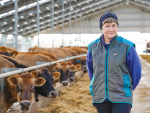
 ASB head of rural banking Aidan Gent.
ASB head of rural banking Aidan Gent is encouraging farmers to speak to their banks when they are struggling.
He says that those farmers who need assistance from their bank should “pick up the phone, ping us an email”.
Gent, who is himself a farmer, says that farmer satisfaction is at an alltime low.
“It certainly has been a challenging time on farm at the moment and we really, really are doing all we can to support our customers,” he told Dairy News.
Gent says farmers are seeing a culmination of low product prices and record on-farm inflation, accompanied by “one of the highest and most aggressively rising OCRs we’ve ever had in history”.
All of that adds up, he says.
“No doubt that’s putting a lot of pressure on, especially when you look at the on-farm inflation challenge.”
Gent says that, historically, in these sorts of scenarios, farmers have tightened their belts. However, this time around, higher levels of cost inflation have meant that cutting costs isn’t working as well as it once did.
Additionally, sustainability is now becoming a major challenge on-farm.
Gent says there’s currently a lot of talk surrounding emissions and efficiency.
“But that’s quite challenging… because farmers are struggling to think about how their next six months are going to go let alone how the business will look like in five-or- ten-years’ time,” he says.
He says that farmers have been put in a position where they can’t afford to not have that conversation because the sector needs to be futureproofed.
“So, it’s really a tough spot,” he says.
Gent says that initiatives like AgriZeroNZ – which the bank signed on to earlier this month – are important to managing that.
“Ultimately, it’s about being a little bit brave inmarket too,” he says. “If you look at something like methane reduction, no one really knows the answer so we’ve got to start somewhere.
“We’ve got to start by having a conversation, starting to understand what science and technology is available and then figuring out what does and doesn’t work in the New Zealand farming system because no two farms are the same.”
He says you can’t assume that what works for one farm will then work for another. This, he says, makes the answer on things like methane reduction “a bit more challenging”.
Gent says that, for ASB, it is important that farmers are aware that the bank is available to assist in coming to a solution.
“I’m always concerned about those farmers who might be a little bit nervous to talk to their banks.
“We always ask that when times are tough on-farm to put up their hands and talk to their bank because it’s far easier to find a solution working with people than it is thinking you need all the answers before you talk to us,” he concludes.
Wool Impact and ASB have signed a new partnership with the bank set to provide financial backing to support the revitalisation of New Zealand's strong wool industry.

Entries have opened for two awards in the New Zealand Dairy Industry Awards (NZDIA) programme, aimed at helping young farmers progress to farm ownership.
According to ASB, Fonterra's plan to sell it's Anchor and Mainlands brands could inject $4.5 billion in additional spending into the economy.
Sheep and beef farmers are cautiously optimistic as farmgate prices continue to firm.
The 2025-26 season is set to start on a high and a $10/kgMS opening forecast milk price isn't being ruled out.


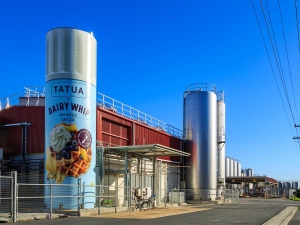
Waikato milk processor Tatua has again declared a record milk payout to farmer shareholders, leaving other processors in the dust.
A Labour-led Government won’t be bringing back the controversial freshwater rules of 2020.
National’s much-touted free trade deal with India featured in the Rural Issues Debate at Mystery Creek, Hamilton on Wednesday night.
New Zealand's 2026-27 freshwater fishing season has opened, with anglers encouraged to head to rivers and lakes over the coming days as conditions look favourable across much of the country.
Central Otago District Council (CODC) has voted against a plan to spread treated sewage sludge from Cromwell and Alexandra on farmland near Lauder, a decision Federated Farmers says reflects strong opposition from rural residents.
Pāmu has released its FY26 Integrated Annual Report, reporting a Net Operating Profit of $113 million, more than double the $49 million recorded in FY25.