Resilient Global Dairy Industry Overcoming Volatility
Fonterra chief executive, Richard Allen says being resilient has helped the dairy industry overcome extreme volatility in recent years.
 increase font size
 Fonterra produced and exported $3.8 billion in dairy products to China in 2017/18.
Regional New Zealand is punching above its weight in the relationship with its biggest trading partner, China.
Fonterra’s chief operating officer global operations, Rob Spurway, says increasing Chinese appetite for NZ dairy is helping drive our region’s economies and now 11% of all dairy in China comes from Fonterra farmers.
In a message to mark the Chinese Year of the Pig last week, Spurway noted that last year NZ exports to China were worth at least $16.6 billion, and $3.8b of that was generated by Fonterra in rural and regional NZ.
In total, about 25% of Fonterra’s exports go to China and are consumed by about 150 million people.
“We’re not just talking about milk powder either,” says Spurway.
Fonterra mozzarella tops at least 500 million pizzas and NZ cream goes into 500 million tea macchiatos every year. “A little bit of NZ is ending up on shelves and tables across China and in return that product is helping put food on Kiwi tables,” he adds.
China export earnings help generate income for forklift drivers in Darfield, Maungaturoto tanker operators, cheesemakers in Stirling and processors at the co-op’s plant in Te Awamutu, Spurway says.
“The benefits of our relationship with China flow into communities as our employees and farmers support businesses, schools and other local organisations across the country.”
Waikato is among Fonterra’s biggest regions for China exports, totalling $1.2b in cream, cheese and milk powder -- about $2500 per person in the region.
Of Fonterra’s 30 NZ sites, Clandeboye in Canterbury was the top producer, exporting about $566m of products to China, Southland’s Edendale exported nearly $560m and Whareroa, Taranaki exported $437m.
Chinese consumer demand has a year-long positive effect, says Spurway.
“I’m fortunate my job has taken me to China a fair number of times and my sense of pride is as strong as ever when I see our products on shelves, in bakeries and in beverages.
“It’s special knowing that a little bit of regional and rural NZ has found its way into the lives of people in Shanghai, Beijing and Dongguan.”
Fonterra chief executive, Richard Allen says being resilient has helped the dairy industry overcome extreme volatility in recent years.

Northland farmer Greg Collins has taken over as chair of the Fonterra Co-operative Council.
Fonterra’s 2026 financial year was a year of delivery, with record volumes of milk collected, processed and shipped by the co-op.
Dairy farmers, still holding onto their Fonterra shares despite switching milk supply elsewhere or exiting the industry, now face a stricter share sell-down requirement.
Milk powder prices are continuing their merry run, firming up a potential $10/kgMS farmgate price this season.

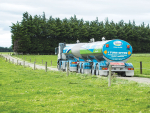
Halter has launched Mav, an AI farming assistant that lets dairy farmers ask questions about their herd and pasture and get answers drawn from the data the company’s collars already collect.

OPINION: At first glance it appears that Father Christmas has delivered the rural sector good tidings, with most pundits predicting the return of the centre-right coalition.
For 15 years, Glenda Rees has travelled from Gore to Awarua, often several times a week, to keep watch over one of the country’s rarest birds.
With some farmers opposing a government-industry partnership set up to develop methane reducing products, one NZ company claims that it already has a product on the market.
During the nesting season, from September to December, industrious starlings can quickly build nests in the darker areas behind tractor and vehicle, usually close to hot engines, typically resulting in localised damage or in some cases complete write-offs.
The meat processing industry is much more collegial than it was in the past and is now more focused on common goals.