New Rural Recycling Scheme to Replace Voluntary Farm Plastics Programmes by 2027
Environment Minister Nicola Grigg has announced details of a new rural plastics recycling scheme.
 increase font size
 Agrecovery has designed the scheme to include a phased approach to encompassing a broader range of materials over time.
Farm plastic recycler, Agrecovery’s Green-farms Product Stewardship Scheme (GPSS) has been officially accredited under the Waste Minimisation Act (2008).
The GPSS is designed to tackle the challenge of farm plastic waste head-on, with a focus on four primary farm plastics waste streams in the first 3 years of the scheme being in effect: agrichemical containers, bale wrap and silage sheets, small seed and feed bags, and large 1T and 500kg fertiliser sacks. The GPSS has also been accredited to incorporate Animal Health and Household Pest and Weed plastic packaging.
Agrecovery board chair Anders Crofoot says receiving the accreditation is a testament to the hard work and commitment of its team, stakeholders, and the agricultural community.
“Together, we are setting a new standard for environmental responsibility, ensuring that our actions today pave the way for a more sustainable tomorrow.”
“New Zealand dairy farmers are committed to reducing their environmental footprint, including minimising plastic waste. The GPSS offers a solution to enable our farmers to progress further along this journey,” says Burger.
Agrecovery has designed the scheme to include a phased approach to encompassing a broader range of materials over time with plans to significantly broaden the range of recyclable plastics covered by the GPSS in the next 2-7 years. This expansion is a response to the feedback from the farming community and an acknowledgment of the evolving needs of the agricultural sector.
Agrecovery chief executive Tony Wilson says that this is a landmark achievement not only for Agrecovery but for the entire New Zealand primary industry.
“Our accredited GPSS underscores our dedication to stewardship and sustainable practices, driven by the demands and cooperation of New Zealand’s farmers and growers. We’re looking forward to expanding our schemes and fostering innovation and collaboration to ensure a sustainable future for all.”
The GPSS will operate as a voluntary scheme until regulations are in place to ensure all producers of the targeted products participate.
Regulations proposed by the industry-led scheme co-design process to support the GPSS would require those selling the targeted products paying levies to enable a free nationwide collection network for farmers and growers.
Environment Minister Nicola Grigg has announced details of a new rural plastics recycling scheme.

The Government is introducing a new nationwide rural recycling scheme that will significantly increase the recovery of farm plastics from March next year, Minister for the Environment Nicola Grigg announced today.
Rural contractors will be able to play a role in the revamped agricultural plastic recycling scheme with new regulations due for Cabinet signoff before this year’s election.
Rural recycling scheme Agrecovery is welcoming the Government's approval of regulations for a nationwide rural recycling scheme for agrichemicals and farm plastics.
The Government is calling on rural New Zealanders to share their views on proposed regulations designed to improve the management of farm plastic waste.



The Royal New Zealand College of General Practitioners (the College) and Hauora Taiwhenua Rural Health Network are calling for investment in a proposed new training pathway for rural GPs, warning that many rural practices are struggling to recruit while a large share of the existing workforce nears retirement.
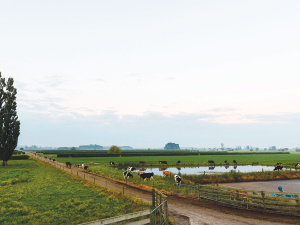
Federated Farmers has called on Central Otago District Council (CODC) to drop or vote down a plan to truck sludge from Alexandra and Cromwell to farmland near Lauder, warning it would compound an "outrageous" situation created by a separate council's decision weeks earlier.
Synlait has swung to second-half profit as operations stabilise, but the dairy processor still posted a $75.4m annual loss.
LIC shareholders have elected a new North Island representative to the co-operative's Board, along with five representatives to its Shareholder Reference Group (SRG), following the company's Annual Meeting held in Invercargill.
Farmers across parts of Southland and South Otago are continuing to deal with difficult conditions after a prolonged run of wet weather, with pressure building around feed supply, stock management, pasture damage, farm infrastructure and everyday workloads.
Federated Farmers says it welcomes Labour's commitment to reviewing the Sharemilking Agreements Act, calling on other major parties to do the same.