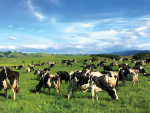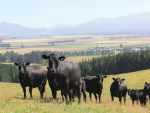
BVD Control Begins Long Before You See A Problem
Bovine Viral Diarrhoea (BVD) is sometimes viewed as a dairy industry issue, but the reality is that the disease can have serious consequences for beef breeding herds as well.
 increase font size
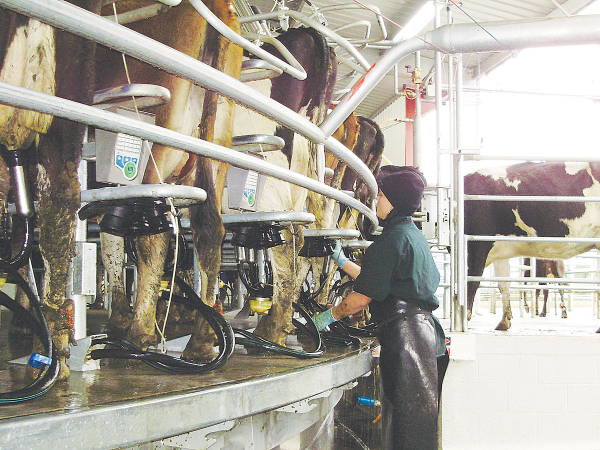 According to a study from the Riddet Institute, OAD milking can increase or lower the amounts of proteins in milk.
Once-a-day milking (OAD) can increase or lower the amounts of proteins in milk, according to a new study published in the journal Dairy.
The study was conducted by Riddet Institute PhD student Marit van der Zeijden as part of her PhD looking at the comparison between OAD milking and twice-a-day (TAD) milking.
The study found significant differences in the proportion of some proteins, depending on the milking system used.
"Milk from a OAD milking system contained higher proportions of as2 casein and k-casein and lower proportions of a-lactal-bumin," says van der Zeijden.
She says this could have implications for milk processing and quality, as gelation and heating properties are impacted by these proteins.
Van der Zeijden says this was the first study to look at protein composition across the whole milking season, rather than a single sample. Most similar studies also examined outputs of cows temporarily switched to once-a-day rather than cows best suited to the regime.
Bovine milk from cows at two Massey University research farms in Palmerston North were compared in the study, one on OAD milking and one TAD. Both farms were pasture-based feeding systems, with higher dry matter supplementation on the TAD farm.
The cows were also as homogenous as possible, with nine cows from each system selected comprising the same make up of Holstein-Friesian (3), Holstein-Friesian x Jersey cross (3), and Jersey (3). Van der Zeijden took full-milkings samples at nine pivotal stages of the milking season - three at the beginning of the season, three in the middle, and three towards the end. Samples were also categorised by the day in the lactation stage the cow was in on the day of sampling (early, mid, and late). The TAD cows had milk from the two milkings combined.
She says many factors can affect protein composition, including the time in the season and the lactation stage of the cow, from calving to drying off time when protein and fat increase as milk yields decrease.
Bovine Viral Diarrhoea (BVD) is sometimes viewed as a dairy industry issue, but the reality is that the disease can have serious consequences for beef breeding herds as well.

Animal health company Bovonic is gearing up for its next stage of growth after increasing New Zealand sales of QuadSense by more than 50% in the last 12 months, including a record quarter for the business this year.
With lambing underway in many regions, Beef + Lamb New Zealand is encouraging farmers to put together a wellequipped lambing kit to help minimise lamb losses, particularly in bad weather.
Bovine Viral Diarrhoea (BVD) remains one of the most significant infectious diseases affecting New Zealand dairy herds.
Bovine Viral Diarrhoea (BVD) is sometimes viewed as a dairy industry issue, but the reality is that the disease can have serious consequences for beef breeding herds as well.


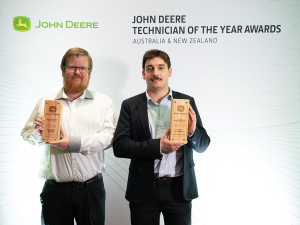
Leading John Deere technicians and apprentices from New Zealand and Australians were recognised at the recent sixth annual JD Technician of the Year Awards, held in Brisbane.
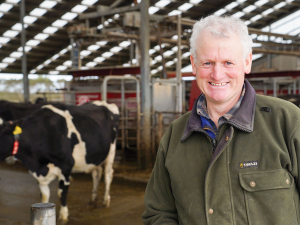
In Dacre, near Invercargill in New Zealand’s South Island, Bruce Dinnington is running a dairy operation unlike any other.
A free online platform aggregating governance vacancies across rural and regional New Zealand has been launched.
Environment Minister Nicola Grigg has announced details of a new rural plastics recycling scheme.
Agricultural drone operators say that a government decision to allow lower-risk drone work without certification won’t lower standards but drive innovation and efficiency.
OPINION: Warning bells are ringing in the arable sector.