China No Longer Just A Commodity Story - Luxon
China remains New Zealand’s biggest market, taking $23 billion of our exports, but it’s no longer a commodity story, says Prime Minister Christopher Luxon.
 increase font size
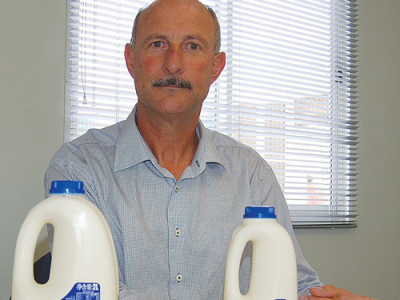 Green Valley Dairy chief executive Corrie den Haring.
Green Valley's exports of fresh milk to China over five years have gone from “strength to strength to strength,” says general manager Corrie den Haring.
The company, located just south of Auckland, is exporting at least 20 tonnes a week to China.
“We are just upgrading some lines at the moment to be able to significantly increase that area,” he told Dairy News.
The milk is flown direct and marketed in the clear PET bottles (similar to the Lewis Rd bottles Green Valley packs).
“It showcases the product…. It looks like a glass bottle and the product really shines.”
In China consumers pay about the equivalent of $10 for a 1L bottle or $20 for 2L.
While the product tends to be bought by more affluent Chinese, den Haring says imported fresh milk is increasingly becoming mainstream.
“There is still a lot of mistrust of food products and a high degree of authenticity and trust is required within that supply,” he explains.
The main consumers of fresh milk are children, and because there are many adults per child “much activity goes into making sure that child gets the best; nutrition is high on the agenda”.
“Milk... is fundamentally understood by parents as a good product, nutritious product.”
den Haring says because Chinese distrust their local product they happily buy New Zealand product and, “dare I say it, not just NZ product; Australia is big in this area, sending a lot of fresh milk into China, and [so does] Korea. It is not just NZers.”
Green Valley’s fresh milk goes to about five destinations in China assisted by the number of airlines now flying from China to Auckland, bringing tourists and trade.
“All those planes take people back to China and many products into China… and a lot will have fresh milk on them.”
Green Valley works with well-connected Chinese partners already established in NZ with interests in the dairy industry and/or food products.
“That seems to be a good model.”
China remains New Zealand’s biggest market, taking $23 billion of our exports, but it’s no longer a commodity story, says Prime Minister Christopher Luxon.
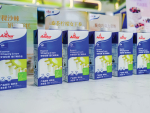
Fonterra is strengthening its foodservice presence in China with the launch of a new cream for professional bakeries at Bakery China 2026 in Shanghai.
OPINION: What does the birth rate in China have to do with stock trading? Just ask a2 Milk Company.
Additional tariffs introduced by the Chinese Government last month on beef imports should favour New Zealand farmers and exporters.
One of the most galling aspects of the tariffs whacked on our farm exports to the US is the fact that, now more than ever, US farmers are being propped up by government welfare – a direct result of Trump’s hardline on its trading partners.

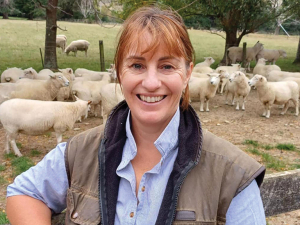
B+LNZ's Wormwise veterinarian Mary Bowron has won the Best Sheep and Beef Vet of the Year Award in recognition of her outstanding contribution to New Zealand’s sheep and beef sector.
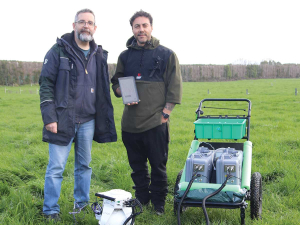
Researchers at Massey University are using a special piece of scientific equipment to improve the measurement of greenhouse gas emissions from pasture soils.
More signs of a booming kiwifruit sector.
OPINION: David Seymour and James Meager's plan to make it easier for farmers and orchardists to operate drones can best be described a 'courageous' move.
New Zealand wool is reaching new heights as air filtration companies move away from synthetic products to biodegradable alternatives.
Opuha Dam's ability to protect South Canterbury communities from major flooding has taken a significant step forward, with Opuha Water Limited (OWL) successfully commissioning a new outlet valve capable of releasing record volumes of water from the dam ahead of a weather event.