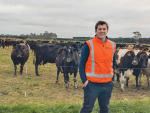
New Dairy Holdings CEO Backs Self-Contained Model
Running a tight and self-contained ship is the key to the success of the country's largest dairy farmer, says Blair Robinson, the new man at the helm of Dairy Holdings.
 increase font size
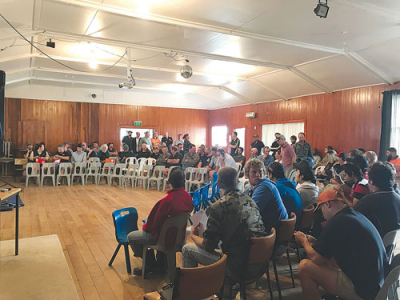 Farmers attending a meeting on M. bovis in Levin last week.
Milk companies are this week taking bulk milk samples from tankers in the southern region of the North Island as national surveillance for Mycoplasma bovis moves into areas with no known infection.
Dairy farmers are being called to meetings to hear about the programme and get sampling packs individually labelled for their farms.
Meetings were held last week in Central Districts – the lower third of the North Island – and sampling has begun of bulk milk from those farms. Each farmer in the district is then expected to provide samples of non-vat milk from any sick, lame or mastitic cows on two dates -- February 14 and February 28.
Each farm’s contracted milk company will manage the collection of samples.
The surveillance is going nationwide after being carried out in regions with confirmed instances of Mycoplasma bovis – South Canterbury, Otago/Southland and Hawkes Bay.
The meetings were to have been held on February 7-9 in Central Districts, then February 13-15 for Canterbury north of the Rakaia, February 14-15 in Taranaki, February 19-21 in Northland and the South Island West Coast, February 19-22 in Bay of Plenty, February 22-23 in the top of the South Island and February 26-28 in Waikato.
Releasing the schedule of meetings, the head of Fonterra’s FarmSource for Southland, Mark Robinson, said while the sampling was strictly speaking a request rather than a demand, the compliance with the scheme so far had been “pretty good”.
If a farm did not supply samples, then the company would determine whether that was a simple error or the farmer’s decision, in which case the company had the option of taking additional samples from bulk milk.
“In addition to that, it’s likely that MPI might track non-compliant farms and then impose on it an absolute mandatory requirement to supply samples under the Biosecurity Act. I’m hoping it doesn’t get to that point,” said Robinson.
“Most farmers are willing to comply -- for want of a better term -- with this because I think the vast majority understand the importance of understanding how far this thing has spread.”
The testing is a joint effort by all dairy companies, DairyNZ, DCANZ and MPI, who are all working “really well” together to ensure it goes quickly and efficiently, Robinson said.
“It is important that all farmers in New Zealand who are supplying milk for processing to any dairy company participate.
“The information we gain from the surveillance programme will help MPI make the right decisions about what to do next -- whether that is eradication, which is still very much the intention. If it has spread further than is currently known or expected, then obviously the decision might change.”
It is hoped to have results about 10 working days after supply of the second sample vial. MPI will directly contact any farm with suspect results, while processors will contact farms that test clear.
Running a tight and self-contained ship is the key to the success of the country's largest dairy farmer, says Blair Robinson, the new man at the helm of Dairy Holdings.
OPINION: It's no surprise that "world-class biosecurity" continues to dominate as the top priority for agribusiness leaders, holding the number one spot for the 16th consecutive year in KPMG's latest agribusiness report.
Compensation assistance for farmers impacted by Mycoplama bovis is being wound up.
New Zealand's world-first Mycoplasma bovis eradication programme is making great strides but this isn't the time for complacency, says Ospri.
A national pest management plan to eradicate Mycoplasma bovis (M. bovis) will come into effect by the end of this year.


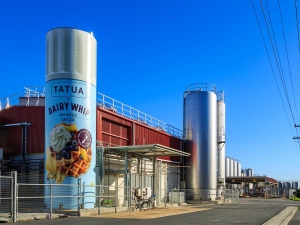
Waikato milk processor Tatua has again declared a record milk payout to farmer shareholders, leaving other processors in the dust.
A Labour-led Government won’t be bringing back the controversial freshwater rules of 2020.
National’s much-touted free trade deal with India featured in the Rural Issues Debate at Mystery Creek, Hamilton on Wednesday night.
New Zealand's 2026-27 freshwater fishing season has opened, with anglers encouraged to head to rivers and lakes over the coming days as conditions look favourable across much of the country.
Central Otago District Council (CODC) has voted against a plan to spread treated sewage sludge from Cromwell and Alexandra on farmland near Lauder, a decision Federated Farmers says reflects strong opposition from rural residents.
Pāmu has released its FY26 Integrated Annual Report, reporting a Net Operating Profit of $113 million, more than double the $49 million recorded in FY25.




