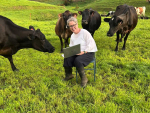
International Day of Rural Women: Two DairyNZ Farmers’ Stories
Today, 15 October, is the International Day of Rural Women, which recognises rural women’s contribution to farming, communities and the environment.
 increase font size
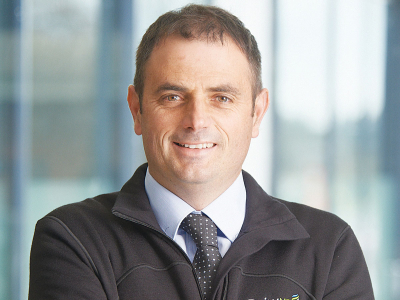 DairyNZ director Ben Allomes.
DairyNZ director Ben Allomes is advocating a paradigm shift in the way the primary sector markets and presents itself as a career.
He says all the negative talk about the dairy industry damages the whole primary sector brand and has the effect of turning young people away from making agriculture their career choice. He says there is a lot of untrue information floating around and some is just political point scoring.
Rather than stand off and see the problems, Allomes wants emphasis to be placed on encouraging young people to be involved in finding solutions to problems.
Based on the experience and knowledge he gained as a Nuffield scholar, Allomes says people who succeed in the industry are leaders, have been through bad times and have an emotional connection to the sector.
“We all know that farming is more than a job - it is part of us and who we are, and that is why we take criticism of our industry in the media and from critics so personally,” he told Dairy News.
“That is why we get affected with mental health because these people are making personal attacks on something that is connected to our purpose and values and our whole being. For us being connected to the primary industry in the way we are is special. It’s such a noble industry - we make food we are responsible for animals - it’s not just a turn up and knock off sort of thing,” he says.
What Allomes is trying to do is influence a review taking place into vocational training for the primary sector – especially in the light of the collapse of Taratahi Agricultural Training Centre. He says the primary sector somehow has to differentiate itself from other career options
He says in the past the farming system has provided for needs of the family that owns the farm and their whole life has been built around that and their involvement in a variety of community activities.
“But now we have created these semi-professional businesses and have people working for us who have to achieve certain targets and outcomes. But these people are reconnected to primary industry as well.
“We have built our industry to work for us and it is our duty to also make it work for our staff otherwise we are just leveraging off their hours their labour to make our lives better, whereas we should be working together to make all our lives better. Let’s create a fit-for-purpose employment system on farm that enables everyone in the business to achieve their goals, not just the owners,” he says.
According to Allomes, farm owners need to have a better understanding of their staff and not expect them to mirror their goals. He points out that an owner may choose to work 80 hours a week because they have a personal financial stake in the business. But he says they can’t expect staff to necessarily embrace that philosophy.
“What’s right for doesn’t mean it’s right for everyone else in my team. My job as an employer is to talk with my team to make sure I know their choices and reasons so I can build my system to enable them to truly exercise what they want - not what I think they want,” he says.
The millennials factor
Millennials, says Ben Allomes are looking for more than just a job. They want to be a stakeholder in a job and connect this with their purpose in life. He says there are plenty of jobs for young people and the primary sector must tune into the needs of young people and make them welcome and feel they are making a positive contribution to the sector.
He says there is a lot of talk about ongoing changes in the primary sector and that jobs will disappear. Allomes believes jobs may change, but the need for good staff will not.
“This means that we have to connect and appeal to those, who for want of a better word, want to invest in the primary sector,” he says.
This is no small ask and will require significant investment in getting the Ben Allomes positive and innovative messages out to young people – the future leaders of the primary sector.
Today, 15 October, is the International Day of Rural Women, which recognises rural women’s contribution to farming, communities and the environment.
The first major update to the Dairy Cattle Code of Welfare in more than a decade has been released, marking what DairyNZ describes as an important step in ensuring animal welfare standards continue to evolve alongside scientific evidence and on-farm realities.
Have a plan in place for your cows and staff.
DairyNZ deputy chair Cameron Henderson has been re-appointed unopposed for another term.
OPINION: The stats speak for themselves.



Federated Farmers has welcomed new rural policies released by ACT, saying they align closely with its own election priorities.

Rural Contractors NZ says proposed changes to land transport rules for agricultural vehicles are a welcome response by the Government to out of date regulations which have seen members hit with huge fines.
Alliance is calling for final applications for its 2027 Graduate Programme, with applications closing on Sunday 25 October.
Decades piloting planes has ensured vet and farmer David Hayes is focused on safety. So, after a serious accident while welding on farm, he is sharing his experience so others can learn from it.
Canterbury milk processor, Synlait Milk has confirmed Leon Fung as its chief executive officer.
OPINION: Making it easier to collect rainwater and use it to grow crops and livestock is a no brainer.




