Award winner aims to put farmers in the clover
This year's Kate Sheppard Memorial Award recipient will support research to ultimately help New Zealand farmers choose forages for best production and drought resistance.
 increase font size
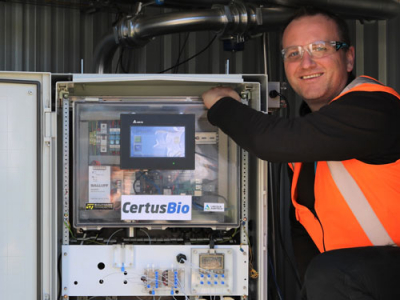 CertusBio chief executive Matthew Jones.
The days of losing dairy products in processing lines and waste streams may soon end.
Lincoln Agritech Ltd says technology it has devised to detect processing losses in dairy plants can save the industry millions of dollars a year and help keep pollutants from waterways.
Commercialised by CertusBio, Christchurch, the automated bio-sensor continuously monitors product lines.
The device, Milk-Guard, uses a lactose-specific enzyme to measure the percentage of dairy products present in waste streams and processing lines, sending the data to a process control room for human monitoring and changes if necessary.
CertusBio chief executive Matthew Jones said that due to the vast quantity of dairy products processed in New Zealand, large amounts of valuable products could be lost quickly.
“Dairy plant operators will be able to improve the resource and energy efficiency of their plant processes by reducing losses of valuable dairy products,” Jones says.
This year's Kate Sheppard Memorial Award recipient will support research to ultimately help New Zealand farmers choose forages for best production and drought resistance.
A Lincoln-based wool products company believes it offers a glimmer of hope against the increasing negativity currently saturating New Zealand’s strong wool industry.
The “mythology” of regenerative agriculture and lack of scientific evidence has prompted two renowned plant scientists to write to Ag Minister Damien O’Connor.
New research from Lincoln University has revealed that the genetic disposition of dairy cows could significantly reduce nitrate leaching.
Lincoln University has unveiled plans for what is expected to be a globally-unique Energy Demonstration Farm to help the primary sector meet its future zero-carbon obligations.
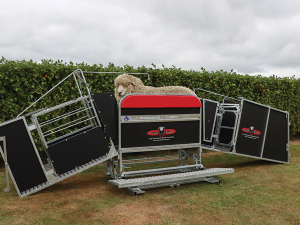
Oamaru-based livestock handling specialist Te Pari has bought Combi Clamp, the New Zealand manufacturer of Combi Clamp manual sheep handlers.
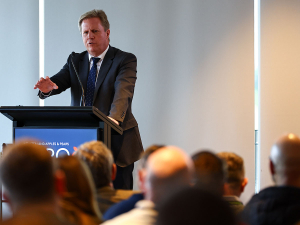
Agriculture Minister Todd McClay has admitted that a scheme bringing workers from Pacific nations to work on orchards has become too hard to navigate but says changes are coming.
A new app designed in New Zealand aims to help sheep, beef and deer farmers capture, analyse and use body condition score data more effectively.
Canterbury farmer Andy Macfarlane has been appointed to the board of AgriZeroNZ, the public-private partnership designed to accelerate the development and deployment of emissions reduction tools for New Zealand farmers.
For over 50 years Mel Ewers has been supporting the apple sector navigate through compliance and quality assurance issues.
The apple sector is enjoying a bumper harvest season.