Feds Back National’s 19 Farming National Standards
National’s pledge to introduce 19 new national standards shows the party is serious about getting Wellington out of farming, Federated Farmers says.
 increase font size
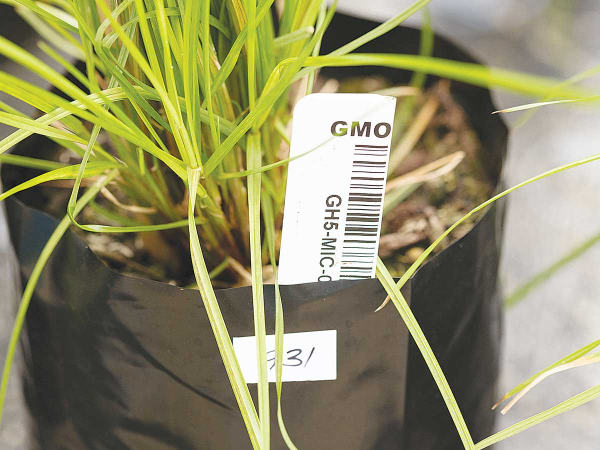 Under current rules, gene editing in New Zealand is only allowed in the lab.
Dairy farmers and scientists are backing the Government's decision to introduce legislation overturning a long-term ban on gene technology.
However, they warn that pockets of resistance remain, and about the need to hit the sweet spot and the need to allow for all types of farming.
DairyNZ science advisor Dr Bruce Thorrold says dairy farmers want choice.
While welcoming last week's government announcement, Thorrold suggests a regulated approach where everyone can work together.
"It is time to revisit the regulations governing genetic technologies in New Zealand as the science has advanced rapidly in recent years," he says.
"As farmers and growers look for solutions to sector-wide issues, we should explore all promising avenues that could help with the challenges we face. However, we need to tread carefully and ensure a regulated approach that considers the wide range of views, opportunities, and risks, and provides appropriately for coexistence."
DairyNZ has been engaging with farmers and Thorrold says that while there are a wide range of views, a clear theme that is emerging is choice, and the need to allow for all types of farming.
"While many are in support of changes for environmental and productivity gains, some oppose change to protect tikanga and markets.
"As a science-led industry-good body, being able to test these types of technologies within our unique New Zealand pastoral farm systems is important in terms of assessing both opportunity and risk."
Federated Farmers president Wayne Langford says Feds have been advocating for a national conversation about the use of technologies like gene editing for a long time now.
Langford notes that the last time New Zealand took a serious look at the potential use of these technologies was in the early 2000s, but the science has continued to develop at breakneck speed since then.
"Our collective understanding of some of the big global challenges we're all facing, like climate change and biodiversity loss, has also continued to quickly develop over that time.
"This announcement from the Government opens the door for us to consider all the potential benefits, weigh them up against any risks, and decide how we want to move forward together as a country."
The science community is also backing lifting the ban on gene technology but warns that divisions within the population will remain.
Genetics expert Professor Michael Bunce, University of Otago, says that asking if gene editing is 'good or bad' is like asking if the internet is 'good or bad'.
"We need to step past this binary state. It requires us to zoom in on a given application to make the 'call' as to what benefits society, environment and the economy, and what might be damaging or an unacceptable risk.
"This is a technical and nuanced conversation for New Zealand to have. It requires us to pick up our DNA 'game' a little, and park debates from last century when gene technologies were still in their infancy. We may also have to accept that the country may remain divided on this topic - some New Zealanders will remain opposed to gene editing."
AgResearch science team leader Richard Scott notes that in NZ there has been decades of inaction on regulations for genetic modification and gene editing.
"Much of the rest of the world has already made changes, or is in the process of making changes, to accommodate gene technologies that are now more precise and safer than they have ever been. In some cases, these technologies have been safely used overseas for decades now."
He points out that the approach proposed for New Zealadn, which excludes "low-risk and well-understood gene technologies" from regulation, is sensible.
National’s pledge to introduce 19 new national standards shows the party is serious about getting Wellington out of farming, Federated Farmers says.
Today, 15 October, is the International Day of Rural Women, which recognises rural women’s contribution to farming, communities and the environment.
Mobile phone coverage and reliability are deteriorating in rural areas, and farming families are bearing the cost, according to a Federated Farmers survey.
Central Otago District Council (CODC) has voted against a plan to spread treated sewage sludge from Cromwell and Alexandra on farmland near Lauder, a decision Federated Farmers says reflects strong opposition from rural residents.
Federated Farmers has called on Central Otago District Council (CODC) to drop or vote down a plan to truck sludge from Alexandra and Cromwell to farmland near Lauder, warning it would compound an "outrageous" situation created by a separate council's decision weeks earlier.


Mark Hooper has been appointed the new chair of NZPork, the industry organisation representing New Zealand pig farmers.

As the India-New Zealand free trade agreement enters into force, New Zealand’s apple industry has reaffirmed its commitment to the long-term development of India’s apple sector.
Fonterra shareholders can begin voting on Tuesday 20 October in the 2026 Board of Directors’ election, a Co-operative Council election in one Ward, and seven Annual Meeting resolutions.
National’s pledge to introduce 19 new national standards shows the party is serious about getting Wellington out of farming, Federated Farmers says.
The National Party’s policies to make it easier to grow fresh vegetables, secure reliable water and energy and simplify farm planning are practical changes that will give growers the confidence to invest, according to Horticulture New Zealand (HortNZ).
Fonterra Co-operative Group chief financial officer Andrew Murray has resigned to take up a role outside the dairy giant.