What Would Synlait Be Worth to Fonterra or a2 Milk?
Speculation of a possible joint move by Fonterra and a2 Milk to buy Synlait raises a much bigger strategic question, says agribusiness expert Dr Nic Lees.
 increase font size
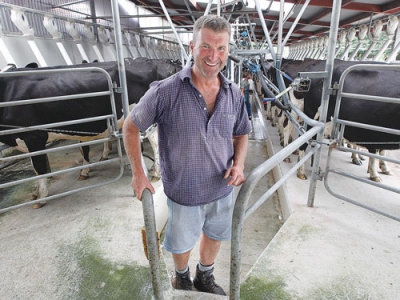 Randal Inch, North Canterbury, enjoys milking a small herd.
As the cows cram into Randal Inch's milking shed you realise space is at a premium on this small North Canterbury dairy farm on the outskirts of Rangiora.
But still it's all smiles: the small herd farmer was sharing jokes with his farm worker Mark when Dairy News visited to discuss the results of a recent Lincoln University survey of 330 small herd dairy farmers.
One key finding was that small herd dairy farmers appear more content with their lot than bigger dairy farmers.
Inch said it all had to do with scale: smaller farms wouldn't want the debt of larger farms but wouldn't get the economies of scale the larger farms get; smaller farms tended to be more traditional and labour intensive and not as cost efficient.
Inch said despite this they had looked hard at the bottom line and were doing well. Carrying 10% fewer stock than a year ago they were producing more milk than back then and even though the overnight Global Dairy Trade auction was down again they were tracking well.
Inch's family has farmed at Bellgrove for 96 years and the 230 cows they now have are grazed on the 94ha they own or lease.
Because the farm is close to Rangiora, Inch has had do big farm things like installing an underpass under a main road for easy access to 34ha on the other side of the road. Before the underpass they needed four people to manage traffic.
Citing the benefits of a small herd operation, Inch said you get a taste of everything: one day fencing, the next day digging up thistles, and everything in between.
However on a bigger farm team there could be a downside: you could be on the irrigation roster or the herd round-up for a month, not giving you the variety of work you experience on his farm.
There's a flipside though: Inch said he'd only had four days off so far this year and wasn't banking on getting anymore time off until June. With a larger team you can allow staff to have time off.
The survey also highlighted the preference of small herd farmers for getting information in face-to-face meetings or at field days. Inch agreed, saying, "farming is forever changing: if you stand still you're going backwards" and "there is wonderful technology out there for farming: it's the cost of it that's a concern".
The survey also showed there was little interest in succession planning, which Inch disagreed with, saying, "they're fools: it's much better to deal with that when people are alive and can voice their opinions than trying to sort it after they have died".
Describing his style of farming as a bit old-school, he and Mark agreed that compared to a big farm it was easier to control things, more hands on. They felt like they were getting somewhere and the work was more personal, hence they seemed genuinely happy in their work.
Speculation of a possible joint move by Fonterra and a2 Milk to buy Synlait raises a much bigger strategic question, says agribusiness expert Dr Nic Lees.

Lynnette Hudson's 30-year obsession with Pinot Noir was sparked working vintage in Burgundy, seeing how subtle changes in terroir were expressed in the glass. It was, she says, "an elightening moment in every way".
A four year trial has reaffirmed that mixing plantain into dairy pastures can help reduce nitrogen losses to freshwater while maintaining milk production and profitability, say researchers.
Twenty five secondary school students from around New Zealand recently completed a three day residential programme designed to explore career opportunities across the food and fibre production supply chain.
A Lincoln University student is set to become the first person to contest both the Young Viticulturist and the Young Winemaker national titles in one year.


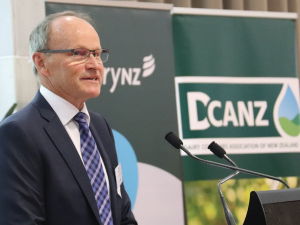
Dairy processors are ready to further boost New Zealand’s export earnings but want the incoming government to match their ambition with good policy.
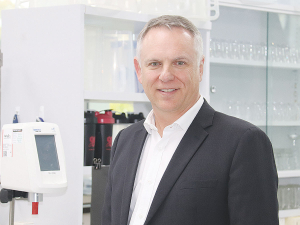
Massey University is best placed to solve the “problems” facing the dairy industry, says vice chancellor, Pierre Venter.
Synlait's longest serving employee – a man who joined the Canterbury-based milk processor even before it began processing milk – is now its newest executive.
A dairy industry leader believes eradicating the common and costly disease, Bovine Viral Diarrhoea (BVD) is within reach.
A farmgate milk price of $10/kgMS this season is firming up as milk powder prices soar and the New Zealand dollar weakens.
Federated Farmers has welcomed new rural policies released by ACT, saying they align closely with its own election priorities.