Southerly Winds Hit Taranaki Dairy Pasture Growth
A spate of southerly winds bringing cold temperatures has presented challenges for Taranaki dairy farmers.
 increase font size
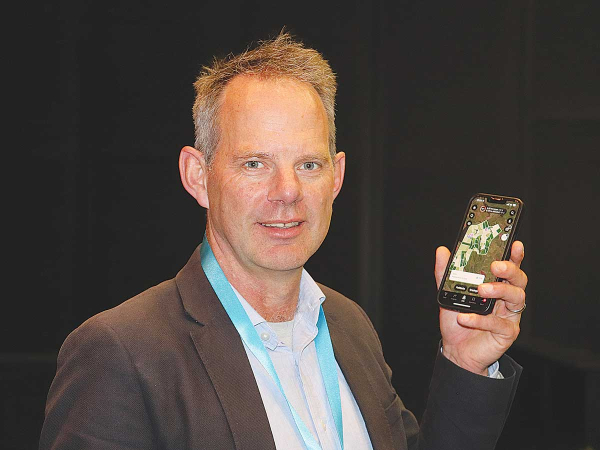 AgFirst chief executive James Allen says the role of the farm consultant has changed over the years.
The farm consultant of the future will need to fully understand the various new emerging technologies and at the same time have good interpersonal skills to relate to clients.
That's the essence of findings from Nuffield scholar and AgFirst chief executive James Allen about defining the role of the next generation agricultural consultants.
Speaking at the annual conference of the NZ Institute of Primary Industry Managers (NZIPIM) in Hamilton recently, Allen said the role of the farm consultant has changed over the years and that the pace of change is now quite rapid with such technologies as AI.
"The traditional role of the farm advisor has been one around tech extension or knowledge transfer. Now we are shifting to a position where knowledge is going to become more commoditised and you are going to be able to use ChatGPT or some AI search engines to find out what you want to know quickly," he says.
Allen says the farm consultant of the future must have a deep understanding of the various technologies and databases available and know how these can directly benefit the farmer client.
"The other bit is still the soft skills: the interpersonal skills, running businesses, working with families and driving that behaviour change."
Allen says in the future there will be a continuation of the trend for fewer and larger farms and that most of these will be whart he called "family corporates". He says, compared to smaller farms, the larger farms tend to place more emphasis on reporting and information requirements.
He says the role of the consultant will be to unscramble and make sense of data and present the information so that farmers can use it to make better decisions and improve their operations.
"AI and technology are here to stay, and people should not shy away from it, rather just start experimenting with it and what it can do for their business.
"We are moving to precision agriculture whether we like it or not, so that goes down to managing the farm by the square metre and by the animal, not by the herd. Our farms are so big these days, we don't understand what each sheep and cow is doing, but we now have technology to do that. In some ways it's back to the old days, thanks to technology," he says.
Technology in all its forms will likely mean some changes for the rural professional companies that service the farming industry.
James Allen points out that the days of a farm consultant sitting down with a calculator and working out covers and grass growth is over. Most farmers can work this out for themselves thanks to automation. But he sas with new emerging technologies there will be a need for specialists.
He says the larger consultancies may employ specialists, while the small firms may retain their own niche.
"I tink it will be a bit of both. For example, in AgFirst I have a ruminant nutritionist and and HR specialist and LEC mapper, so I can call on any of these specialists for a particular farm.
"We will continue to see an evolution of that, so you will see people with really specialist skills, but equally you still need that people person with strong business management skills to tie it all together," he says.
Allen says he's been talking to universities around the country about the implications stemming from his report and he says, "they get it". They are starting to think about how they can best meet the needs of industry in the future.
He says while there may need to be changes to degree courses, it is essential for farm consultants of the future to have to have a core understanding of the basic principles of farming.
"The likes of an Ag Science or B Ag Com that gives an understanding of soils, pasture and livestock and how to integrate these is critical. What we need is overlayed with that is a new set of skills around such things as database management, GIS software skills and getting the best out of AI technology," he says.
A spate of southerly winds bringing cold temperatures has presented challenges for Taranaki dairy farmers.
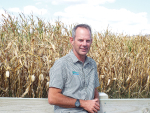
Surprised, humbled and quite thrilled. That’s the reaction of James Allen, one of the founding partners and now chief executive of AgFirst, on being made a life member of the Institute of Rural Professionals.
A warning to dairy farmers not to expect the same good conditions that they experienced last season, has been issued by a leading farm consultant.
As fuel and fertiliser prices rise and with uncertainty in the future, farmers are being urged to go over their budgets with a fine-tooth comb.
For the most part, dairy farmers in the Waikato, Bay of Plenty, Tairawhiti and the Manawatu appear to have not been too badly affected by recent storms across the upper North Island.


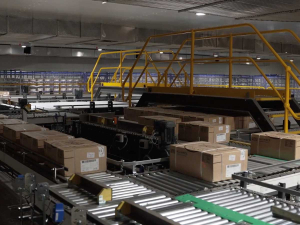
Alliance is calling for final applications for its 2027 Graduate Programme, with applications closing on Sunday 25 October.
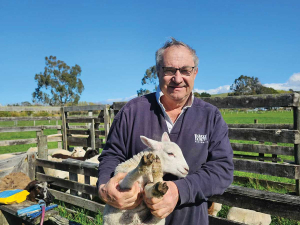
Decades piloting planes has ensured vet and farmer David Hayes is focused on safety. So, after a serious accident while welding on farm, he is sharing his experience so others can learn from it.
Canterbury milk processor, Synlait Milk has confirmed Leon Fung as its chief executive officer.
OPINION: Making it easier to collect rainwater and use it to grow crops and livestock is a no brainer.
As part of its Election 2026 coverage, Rural News asked political parties how they would help pull the arable sector out of the doldrums. Here's what they said:
Farmers are being encouraged to rethink how they manage waste on farm with the launch of ruralwastesorted.co.nz, a new website bringing together practical tips, real farmer experiences and resources.