
Federated Farmers Urges Farmers to Vote on November 7
With less than a week to go before voters choose the next government, Federated Farmers has a simple message to its members - get out and vote.
 increase font size
 In parts of Manawatu cows are just in a paddock being fed supplement.
Dairy farmers in the lower North Island are working on protecting next season, according to Federated Farmers dairy chair Richard McIntyre, who farms just north of the Horowhenua township of Levin.
The area has been suffering from a drought for the past few months, but in the last few weeks there has been some rain, which McIntyre says has helped the grass that was lying dormant to start growing again.
But he warns that some dairy farmers who were in the black financially before the drought, may now at the end of the season find themselves in the red.
He says while the pastures may look greener than they have been, the reality is that pasture covers are low and most farmers are still feeding out, cutting into their winter supplements.
“For example, our autumn calvers have not eaten a blade of grass for the last month. They are just in a paddock being fed supplement because that is how we can feed them the best now,” he says.
McIntyre says a lot of farmers are looking at their pasture which may have died and deciding whether they need to over sow to get things up and running. He says some farmers are looking at drying off some of their cows early with the aim of meeting the 1st of June target for their pasture covers. Others he says will be purchasing more supplements and applying nitrogen strategically to carry them through the winter and to make up for the reserves they have already cut into.
But McIntyre says there has been a positive side to the drought.
“It’s been relatively localised and there are areas not too far away where there are surpluses of feed. So, it’s been easier to source feed than in other years and the price has been more reasonable as there is a lot of surplus feed available and less demand for it.
 |
|---|
|
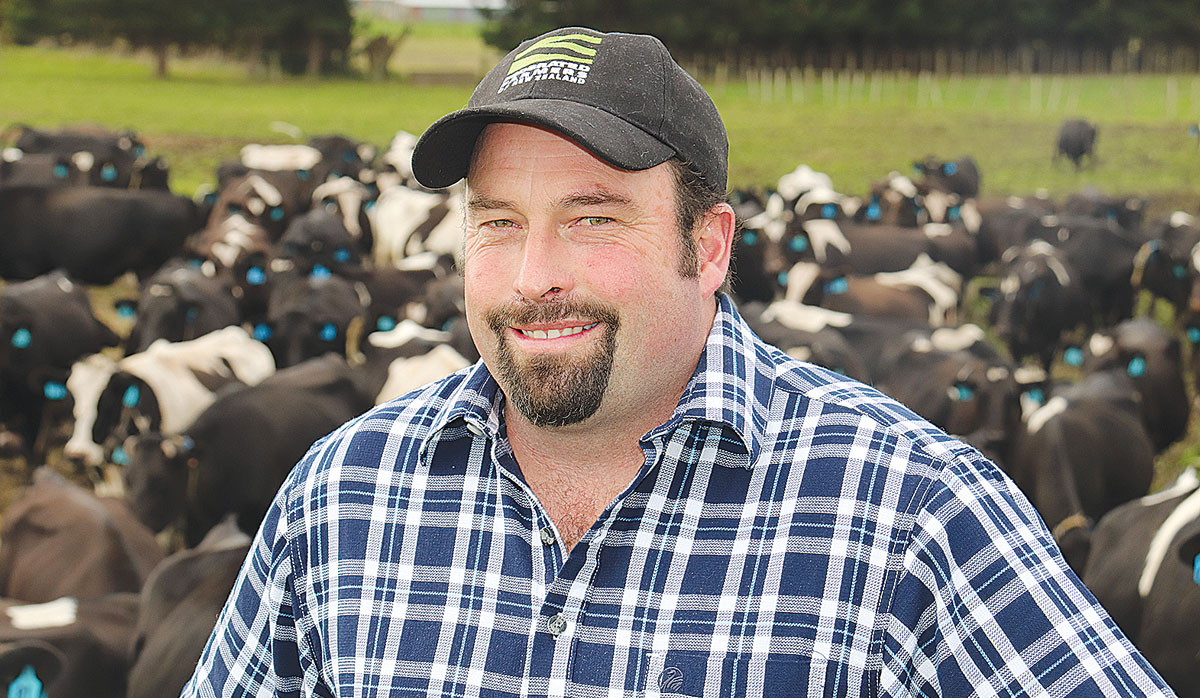
Feds dairy section chair Richard McIntyre |
“A lot of additional maize has been grown this year that hasn’t got a home and so it’s been possible to buy this at a reasonable price.”
On the negative side, McIntyre says farmers like him have had to buy extra feed they didn’t budget for, but the positive side is that the cost of feed is cheaper.
Looking to next season, McIntyre says this is the time of the year that everyone takes out their crystal ball and tries to predict what the payout may be. He says he favours a cautious conservative approach and says he’s working on a budget of the payout being around the $8 mark.
“You can always handle extra money coming into your budget but it’s hard to find money when things go wrong,” he says.
With less than a week to go before voters choose the next government, Federated Farmers has a simple message to its members - get out and vote.

Federated Farmers has welcomed new rural policies released by ACT, saying they align closely with its own election priorities.
A farmgate milk price of $10/kgMS this season is firming up as milk powder prices soar and the New Zealand dollar weakens.
Federated Farmers is backing Feilding High School’s call to keep Agriculture and Horticultural Science as a standalone subject in Year 11.
National’s pledge to introduce 19 new national standards shows the party is serious about getting Wellington out of farming, Federated Farmers says.


OPINION: As election day looms, rural NZ seems to have pressed the pause button – held somewhat in limbo on an orange light.
Will drones be the answer to tackling the problem of wasp and hornet nests high up in trees and other inaccessible places?
Canterbury milk processor Synlait has come through tough times and is now ready to scale up from a stable base, says its newly confirmed CEO Leon Fung.
NZPork says a ham made in New Zealand is not necessarily made from New Zealand pork.
Rural Contractors NZ says proposed changes to land transport rules for agricultural vehicles are a welcome response by the Government to out-of-date regulations which have seen members hit with huge fines.
With New Zealand’s greenhouse gas emissions in the spotlight, Auckland scientist Nathan Balasingham says there’s a better way to tackle the problem than shrinking cow numbers or fertiliser usage.