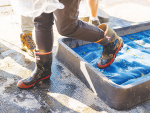
Biosecurity Ranked Top Priority In KPMG Agribusiness Agenda 2026
According to new research, industry leaders have ranked world-class biodiversity as the number one priority for the 16th year in a row.
 increase font size
 Ian Proudfoot.
The only certainty for dairy farming is that the future for every farmer in New Zealand will be different from the realities they face today.
That’s the message from Ian Proudfoot, KPMG global head of agribusiness, who will speak about the future of food at the South Island Dairy Event (SIDE) at Lincoln University on Tuesday June 27.
Described as a leading NZ food futurist, Proudfoot has presented widely on the opportunities and challenges facing agribusiness -- particularly on how food will be produced, processed, distributed and consumed in the future.
He warns dairy farmers that the major threat to NZ’s primary sector is complacency.
“Many farmers believe that because we are good at growing high-quality food, fibre and timber products, all we need to do is keep doing what we have always done.
“While it is comforting, this is built on the belief that change will exist around us but not affect the markets we sell to, or the preferences of the consumers who eat our food.
“The reality is markets are changing at a pace not seen before, and the impact this has and will continue to have, on dairying is profound.
“While we pride ourselves on producing a clean green wholesome product in our milk, it is easy for us to lose sight of the fact that to the consumer, natural cow dairy products may be just one of their 10 choices of milk, including coconut, almond, cultured, sheep milk and others.
“What influences their decision to choose our cow milk is crucial. Will these customers continue to seek out our products as innovations and will changes in the agri-food sector deliver new choices to traditional customers?”
Proudfoot says it is reasonable to expect that many of these customers may substitute cheaper or more sustainable alternative products, leaving our farmers competing in lower-value and increasingly commoditised markets.
He is often asked how individual dairy farmers can influence what happens further along the value chain.
“First, understand that you’re not just growing a product, you’re producing food for people. Everything you do onfarm therefore needs to reflect what the consumer expects and what they want to experience.
“The wider community is becoming increasingly interested in where its food comes from and consequently is expecting more from farmers. The people who have a long-term future in dairying are those who understand they are in the business of producing food -- not milking cows -- and what their consumers think of their dairying practices matters.
“Don’t be comfortable being part of a co-op; question its direction, take a role in governance, be part of the value chain. Invest in getting to where you want to be; don’t let the future just happen.
“Start today; every day you delay change puts you a day further behind your competitors.”
According to new research, industry leaders have ranked world-class biodiversity as the number one priority for the 16th year in a row.

Biosecurity remains the top priority for agribusiness leaders, according to KPMG’s 2025 Agribusiness Agenda released last week.
Biosecurity remains the top priority for agribusiness leaders, according to KPMG's 2025 Agribusiness Agenda released last week.
OPINION: In the same way that even a stopped clock is right twice a day, economists sometimes get it right.
OPINION: Noted economist and self-promoter Cameron Bagrie took one look at KPMG's recently released Financial Institutions Performance Survey on banks and zeroes in one key number that suggests banks are so risk averse in this country that they are probably stifling growth and innovation.


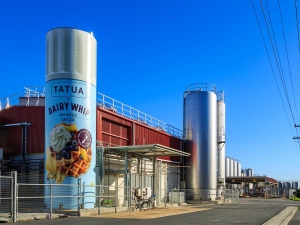
Waikato milk processor Tatua has again declared a record milk payout to farmer shareholders, leaving other processors in the dust.
A Labour-led Government won’t be bringing back the controversial freshwater rules of 2020.
National’s much-touted free trade deal with India featured in the Rural Issues Debate at Mystery Creek, Hamilton on Wednesday night.
New Zealand's 2026-27 freshwater fishing season has opened, with anglers encouraged to head to rivers and lakes over the coming days as conditions look favourable across much of the country.
Central Otago District Council (CODC) has voted against a plan to spread treated sewage sludge from Cromwell and Alexandra on farmland near Lauder, a decision Federated Farmers says reflects strong opposition from rural residents.
Pāmu has released its FY26 Integrated Annual Report, reporting a Net Operating Profit of $113 million, more than double the $49 million recorded in FY25.