What Would Synlait Be Worth to Fonterra or a2 Milk?
Speculation of a possible joint move by Fonterra and a2 Milk to buy Synlait raises a much bigger strategic question, says agribusiness expert Dr Nic Lees.
 increase font size
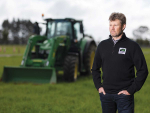
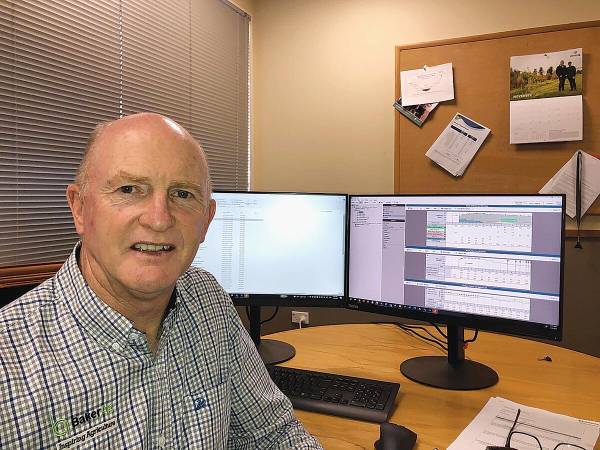 BakerAg director Chris Lewis.
A large slice of the $3.2 billion proposed capital return for Fonterra farmer shareholders could end up with the banks.
Debt reduction is the overwhelming preference of most Fonterra farmers, if a survey of a small group is anything to go by.
The survey, carried out by agribusiness consultants BakerAg, received responses from 28 Fonterra shareholders. Debt reduction was the first choice of 75% of respondents, with 10% preferring on-farm investment and another 10% succession. The responses were published in BakerAg’s monthly publication, MilkLines.
BakerAg dairy team director Chris Lewis says while the sample is small, the survey provides insight into both the financial priorities of some farmers and the cultural mindset underpinning their investment and succession decisions.
“While the sample size is modest, the responses offer a valuable snapshot of attitudes, priorities, and strategies.”
Lewis says the overwhelming preference for debt reduction highlights the risk-averse and financially disciplined stance of most farmers.
“Reducing debt provides immediate security, lowers interest obligations, and improves long-term resilience. Notably, none selected land purchase, retirement or personal spending as their priority. Underscoring that farmers view this capital as core business-first rather than growth or lifestyle-oriented.”
Fonterra farmers will vote at a special general meeting this week on a board proposal to sell its global consumer and associated businesses for $4.22 billion to French company Lactalis. If the divestment is approved, Fonterra is signalling a capital return of $2/share, which is equivalent to $3.2 billion.
In the survey, respondents were asked to break down percentages of allocation. Debt repayment dominates with 75% of respondents saying this was first choice and on average they would put 72% of the Fonterra Brands sale distribution into debt reduction.
According to Lewis, applying that 72% to the $3.2b of distribution is $2.3b could be going back to banks.
“Several respondents did go on to say that debt reduction was the first step in a process that would ultimately enable future land purchase or succession.”
He noted that nearly 26% have land purchase as their second option.
“If 1 in 4 Fonterra shareholders are looking to buy another farm, that must equal strong demand and an inevitable push in real estate prices.
“Investments, both on- and off-farm, absorb much of the remainder. Several respondents noted that their debt was already low and that they were exploring alternatives that included purchasing urban houses.”
Lewis says that the survey paints a clear picture of farmers’ priorities and what might happen following the Fonterra Brands sale.
“The proceeds are largely treated as an opportunity to strengthen balance sheets rather than immediately fuel expansion or consumption. Farmers remain conservative, debt-focused, and reliant on trusted advisors. These decisions will likely position the sector for future stability and measured growth,” Lewis says.
Speculation of a possible joint move by Fonterra and a2 Milk to buy Synlait raises a much bigger strategic question, says agribusiness expert Dr Nic Lees.

In the past, much has been made of the concept of farm to fork, but an Australian expert in food science and marketing with experience in the dairy industry, Dr Angeline Achariya, says the reverse of this slogan is critical to win modern day consumers.
A four year trial has reaffirmed that mixing plantain into dairy pastures can help reduce nitrogen losses to freshwater while maintaining milk production and profitability, say researchers.
Fonterra has opened its upgraded Chengdu Application Centre, bringing New Zealand dairy expertise closer to customers in one of China's fastest-growing regions.
Tatua chair Stephen Allen says he leaves the co-op with a deep sense of gratitude for the people who have contributed to its success.

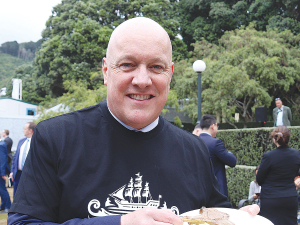
OPINION: In politics, credibility is and should be big. It must surely rank higher than charisma, which is quite trite and superficial. Yet, voters nowadays are often wooed and influenced by how someone looks or talks at a superficial level. TV plays a huge role in this.
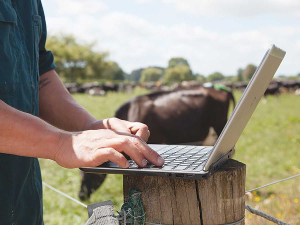
Farmers can spend less time on paperwork, thanks to a new data sharing agreement between DairyNZ’s DairyBase and LIC’s MINDA software.
Kaikōura families affected by July's severe storm have found a practical solution to a problem that's kept some children away from regular schooling for weeks: a washed-out section of Inland Kaikōura Road, which has stopped the local school bus from running its usual route.
Rural New Zealand is welcoming the Government’s recent package of rural healthcare initiatives.
Interest in agritech and production animal systems has prompted Massey University's School of Agriculture and the Environment to new majors to its popular animal science degree.
Ballance Agrinutrients chief executive Kelvin Wickham says despite a tough year, he is pleased the business has returned to profit.