Rural NZ Welcomes $8.5m Government Health Package
Rural New Zealand is welcoming the Government’s recent package of rural healthcare initiatives.
 increase font size
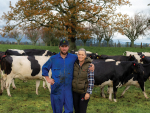
 Fiona Gower.
Farmers are calling for an improvement of the rural broadband network.
Rural Women New Zealand (RWNZ) says improving connectivity is vital to successful business, health and safety, education and social connection in rural communities.
National President, Fiona Gower, says RWNZ would like to see the Wireless Internet Service Providers (WISP’s) included in the Government’s new rural broadband funding.
“We would also like to see a commitment to improving cellphone coverage in rural New Zealand because with only 50 per cent coverage across New Zealand, it is the rural communities missing out. COVID-19 has highlighted the issue of digital inequity with incredibly slow rural internet speeds and landlines overloading,” she says.
Gower says children now being schooled at home are often struggling to get to their online classes.
“Across the board, self-isolation and restrictions on bubbles mean that it is vital that communities have the tools to connect, at the very least, to maintain mental wellness,” says Ms Gower.
Federated Farmers vice president Andrew Hoggard says surveys conducted by his organisation show there are some large parts of the rural countryside which still have slow, or no, access to the internet.
“The vast majority of New Zealanders living in towns and cities have absolutely no idea how bad internet access still is in some parts of the country,” he says.
Hoggard says Feds surveys show internet speeds for rural users are still likely to make it difficult for them to complete tasks like internet banking, making orders online and using recruitment websites, not to mention the kids being able to do online schooling.
“If government are looking for a shovel-ready project, this would be a good one. The shovels are already in the ground.”
Rural New Zealand is welcoming the Government’s recent package of rural healthcare initiatives.

Deputy Prime Minister and ACT Party leader David Seymour says advocacy group Rural Women New Zealand (RWNZ) has submitted against a controversial bill without consulting its members.
Women up and down the country are the glue that hold rural communities together, giving so much to so many, says the inaugural Rural Woman of the year award winner Kate Acland.
Rural Women New Zealand has announced the winners of the 2026 NZI Rural Women Business Awards.
Rural Women New Zealand this month submitted on the Draft Mental Health and a Wellbeing Strategy 2026-2036, because a person's postcode should not determine the quality of their mental health support.



Three men have been sentenced in District Courts after Ministry for Primary Industries prosecutions over animal welfare, food safety and cattle tracing offences.
Fonterra’s 2026 financial year was a year of delivery, with record volumes of milk collected, processed and shipped by the co-op.
OPINION: The Government's decision to reinstate agriculture and horticultural science as a standalone subject from Year 11 is the right one.
Dairy farmers, still holding onto their Fonterra shares despite switching milk supply elsewhere or exiting the industry, now face a stricter share sell-down requirement.
Hamilton-based agritech company Aimer Farming has completed a $3 million capital raise to support its next stage of growth, including a beef farming product due to launch in 2027.
When dairy manager Miriam Lauridsen learned the farm, she was joining held weekly health and safety meetings, she initially thought that was “a bit over the top”. Experiencing that culture changed her mind.