Fall Armyworm in NZ Maize: Four Years of Research
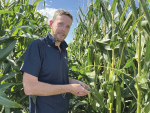
Four years since it was first detected in New Zealand, researchers and growers now know much more about management of maize pest fall armyworm (FAW).
 increase font size
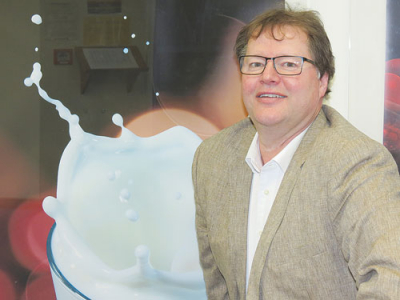 Warren McNabb, Riddet Institute.
Strong evidence is emerging that consumers are suspicious of processed foods, says Professor Warren McNabb.
McNabb, of the Riddet Institute, Palmerston North, is leading a five year, $11 million research project, aimed at producing new high-value milk products.
People want fewer processed foods and would prefer foods they view as more natural. They want to know where their food comes from and the effects of food on their health.
This is a trend will get bigger and bigger, McNabb says.
“People are concerned about the environment, climate change and sustainability and they are starting to add dimensions of that when they think about food. There is a rapidly growing trend towards ‘sustainability nutrition’ from a consumer perspective.”
To meet these consumer trends, the researchers hope to better understand the properties of the various milks; they will look at ways of exploiting these by developing ‘co-products’, e.g. two types of milk mixed together possibly with a plant additive.
The health factor is intrinsic to developing milk products for export, with particular emphasis on increasing the value but not necessarily the volume. That’s why the research is especially ‘value-add’, McNabb says.
“I see NZ as an exporter of agri-foods as being a high-end delicatessen. You have to be the best at what you want to do well; it’s no good being second best.
“How can you crack this high end, these high value substantiated foods? If you make a claim, be it an environmental or sustainability or a health claim, that needs to have scientific substantiation.
“Given the power of social media and the speed at which information gets around you need to have scientific credibility.”
Four years since it was first detected in New Zealand, researchers and growers now know much more about management of maize pest fall armyworm (FAW).
Generative AI in the workplace, trials in the field, and industry-relevant research took centre stage at this year’s Grape Days events in Central Otago, Hawke’s Bay and Marlborough.
Scientists from the Ministry for Primary Industries (MPI) are part of an international team working to develop a low-cost diagnostic tool that could significantly improve food crop production in developing countries.
Scion is running experimental research burns near Christchurch from March 3-14, to test new theories on how wildfires spread under various conditions.
OPINION: The politics of science or is it the science of politics that is driving research in New Zealand?



LIC shareholders have elected a new North Island representative to the co-operative's Board, along with five representatives to its Shareholder Reference Group (SRG), following the company's Annual Meeting held in Invercargill.
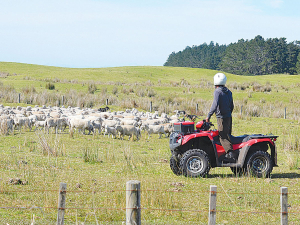
Farmers across parts of Southland and South Otago are continuing to deal with difficult conditions after a prolonged run of wet weather, with pressure building around feed supply, stock management, pasture damage, farm infrastructure and everyday workloads.
Federated Farmers says it welcomes Labour's commitment to reviewing the Sharemilking Agreements Act, calling on other major parties to do the same.
For Canterbury dairy farmers Sian Meijer and Rick Wobben, wearable technology has become one of their most valuable on-farm tools - helping manage 1850 cows across an expansive, high-performing dairy operation while improving efficiency, mating outcomes and day-to-day decision making.
Fonterra has unveiled its annual results for the 2026 financial year, posting $27 billion in revenue and close to $20 billion returned to New Zealand farmer owners and unit holders.
The first major update to the Dairy Cattle Code of Welfare in more than a decade has been released, marking what DairyNZ describes as an important step in ensuring animal welfare standards continue to evolve alongside scientific evidence and on-farm realities.