Open Country Dairy Expands Butter Production with New Plant
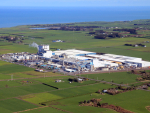
The country's second largest milk processor, Open Country Dairy, is building a butter plant at its Awarua site in Invercargill.
 increase font size
 Farmy Army members fixing fencing on a flood-ravaged farm.
Southland dairy farmers ironically need some good rain to wash the silt off their pastures and help recover from the early February flooding, says Open Country Dairy regional milk supply manager Myles Herdman.
“The majority of farmers are okay, it’s the ones that were close to the rivers that ended up with silt on the pastures are going to have problems,” said Herdman.
“We really need another good rain to clean the pastures up.”
About 10 of the company’s supplying farmers had to shift stock to other farms.
“A lot of them along the rivers have lost their fences. So that’s a major cleanup and it’s a time-consuming clean up because you’ve got to pull all the wires out of the mud and in a lot of cases you’re just better to cut them.”
Herdman praised the way farmers turned out to help each other. One Open Country supplier had 30 people turn up on Sunday unexpectedly to spend the day picking debris out of his fences.
“It’s amazing just how much they do for each other when the chips are down.”
However, those who lost baleage, or whose winter crops went under “might not recover very well,” he said.
The company, whose sole South Island processing plant is at Awarua, near Bluff, picked up milk early from some farms when they knew the water was coming.
“We knew we wouldn’t be able to get back with the rivers rising so quickly,” said Herdman.
“So it was just just a big coordination job, with the transport and communicating with the farmers, knowing what milk was there and what wasn’t there.”
Herdman couldn’t give a precise figure but said “quite a bit” of milk had to be dumped but farmers’ milk losses would be covered by dairy company insurance.
“Anything outside spec... so if it goes 48 hours we have to dump it.”
The country's second largest milk processor, Open Country Dairy, is building a butter plant at its Awarua site in Invercargill.
When American retail giant Cosco came to audit Open Country Dairy’s new butter plant at the Waharoa site and give the green light to supply their American stores, they allowed themselves a week for the exercise.
Seen a giant cheese roll rolling along Southland’s roads?
Farmers supplying milk to Taupo-based processor Miraka are getting a 2024-25 season base milk price of $10.16/kgMS.
New Zealand dairy farmers are set to be the first in the world to receive access to a new digital physical milk pricing tool that enables them to fix the price for their physical milk.
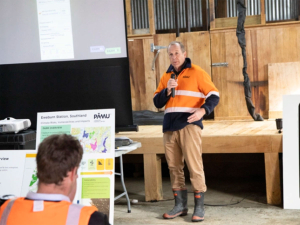
State farmer Pāmu is opening its farm gates this summer in an effort to give the rural sector the opportunity to see how large-scale, multi-system farming is delivering productivity and profitability across New Zealand.
A five-year study has found that the cost of reducing emissions without technology may be significant and unsustainable for Northland dairy farmers.
DairyNZ says Waikato farmers need certainty on Plan Change 1, but they say that certainty must be matched with practical, workable rules and a clear transition that doesn't get ahead of the new resource management system currently under review.
While the Government has moved quickly to make commercial hauliers' lot easier during the current fuel crisis, they appear to be stuck in the creep box when it comes to the agricultural industry.
Waikato farmers have been told that the Government’s new planning system legislation and the region’s Plan Change 1 (PC1) “won’t mesh together very well”.