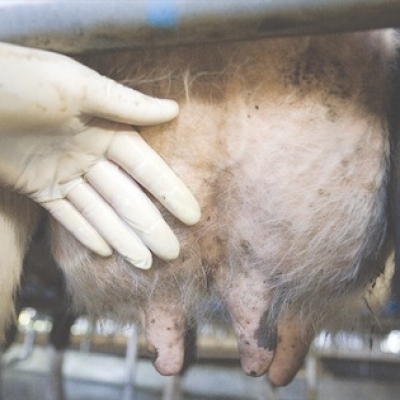
To avoid the cost, hassle and cow discomfort of mastitis in your herd, here are some preventative measures.
Teat spraying kills bugs and helps to heal cracked and dry teats. It is important to choose the right type of teat spray for the environment; chlorhexidine is a good all-round maintenance teat spray and iodine is useful in more challenging environments.
Once the teat spray type is chosen it is important to ensure the dilution rates are measured accurately. (See tables).
Mixing teat spray is not complicated but if it isn’t done in the correct order and mixed well it will not be as effective.
How to mix:
Teat spray should always be mixed by adding the product, including teat conditioner emollient, to the water.
- Measure and add water to bucket
- Measure teat spray in a large jug (recommend 5L jug) and add to water
- Measure teat conditioner in large jug and add to mixture
- Stir mixture to combine
- Spraying correctly is possibly the most important step as missing teats means the whole process is ineffective.
How to spray correctly:
- Ensure spray nozzle is under cow
- Spray in a circular motion
- Ensure coverage of all 4 teats, from the base to the tip
For severely cracked and chapped teats using an additional salve or cream can help these heal quickly.
By following these simple steps teat condition can become supple and smooth, not allowing the introduction of harmful bacteria and therefore decreasing the opportunity for mastitis.


• This first appeared in the 2015 edition of Getting the Basics Right.