Don't get caught short - have enough feed in the bank
OPINION: Few things are more stressful for dairy farmers than running out of feed when cows need it most.
 increase font size
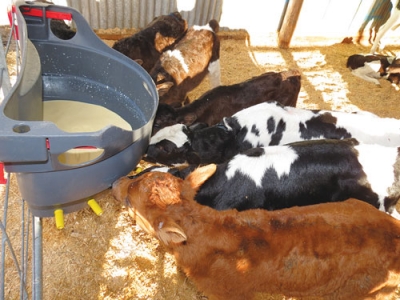
Last month we discussed the importance of colostrum, the consequences of insufficient colostrum feeding and how to assess colostrum management on farm.
This month, we introduce the concept of colostrum quality, the factors associated with it and how it can be easily measured.
What does colostrum quality mean?
Newborn calves should be actively fed good quality colostrum as soon as possible after birth to reduce the risk of failure of passive transfer (FPT). In this context, colostrum quality is referring to the concentration of antibodies (also referred to as “IgG”) per litre of colostrum. The higher the concentration of antibodies in a litre, the better the quality of colostrum. Good quality colostrum is defined as containing at least 50 grams of IgG per litre of colostrum. Poor quality colostrum is defined as being less than 50 grams IgG per litre of colostrum.
What affects the quality of colostrum produced?
The quality of colostrum produced is one of the hardest factors to influence in a colostrum management programme. Colostrum quality can be affected by many different factors including breed, parity, dry period length, volume of colostrum produced and time to first milking.
Jersey breed cows tend to have the highest concentration of IgG per litre of colostrum, whilst Holstein-Friesians tend to have the lowest concentrations of IgG per litre. This is associated with the high volumes of colostrum these breeds often produce, resulting in dilution of IgG present in the udder.
Previously, parity has been shown to affect the IgG concentration in colostrum, with older cows having higher quality colostrum compared to younger cows. However, further research suggests there is no difference in IgG concentration with age. Some heifers produce excellent quality colostrum and the practice of discarding colostrum produced by heifers is now discouraged.
The production of colostrum in the udder starts about 4-6 weeks prior to calving. Therefore, the length of the dry period can significantly affect the quality of colostrum. Dry cow nutrition, transition management, accurate dry off dates from pregnancy testing, teat sealant and strategic vaccination where appropriate, are all integral components of a colostrum management programme.
The time between calving to first milking has a negative effect on colostrum quality. Colostrum quality in the udder rapidly declines at the point of calving and research shows that colostral IgG concentration decreases by 3.7% for each hour after calving. Cows and heifers should be collected from the calving area at least twice daily and milked as soon as possible. If cows are only collected once daily from the calving area, collection of the best possible colostrum has not been achieved.
Pooling colostrum is the mixing of colostrum produced by different cows and heifers, after collection. The logic behind this was that it was supposed to minimise the impact of low-quality colostrum samples. Unfortunately, this actually results in reducing the overall quality of the pooled sample, as good quality colostrum is now diluted with poor quality, and overall IgG concentration is less.
In reality, colostrum quality is highly variable from farm to farm and from cow to cow.
How do I measure colostrum quality?
Direct measurement of colostral IgG can be carried out at a laboratory. This is considered the ‘gold standard’ to which other indirect tests are compared.
However, the direct measurement of colostral IgG on farm is almost impossible in terms of practicality, cost and processing time. Indirect measurements of colostrum quality have been described, such as visual inspection, the use of a colostrometer and more recently the Brix refractometer.
Colostrometers are reasonably quick to use on farm but do have some limitations. They are significantly affected by temperature and for a known quality of colostrum, the colostrometer can differ by 0.8mg/ml for every degree Celsius change in temperature. They are also very fragile, which can make them unsuitable in a farm environment.
The Brix refractometer is available in both optical and digital forms. A cut-off of 22% Brix is deemed to equate to a cut-off of 50g/L of IgG, thus samples ≥22% Brix are considered to be of adequate quality. The benefits of the Brix refractometer are that measurements are not affected by ambient temperature and they are robust, easy and economical to use on-farm.
How do I use this on my farm?
The quality of colostrum can no longer be left to chance and guess-work. Routinely measuring colostrum quality with a Brix refractometer has been an invaluable tool as part of an integrated colostrum management programme. A simple system in using the Brix refractometer is to ‘grade’ colostrum according to the quality.
• Dr Gemma Chuck is a dairy vet working at The Vet Group in south west Victoria, Australia.
OPINION: Few things are more stressful for dairy farmers than running out of feed when cows need it most.
Cows ingesting metal objects in conserved feed is typically going to end in tears, quite often with a trip to the knacker’s yard.
Colostrum is produced only in the first milking after calving, it is higher in protein and fat than milk, contains a wide array of other beneficial bioactive molecules, specific nutrients, hormones and growth factors, and has a distinctive yellow colour.
Providing a newbown calf with colostrum within 12 hours of birth is vital, we know that. And if maternal colostrum is unavailable or poor quality, a colostrum replacer can provide an essential alternative.
Farmers are being urged to feed more milk to new-born calves.


Minister of Conservation Hon Tama Potaka has appointed Susan O'Regan as Chair of the Queen Elizabeth II National Trust (QEII) for a three-year term.
Red meat farmers are welcoming Labour’s plan to review the Emissions Trading Scheme and not to campaign on pricing agricultural emissions.
Where any worker in the kiwifruit industry is mistreated, we expect the authorities to take action.
Mid Canterbury Federated Farmers arable chair, Bevan Lill, said Beef + Lamb NZ data indicated that for the last six years, the average arable return on investment was about 0.8% while inflation ran about 4% - so the average arable farm was going backwards at about 3% a year.
Seed and grain companies share the concerns of arable farmers about the viability of their sector, says Seed and Grain New Zealand chief executive Dr Sarah Clark.
The New Zealand Institute of Forestry (NZIF) says unnecessary changes to New Zealand’s Emissions Trading Scheme (NZ ETS) will seriously erode investor confidence and result in significant reductions in forest planting rates.