
Tongan Student Wins Final William Gearish Award
Vetekina Pau'u is the first Tongan to win the William Gearish Memorial prize and sadly she will also be the last recipient.
 increase font size
 New Zealand Trade Commissioner in Vietnam, Tony Martin.
New research just completed by Tony Martin shows many New Zealand firms could be missing good export opportunities in emerging markets.
As a masters student, Martin has just completed a thesis with Massey University on how small businesses select their export markets and find partners to do business with. He focused on the food and beverage sector because of its importance to the NZ economy.
He says there is a trend for smaller NZ companies to select markets they are familiar with rather than consider broader options.
“There’s a level of comfort or familiarity about countries we know more about and are more culturally aligned with, such as Australia, the UK, the US, Singapore and Hong Kong,” Martin told Dairy News.
“They are much more front-of-mind for a lot of our smaller and medium sized companies than, say, Asia, South America or the Middle East.
“The point of the research was to see if that is influencing the way small companies start their internationalisation process. The research told me that when the companies want to actively go out and develop international markets they normally will follow the path of those more familiar countries, so they go to Australia, UK, US and so on.
“But if they get an inquiry or an order for a product from a country they don’t know much about, one they are less familiar with, then sometimes that can be a catalyst to become interested in that country. But it is very rare for them to proactively go out to these less familiar countries.”
Some companies are unaware of the options which would help break down some perceived notions about these less familiar countries. “So when a country has language, or cultural or historical differences, it doesn’t necessarily mean it is more difficult to do business in than a country we are more familiar with.”
NZTE has offices in these countries and people who speak the languages. “We have people who understand the culture and can help to facilitate entry into these markets. The attractive thing about many of these emerging markets, or markets we are less familiar with, is they are growing rapidly and they want products we produce.
“The point of this research is not to open the floodgates and say ‘everyone should be coming to Vietnam’ or ‘everyone should be going to Indonesia’. It is about [indicating to] companies where the opportunities lie and with NZ Trade and Enterprise we follow where the companies want to go and that works well.”
But there is a need to better inform NZ companies about opportunities in markets they are less familiar with.
Vetekina Pau'u is the first Tongan to win the William Gearish Memorial prize and sadly she will also be the last recipient.
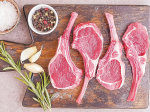
New Zealand's red meat and fifth-quarter exports reached $867 million in August, up 23% on the same month last year, as stronger returns lifted earnings across all major markets.
Meat Industry Association data, released alongside the Red Meat Sector conference in Wellington, shows export value climbing across the US, China, UK and Canada.
OPINION: The stats speak for themselves.
Researchers at Massey University are using a special piece of scientific equipment to improve the measurement of greenhouse gas emissions from pasture soils.


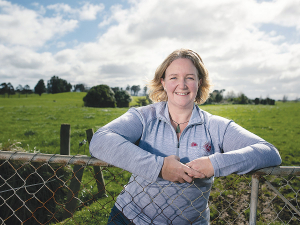
Farmers are being encouraged to rethink how they manage waste on farm with the launch of ruralwastesorted.co.nz, a new website bringing together practical tips, real farmer experiences and resources.

New Zealand Winegrowers (NZW) is celebrating the India-New Zealand Free Trade Agreement (FTA) coming into force today, bringing New Zealand wine improved access to one of the world’s fastest-growing economies.
New Zealand’s red meat sector has welcomed the India-New Zealand Free Trade Agreement taking effect, which removes India’s 33% tariff on New Zealand sheepmeat.
More than 95 per cent of New Zealand’s forestry and wood exports to India can now enter tariff free as the New Zealand-India Free Trade Agreement comes into force today.
Federated Farmers is backing Feilding High School’s call to keep Agriculture and Horticultural Science as a standalone subject in Year 11.
Food and fibre exports have returned a billion- dollar bonus to the country.