Hawke's Bay Fruit Growers Urged to Prepare for El Niño
Hawke's Bay fruit growers are being reminded of the need to prepare for whatever the El Niño weather system may bring in the coming months.
 increase font size
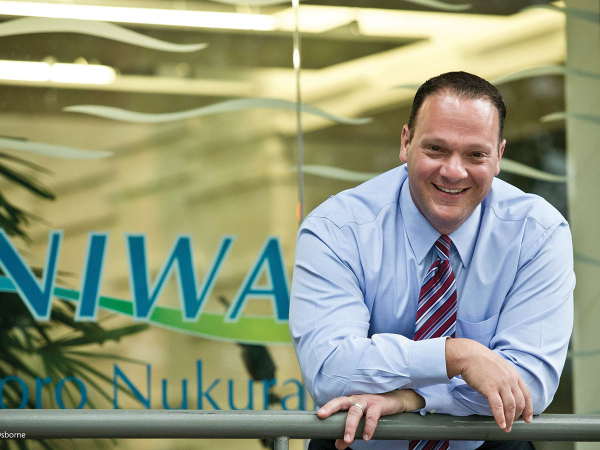 Chris Brandolino
With a very strong El Niño increasing the odds of a dry and windy winegrowing season in New Zealand’s eastern regions, the industry should take measures to prepare.
But Chris Brandolino, Earth Sciences New Zealand Chief Scientist – Weather and Climate Forecasting, cautions that while this will be close to, if not greater than, the strongest El Niño in modern record-keeping, its impact is less certain. Records can offer a “steer” on what happens on average, but each El Niño – including previous very strong iterations in 1972-1973, 1982-1983, 1997-1998 and 2015-2016 – has its own “fingerprint”. In addition, the warming planet means historical analogues are not as reliable as a predictor of the future, he says. A super El Niño in 1982, for example, occurred on a planet that was “notably cooler” than it is today.
Chris presented at a Bragato Research Institute webinar in late September, unpacking the latest seasonal outlook to explain what it could mean for New Zealand winegrowers. While El Niño is a significant factor in day-to-day weather, particularly in a “super” iteration, ocean temperatures around New Zealand also influence weather, particularly temperature, as does the Indian Ocean Dipole. “So El Niño is not happening in a vacuum.” However, given certain “typical El Niño” outcomes are more likely, “I think we are in a situation where management actions and planning should be undertaken based on these odds being elevated”, he says.
Those odds are for drier than usual conditions for the eastern and northern parts of both islands, and the risk of some areas within regions being particularly dry, with potential for drought. “There’ll be variability even within those eastern areas,” Chris says.
Wind is also typically stronger under El Niño, particularly for the lower North Island and the South Island. Meanwhile, there’s an increased tendency for big temperature swings, from warm to chilly conditions, including late season frosts. “El Niño tilts the odds toward these highly variable temperatures.”
Both factors will exacerbate dry conditions. “Ultimately, where the wind blows most persistently, and that coincides with areas of rainfall deficit, and it gets these spiky, warm temperatures, those are the areas that are really going to find the most profound dryness.”
Expectations are for dry conditions for the first half of October, with more “active” weather starting to re-emerge from the Southern Ocean in the second half, cranking up the wind, and bringing periods of “spikiness”, with shifts from warm to cool conditions likely to persist into November. There’s a likelihood of at least some rain in the second half of October, although it is questionable whether it will find its way to the eastern parts of both islands, given westerly conditions.
The super El Niño doesn’t guarantee outcomes of dry, windy east coast weather with variable temperatures, Chris says. “But if you’re playing the odds game, the numbers grow when El Niño is at the driver’s seat of Mother Nature’s car.”
nzwine.com/el-nino-webinar
Hawke's Bay fruit growers are being reminded of the need to prepare for whatever the El Niño weather system may bring in the coming months.

Westpac NZ is calling on farmers and growers to start preparing now for the possibility of a dry summer, as likely El Niño conditions raise the risk of drought across parts of the country.
OPINION: Have a plan in place now!
A spate of southerly winds bringing cold temperatures has presented challenges for Taranaki dairy farmers.
Have a plan in place for your cows and staff.


