Managing winter feeding a priority
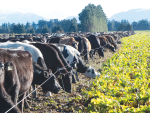
Going into autumn, Beef + Lamb New Zealand is encouraging farmers to think about how they will manage their winter fodder crops – particularly in a year when feed resources are likely to be tight.
 increase font size
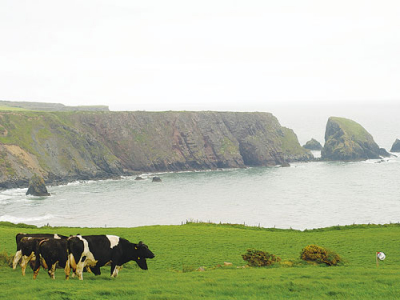 The Irish dairy sector is facing a fodder crisis.
A fodder crisis is forcing Irish dairy farmers to buy feed from other farmers around the country.
Inter-farm trading of forages is growing as farmers replenish feed reserves for winter later this year and reduce a risk of a fodder shortage in future years.
Prolonged rain and colder-than-average weather since the end of the summer in July 2017 is affecting grass growth.
Figures from the Irish Agriculture and Food Development Authority (Teagasc) show that growth to date in 2018 has averaged 770kg DM/ha; the five-year average for the corresponding period is 1359kg DM/ha.
Teagasc says the fodder crisis is challenging the industry to find innovative solutions; seed suppliers, merchants, farm advisors and farmers are moving fast to secure fodder supplies for next winter. One new idea is to have an intermediary help to link and facilitate farmer-to-farmer trade.
Teagasc says for at least a decade tillage and livestock farmers have been working together to grow and supply fodder, but with limited success.
A sustainable farm-to-farm trading system has not taken off for several reasons: tillage farmers are concerned about payment and delivery because this deviates from the merchant payment structure; livestock farmers are worried about quality, quantity and cost of the forage.
Teagasc is urging livestock farmers to complete a winter feed budget for the year ahead.
Tom O’Dwyer, head of dairy knowledge transfer in Teagasc, says this will help to identify gaps and where, or if, extra forage is needed.
“Many farms have more livestock than in other years, and not only is extra cover needed for these animals but a larger forage buffer is needed to cover potential adverse weather like this year.
“It is better to plan and make arrangements for the supply of additional quality fodder sooner rather than later,” O’Dwyer says.
“Trust plays a huge part when farmers are working together. Where there is trust and a written agreement discussed and signed by both parties these arrangements are successful.
“Sourcing maize close to the farm can be an issue, so farmers further apart may need to work together. In these cases the parties involved may not know each other initially, so a leap of faith is necessary.”
Going into autumn, Beef + Lamb New Zealand is encouraging farmers to think about how they will manage their winter fodder crops – particularly in a year when feed resources are likely to be tight.
The Government taskforce report on winter grazing says farmers are not solely to blame for all the problems associated with this practice.



Celebrating 50 years in the rural landscape of Central Canterbury and beyond, Ashburton-based Carrfields, has been the exemplar for all aspects of modern agriculture via its extensive range of services including supply, growing, agronomic advice and marketing.

For Taupiri dairy farmers Logan and Sian Dawson, their involvement in the NZ Dairy Industry Awards has been a key catalyst in the growth of their business - the experience helping shape how they approach the farm ownership pathway they are pursuing today.
West Otago dairy farmer Luke Kane has been awarded the 2026 Rabobank Dr John Morris Business Development Prize.
OPINION: As the general election approaches, political parties are churning out policies in the hope of attracting more votes.
An LIC bull, Tronnoco AR Sadio-ET S3F, bred by Tony and Keri O'Connor of Tronnoco Farming Co Ltd near Timaru, has won the 2026 Mahoe Trophy.
With forecasters advising El Niño conditions will develop through winter and strengthen into spring and summer, Ballance Agri-Nutrients is encouraging farmers and growers to think ahead about nutrient planning and be prepared to work around challenging weather conditions.