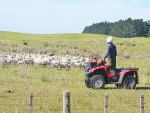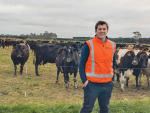
New Dairy Holdings CEO Backs Self-Contained Model
Running a tight and self-contained ship is the key to the success of the country's largest dairy farmer, says Blair Robinson, the new man at the helm of Dairy Holdings.
 increase font size
 MPI's John Roche
OPINION: The Mycoplasma bovis (M. bovis) Programme is now in the sixth year of the 10-year eradication programme.
The number of infected farms decreasing each year. While this trend is expected to continue, it is important we all keep our foot on the pedal.
Our world class surveillance tools are ensuring we are finding any remaining cases of M. bovis in New Zealand and continue to follow up cattle movements that carry a risk of infection.
The programme is continuing to put the welfare of farmers front and centre. There is a continuous improvement approach to ensure eradication activities are fit-for-purpose while minimising impact on farmers and achieving value for the programme's funders - farmers via levies and taxpayers via Crown funding.
Following the eradication decision in May 2018, M. bovis partners put $8m towards science and research, including the development of improved diagnostics, to support the eradication effort.
While this work was underway, work towards eradication has continued and we have gained a good understanding of how to eradicate. The ELISA test we use for milk and blood testing has proving successful and has been internationally critiqued. It is considered very good at identifying infection when it is there, especially when applied at the herd-level.
We have optimised our current test to be very specific, meaning very few false positive results. Combined with our disease control protocols, we are able to minimise the impact on farmers as much as possible while still getting crucial information to achieve eradication.
New tests and tools are always considered, especially when there are opportunities for improvement and reduced impact on farmers. But changes can have unintended consequences. Therefore, with the potential impact on farmers front of mind, all new tests must be independently considered and validated against the existing processes.
When tests are more sensitive, they have the potential to come at a cost of decreased specificity. This means there is a risk of more false positives, and therefore, more farms under legal controls while further testing is carried out.
Decisions about changes to new tests, tools and technology are not taken lightly. This is due to the impact it could have on costs, the risk of increased on-farm disruption, potential changes to programme processes, lab technicians expertise and training. As well as to the overall outcome of the eradication effort.
Applications must be carefully considered and weighed up against the current tools and processes which can take time and comes at additional cost to the programme.
A new screening test on the market is under consideration, with a Diagnostic Tests Validation Evaluation Panel being formed by MPI to consider the test and the argument for change. If the Evaluation Panel recommends validation trials are undertaken, a process will begin running the new test in parallel with the existing test for a period of time. This will give us information about how it works in the field, whether it is more effective than our current test and protocols, and how the results impact and inform eradication activities.
Once these exercises have been completed, a recommendation will be made to decision-makers.
Importantly, however, there is no known test that allows us to accurately identify individual infected cattle within a herd. It is unlikely there ever will be - especially for use in an eradication attempt.
Because of the nature of the disease and the type of bacteria, only animals that are mounting an immune response will test positive. Furthermore, we know from New Zealand and international data that if any cows in a dairy herd are positive, within a very short period of time, all cows will be infected whether they test positve or not.
It is important that farmers realise M. bovis still poses a risk and know what to do to mitigate it. Keeping accurate and up to date NAIT and animal movement records by farmers enables the quick identification of risk events and movements, which can play a big part in achieving the eradication of M. bovis in New Zealand.
Dr John Roche is MPI's chief departmental science advisor and M. bovis SSAG chair.
Running a tight and self-contained ship is the key to the success of the country's largest dairy farmer, says Blair Robinson, the new man at the helm of Dairy Holdings.

OPINION: It's no surprise that "world-class biosecurity" continues to dominate as the top priority for agribusiness leaders, holding the number one spot for the 16th consecutive year in KPMG's latest agribusiness report.
For the first time in more than 30 years the Government has set a new set of radical priorities for the science it funds - including agriculture.
OPINION: New Zealand's prosperity has always been built on farmers and scientists working together to shape our economy.
OPINION: Last week marked a major step forward in our work to eradicate Mycoplasma bovis.


Pāmu has released its FY26 Integrated Annual Report, reporting a Net Operating Profit of $113 million, more than double the $49 million recorded in FY25.

Meat Industry Association data, released alongside the Red Meat Sector conference in Wellington, shows export value climbing across the US, China, UK and Canada.
Applications are set to open for the 2027 Zanda McDonald Award, a trans-Tasman award recognised for identifying and fast-tracking talented young leaders in agriculture and agribusiness.
The Royal New Zealand College of General Practitioners (the College) and Hauora Taiwhenua Rural Health Network are calling for investment in a proposed new training pathway for rural GPs, warning that many rural practices are struggling to recruit while a large share of the existing workforce nears retirement.
Federated Farmers has called on Central Otago District Council (CODC) to drop or vote down a plan to truck sludge from Alexandra and Cromwell to farmland near Lauder, warning it would compound an "outrageous" situation created by a separate council's decision weeks earlier.
Synlait has swung to second-half profit as operations stabilise, but the dairy processor still posted a $75.4m annual loss.