West Otago Farmer Luke Kane Wins Rabobank 2026 Prize
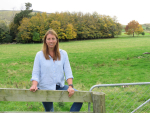
West Otago dairy farmer Luke Kane has been awarded the 2026 Rabobank Dr John Morris Business Development Prize.
 increase font size
 Richard Parkes says farm succession plans need to be transparent for all family members.
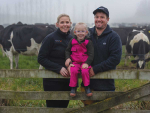
OPINION: Passing the farm down to the next generation is ingrained in the psyche of many NZ farmers, particularly those inter-generational farmers.
Prior to the 2000s, completing farm succession was a reasonably stress-free exercise. Modest land values and average farm income, coupled with many of the farm children preferring to seek their opportunities elsewhere in the big city made the pathway for the succeeding farm child/children reasonably smooth.
Over the past 20 years, however, significant increases in farm values have led to farm succession becoming a great deal trickier. The inability for the succeeding farm child to borrow any meaningful amounts of money against the farm to pay out the parents and siblings has resulted in many parents having to face up to the prospect that a significant portion of the farm will need to be gifted to the succeeding farm child. Meanwhile, the non-farm children may have to wait for many years before they can receive any sort inheritance.
The emergence of social media in this space is not making life any easier for parents either. Non-succeeding farm children, all over the country, are beginning to share their views on farm succession. In particular, their concerns that farm succession should be equal or very fair, and not heavily in favour of the succeeding farm child.
This inability for parents to be able to treat their children equally in almost all situations now is causing a great deal of anxiety for parents. In turn, this is causing procrastination in the planning for farm succession. Furthermore, potential relationship property issues/risks between the succeeding farm child and their partner/spouse can complicate the plans.
No wonder the average age of farmers continues to creep up year on year. Now some 25% of farmers are now considering selling up as their preferred option for farm succession, whilst also alleviating their stress levels due to the ever-looming farming headwinds relating to climate change, rising farm costs and scarcity of farm labour.
Farm succession planning in NZ is quickly becoming a very modern concept which is changing all the time. Farmers need to keep up with the play if they wish to ensure a smooth transition within the family.
Farmers can start the process by talking to their most trusted advisors, usually their lawyers, accountant, bank manager or farm advisor. There are also good farm succession coaches who can be very helpful for farming parents to get their planning underway.
If farmers are hoping to pass the farm down to the next generation, they are going to need to fortify themselves. They also need to take great professional advice, plan as early as possible with their children and keep an open dialogue going year-on-year.
The farm succession plan needs to be transparent for all family members and needs to keep moving. It is never too late.
This decent planning and the setting of probably expectations amongst family members will hopefully assist farming parents to successfully implement farm succession, while ensuring that the family continue to enjoy themselves together at Christmas.
Richard Parkes is principal of Christchurch based law firm CavelLeitch
West Otago dairy farmer Luke Kane has been awarded the 2026 Rabobank Dr John Morris Business Development Prize.
Halter has announced the six winners of its 2026 One Year Free competition, marking the biggest year yet for the annual award and the first time the company has expanded the field beyond its usual line-up.
Cameron Reed lives between two worlds.
On a farm in Tikorangi, North Taranaki, Brent Stevenson is sharemilking 1,400 cows.
OPINION: After a very good farming year and a few bucks back in the tin, farmers will be remiss not to consider the next steps in life and what that means for their farming business. Sheep and beef farmers are no exception.



LIC shareholders have elected a new North Island representative to the co-operative's Board, along with five representatives to its Shareholder Reference Group (SRG), following the company's Annual Meeting held in Invercargill.
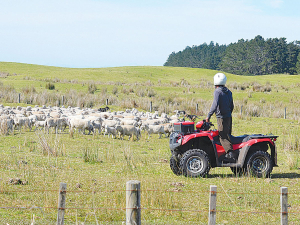
Farmers across parts of Southland and South Otago are continuing to deal with difficult conditions after a prolonged run of wet weather, with pressure building around feed supply, stock management, pasture damage, farm infrastructure and everyday workloads.
Federated Farmers says it welcomes Labour's commitment to reviewing the Sharemilking Agreements Act, calling on other major parties to do the same.
For Canterbury dairy farmers Sian Meijer and Rick Wobben, wearable technology has become one of their most valuable on-farm tools - helping manage 1850 cows across an expansive, high-performing dairy operation while improving efficiency, mating outcomes and day-to-day decision making.
Fonterra has unveiled its annual results for the 2026 financial year, posting $27 billion in revenue and close to $20 billion returned to New Zealand farmer owners and unit holders.
The first major update to the Dairy Cattle Code of Welfare in more than a decade has been released, marking what DairyNZ describes as an important step in ensuring animal welfare standards continue to evolve alongside scientific evidence and on-farm realities.