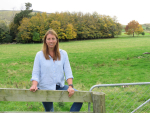
Coby Warmington wins 2025 Ahuwhenua Young Māori Farmer Award
Coby Warmington, 29, a farm manager at Waima Topu Beef near Hokianga was named at the winner of the 2025 Ahuwhenua Young Maori Farmer Award for sheep and beef.
 increase font size
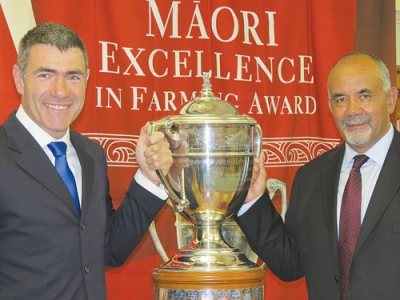 Minister for Primary Industries, Nathan Guy with Te Ururoa Flavell.
Finalist for the Ahuwhenua Trophy were announced at a function at Parliament recently, hosted by the Minister for Primary Industries, Nathan Guy.
About 70 agribusiness leaders attended, seeing farmers from Mangaroa Station and Maranga Station, both in the East Coast region, and Paua Station, Far North, presented with medals for making the final.
Unusual this year is that two of the farms – Mangaroa and Maranga – are privately owned, while Paua Station is owned by the Parengarenga Incorporation. The last time the competition for sheep and beef was run, in 2013, all the finalists’ farms were owned by Maori trusts or incorporations.
Guy said Maori agribusiness, including forestry, contributes $3.5 billion to the New Zealand economy. Maori agribusiness is doing extremely well, and the Miraka Dairy Company winning Maori Exporter of the Year recently is an example of this, he said.
“If we don’t celebrate success in the primary sector, no one else is going to do it for us. That’s why having this event in Parliament is hugely important for Maori and for the primary sector as whole.”
Guy lauded the big turnout of dignitaries and foreshadowed a large attendance at the winner event in Whanganui late May. Agriculture must sell itself better to the community and attract the best and brightest young people, he says. The Ahuwhenua Trophy plays a big role in selling that story.
Kingi Smiler, the chairman of the Ahuwhenua Trophy management committee which runs the competition says all three farms are worthy finalists, demonstrating commitment and determination to create successful farming operations to benefit them and their whanau.
It is great to see whanau farms rewarded for their hard work, he says. “Like others, I’m looking forward to attending the field days at these properties. The field days are great events and I urge everyone in the agribusiness sector to take a few days out of the office and go into the real country and see what people achieve in challenging conditions. They do a great job.”
Smiler says the Ahuwhenua Trophy has contributed much to raising the profile of Maori agribusiness.
“The trophy has helped lift the bar behind the farm gate and we are seeing amazing innovation. The technology on many Maori farms is leading-edge and they benchmark favourably with all other farming operations in Aotearoa New Zealand. Improved governance and leadership of our whanau businesses has led to top people being employed as advisors, managers and general staff.”
Show and tell
In the coming weeks, each finalist will stage a field day on their properties for two purposes.
First, it’s part of the judging process where new judges – not involved in selecting the finalists – evaluate each property and decide on the ultimate winner of the trophy.
Second, the field days allow other farmers and people with an interest in Maori agribusiness – and anyone else – to visit the properties to see what the finalists have achieved.
Field days will take place at each farm:
Coby Warmington, 29, a farm manager at Waima Topu Beef near Hokianga was named at the winner of the 2025 Ahuwhenua Young Maori Farmer Award for sheep and beef.

Grace Rehu, 21 – a leading hand for Turners and Growers in Puketapu, Hawke’s Bay – is the winner of the 2023 Ahuwhenua Young Māori Grower competition.
Finalists in the inaugural Ahuwhenua Young Māori Grower Award 2020 have been told that one of the big challenges is increasing the number of young Māori in leadership roles in the horticultural sector.
About 150 people turned out last week to attend a field day at Ngai Tukairangi Trust’s kiwifruit orchard at Matapihi.
The finalists in the inaugural Ahuwhenua Young Māori Grower Award have just been announced.


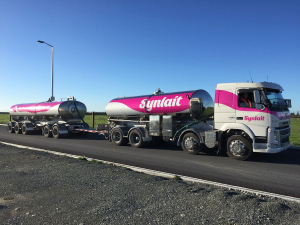
Synlait has swung to second-half profit as operations stabilise, but the dairy processor still posted a $75.4m annual loss.

LIC shareholders have elected a new North Island representative to the co-operative's Board, along with five representatives to its Shareholder Reference Group (SRG), following the company's Annual Meeting held in Invercargill.
Farmers across parts of Southland and South Otago are continuing to deal with difficult conditions after a prolonged run of wet weather, with pressure building around feed supply, stock management, pasture damage, farm infrastructure and everyday workloads.
Federated Farmers says it welcomes Labour's commitment to reviewing the Sharemilking Agreements Act, calling on other major parties to do the same.
For Canterbury dairy farmers Sian Meijer and Rick Wobben, wearable technology has become one of their most valuable on-farm tools - helping manage 1850 cows across an expansive, high-performing dairy operation while improving efficiency, mating outcomes and day-to-day decision making.
Fonterra has unveiled its annual results for the 2026 financial year, posting $27 billion in revenue and close to $20 billion returned to New Zealand farmer owners and unit holders.