
FAR Eyes NZ Grain as Dairy Supplementary Feed
Dr Scott Champion, Foundation for Arable Research chief executive, says that everyone in the supply chain had a role to play in driving the sector's long-term success.
 increase font size
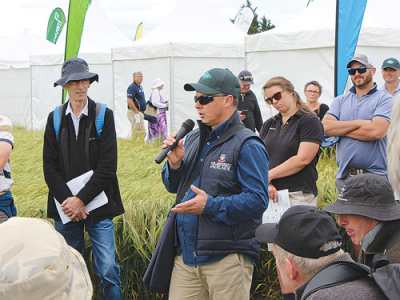 Dr Peter Boutsalis, of the University of Adelaide, gives a presentation on herbicide resistance at the FAR CROPS Annual Expo held at the Chertsey research site, Mid-Canterbury, in December. SUPPLIED.
The first step in tackling herbicide resistance in arable farming is admitting you have a problem, says Australian specialist Dr Peter Boutsalis.
Boutsalis, a post-doctoral fellow at the University of Adelaide who also runs a private plant science consultancy for Australian farmers, was the featured overseas speaker at the Foundation for Arable Research (FAR) 2018 CROPS expo held at FAR’s Chertsey research site in December.
He says a few of the NZ arable farmers attending the event admitted to having a resistance problem and put their hands up when asked.
“Excellent. That’s a step forward.”
Boutsalis’s main message was that if farmers are relying heavily on herbicides they should rotate them, mix them and “keep up the good work they’re doing” in diversifying agriculture.
“Cropping in Canterbury is quite diverse still,” he told the expo. “That’s why resistance has been delayed so much compared to in Australia, where they’ve got continuous cropping and very limited crops.”
Boutsalis says a big difference between NZ and Australian practice is that Australia has moved to a low-tillage system -- simply drilling into the stubble. He said this helps with moisture retention and erosion control (and gives some assistance to pre-emergent herbicides since weed seeds remain confined to top layers) but means they are generally heavily dependent on herbicides for weed control.
Boutsalis said non-herbicide techniques being used in Australia include capturing seeds at harvest, removing seeds before they mature with hay or silage and concentrating weed seeds into windrows that are burnt or used as feed.
Glyphosate can sometimes be used in wheat and barley, if the crop is mature enough not to be affected by it, but the weed species are still young.
Boutsalis says 2018’s severe drought in New South Wales provided an unexpected weed control opportunity for South Australian farmers, because the price of hay doubled to $300 a tonne and made it financially worthwhile for them to bale up their entire crop before it was mature – along with any weeds before they had set seed – and sell it as feed to NSW.
“So for one year, you got 100% control of weeds. And that is a very effective strategy,” he said.
Annual ryegrass is the most problematic weed in southern Australia, followed by wild oats and chickweed.
In his presentation to the expo, Boutsalis tabled figures from ten years of pot tests done on 2000 randomly chosen ryegrass samples, showing resistance to various herbicides ranging from zero or low single figures, up to 60 and 65%.
Cross-resistance is also becoming problematic, he said.
“Furthermore, clethodim (Arrow), also a Group A herbicide, has some unique differences to other Group A herbicides. Arrow will often control wild oats and ryegrass resistant to other Group A herbicides. Additionally, there is often a rate response with Arrow, with higher rates controlling individuals not controlled with lower rates. This is quite unique to Arrow.”
As part of his consultancy business, Boutsalis offers a pot test service for farmers who can send weed samples for testing so they can be advised which herbicide to use in the current season.
“That’s the power of the commercial pot test. You can actually fine tune what the situation is in your particular field,” he said.
“Resistance can start slowly and unnoticed, then one year – bang, it just explodes because enough of the survivors have set seed.”
Dr Scott Champion, Foundation for Arable Research chief executive, says that everyone in the supply chain had a role to play in driving the sector's long-term success.

Flat pricing in the face of significant increases in costs is the greatest problem facing the arable sector, says Foundation for Arable Research (FAR) chief executive Dr Scott Champion.
Four years since it was first detected in New Zealand, researchers and growers now know much more about management of maize pest fall armyworm (FAW).
Two Canadian spraying experts, Tom Wolf and Jason Deveau, are visiting New Zealand in early August to ensure that arable growers are hitting the target with this key piece of equipment.
Tickets are now available for the 2026 Arable Awards, set to be held in Christchurch on 20th August.


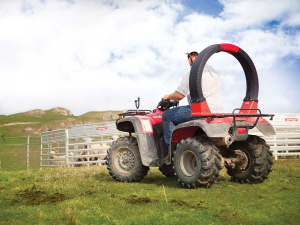
When Northland leather worker Vernon Suckling started making horse saddles 50 years ago, quad bikes and side-by-side vehicles were unheard of.
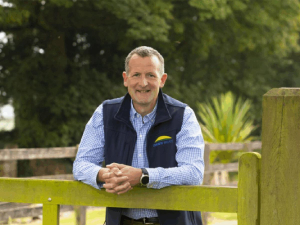
Alliance Group has confirmed that eligible farmer-shareholders who supply and continue to back the business will receive up to $20 million later this year, following the strategic investment partnership with Dawn Meats.
With a general election under five weeks away, Rural News is asking major political parties about their policies and positions on key issues facing the primary sector. We will run their responses to each question over the next four weeks. The ACT Party and the Greens didn't respond in time.
The red meat sector is in great heart.
Dr Scott Champion, Foundation for Arable Research chief executive, says that everyone in the supply chain had a role to play in driving the sector's long-term success.
Entries opened on Monday, 5 October 2026 for the 2027 New Zealand Dairy Industry Awards (NZDIA), which organisers describe as the nation's biggest celebration of excellence in the dairy sector.