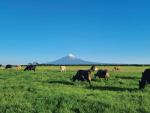
Southerly Winds Hit Taranaki Dairy Pasture Growth
A spate of southerly winds bringing cold temperatures has presented challenges for Taranaki dairy farmers.
 increase font size
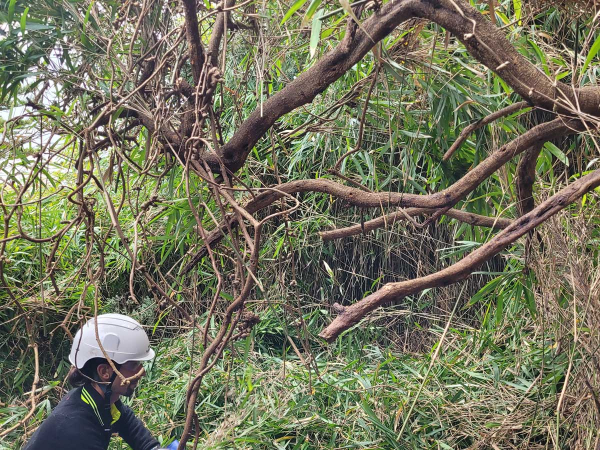 A Taranaki Regional Council biosecurity officer controlling a madeira vine site in New Plymouth. Photo Credit: Taranaki Regional Council
Taranaki Regional Council is working to eradicate pest plants from 570 sites around the region – about three times as many as six years ago.
Council environment services manager Steve Ellis says that’s excellent news.
“To get rid of pest plants, we have to know where they are,” Ellis says. “Most of the sites identified recently would have been quietly spreading and getting worse for many years. Now we can do something about it.”
He says the Council has controlled known infestations of various pest plants for decades however in the last few years, these efforts have been stepped up.
“We have been carrying out more surveillance across the region, working strategically to detect infestations of those pest plants that pose the biggest threat to our native ecosystems,” Ellis adds.
“It’s also great to see a growing community awareness of the importance of biosecurity, what plants to look out for and what to do about suspicious plants. A great example of this was the massive response from the Fitzroy community when we asked for sightings of moth plant. The new sites they reported have kept us busy, but we’re not complaining!”
“It’s important to remember our kids and grandkids won’t be able to enjoy our incredible biodiversity in the future without a collective approach to biosecurity today.”
The Regional Pest Management Plan for Taranaki lists five plants the Council directly controls, namely, climbing spindleberry, giant reed, madeira vine (or mignonette vine), moth plant and Senegal tea. The goal for these plants is eradication. Another 11 plants and two animals are classed as sustained control pests, which means the land owner or occupier is responsible.
Of the active direct control sites, 43% are moth plant, 37% madeira vine, 13% giant reed, 7% climbing spindleberry with just two sites of Senegal tea.
Pest plants are a huge threat to Taranaki’s native biodiversity as they smother native plants and spread easily, which makes control an ongoing challenge.
“Unfortunately it’s rarely a quick fix. With the direct control sites, our biosecurity officers or contractors have to make multiple visits before we can be confident the plant is eradicated,” Ellis says.
For some plants that may take up to 20 or 30 years.
The Council does direct control on public and private land, at no cost to the landowner. If people spot one of the five plants on or near their property, they should leave it alone and immediately let the Council know.
“We have had a few instances recently where well-meaning locals have tried to deal with these plants themselves, but have inadvertently spread it either when moving it or disposing of it.”
If you see or suspect a direct control plant, please contact the Council on 0800 736 222 or email This email address is being protected from spambots. You need JavaScript enabled to view it. with a photo and exact location if possible. Do not touch it or attempt to control it. For more details see www.trc.govt.nz or www.weedbusters.org.nz.
A spate of southerly winds bringing cold temperatures has presented challenges for Taranaki dairy farmers.
Environment Minister Nicola Grigg has announced details of a new rural plastics recycling scheme.
OPINION: The stats speak for themselves.
Election years are always a concerning time for farmers, according to DairyNZ chair Tracy Brown.
The Ballance Farm Environment Awards are coming to the West Coast of the South Island.


Federated Farmers has welcomed new rural policies released by ACT, saying they align closely with its own election priorities.

Rural Contractors NZ says proposed changes to land transport rules for agricultural vehicles are a welcome response by the Government to out of date regulations which have seen members hit with huge fines.
Alliance is calling for final applications for its 2027 Graduate Programme, with applications closing on Sunday 25 October.
Decades piloting planes has ensured vet and farmer David Hayes is focused on safety. So, after a serious accident while welding on farm, he is sharing his experience so others can learn from it.
Canterbury milk processor, Synlait Milk has confirmed Leon Fung as its chief executive officer.
OPINION: Making it easier to collect rainwater and use it to grow crops and livestock is a no brainer.