Digging Deep Into Soil Education
OPINION: "The worst thing that agriculture does is take land from nature."
 increase font size
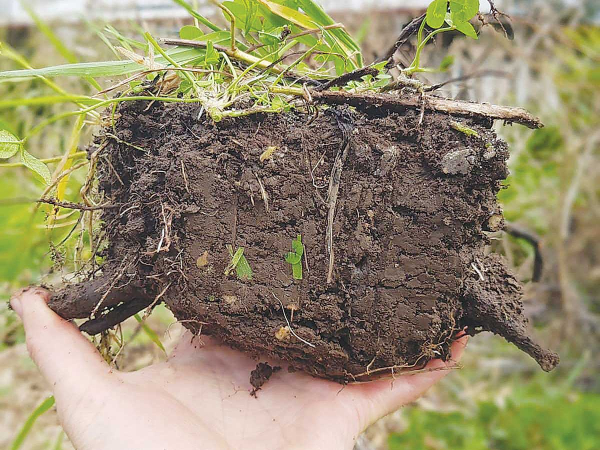 Earthworms improve the general condition of farming soils.
Earthworms improve the general condition of farming soils, reduce surface runoff of contaminants from pasture and prevent soil erosion.
Soils without enough of the right type of earthworms are usually poorly structured and tend to develop a turf mat or thatch of slowly decomposing peat-like material at the surface. Old dung and dead plant material lie about the surface. These factors can naturally inhibit pasture and crop production.
Introduced earthworms are essential to the development of fertile productive soil. They act as biological aerators and physical conditioners of the soil, improve soil porosity, structure, aggregate stability and water retention.
Earthworms also increase the population, activity and diversity of soil microbes, such as actinomycetes and mycorrhizal fungi. These microbes play a vital role in the supply of nutrients to pasture, digesting soil and fertiliser and unlocking nutrients such as phosphorus that are fixed by the soil.
Lower producing grasses are often more evident than ryegrass on these types of soils as well. Pasture growth is slow to start in spring and stops early in autumn. Plant nutrients tend to remain locked in the organic layer and there is poor absorption of applied fertiliser.
Plant roots in such soils are relatively shallow and pastures are therefore susceptible to drought. Water also runs off this type of pasture more easily rather than being absorbed into the soil, increasing water quality problems.
To help avoid these types of problems, soils should have a good diversity of relevant earthworm species.
The most common introduced earthworm in New Zealand is Aporrectodea calignosa, a topsoil dweller. This earthworm grows up to 90mm long and may vary in colour from grey to pink or cream.
Another very common introduced earthworm is Lumbricus rubellus, a surface dweller. Often found under cow pats, this earthworm will grow up to 150mm long. It is reddish-brown or reddish-purple, with a pale underside and flattened tail.
Aporrectodea longa live in burrows as deep as 2-3 metres below the surface.
Undertaking an earthworm count will let farmers know if they have enough of the right type. Counts are preferably done in late winter to early spring when soil moisture and temperature conditions are ideal. Counts can be done by taking out a 20cm cube of soil with a spade. Around 30 earthworms would be ideal in a spade cube.
If soils are scoring way below that there are a range of ways to increase their populations:
Moist soils promote earthworm spread and activity and more will remain activein topsoil during summer under irrigation. Direct drilling and no tillage cultivation methods is another way to promote earthworm numbers. Use a mould board or disc plough rather than a rotary hoe. Cropping farms should include a phase of pasture in their cropping rotation to increase organic matter returns.
Earthworm ecological diversity is also critical to ensure soil functions are optimised. For example, the single species of Aporrectodea calignosa alone was not able to improve water infiltration or pasture production. However, when this species was found in combination with Apporectodea longa, there was positive influence on soil functions despite the abundance of A. longa itself not increasing. This study highlights the importance of including a measure of ecological diversity alongside a measure of abundance to assess soil biological health.
The earthworms play a great role in farm productivity and lessen the contaminant impact on water quality.
Remember, weight of earthworms below healthy productive pastures is approximately equivalent to the weight of animals grazing above ground - a thought provoking fact.
Bala Tikkisetty is a sustainable agriculture advisor (technical) at Waikato Regional Council. For more information contact him on 0800 800 401 or This email address is being protected from spambots. You need JavaScript enabled to view it..
OPINION: "The worst thing that agriculture does is take land from nature."
With the pressure of winter and spring behind us, and the groundwork laid, now is a good time for many farmers to pause, check progress against plan, and think ahead to ensure resilience for whatever summer and autumn may bring.
A study arising from a partnership with Ravensdown, AgResearch and Ngāi Tahu Farming, has created a benchmark approach to testing the health of soils.
OPINION: Good nutrient management will keep nutrients cycling within the farm system and reduce losses to the environment to the bare minimum.
Decline in soil physical properties takes considerable expense and many years to correct, and can increase the risk of soil erosion by water or wind.


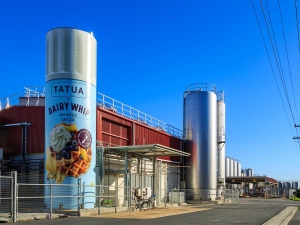
Waikato milk processor Tatua has again declared a record milk payout to farmer shareholders, leaving other processors in the dust.

A Labour-led Government won’t be bringing back the controversial freshwater rules of 2020.
National’s much-touted free trade deal with India featured in the Rural Issues Debate at Mystery Creek, Hamilton on Wednesday night.
New Zealand's 2026-27 freshwater fishing season has opened, with anglers encouraged to head to rivers and lakes over the coming days as conditions look favourable across much of the country.
Central Otago District Council (CODC) has voted against a plan to spread treated sewage sludge from Cromwell and Alexandra on farmland near Lauder, a decision Federated Farmers says reflects strong opposition from rural residents.
Pāmu has released its FY26 Integrated Annual Report, reporting a Net Operating Profit of $113 million, more than double the $49 million recorded in FY25.