Editorial: Wool's Back in the Black
OPINION: Confidence in the wool sector is rebounding as prices hit levels not seen in more than 15 years.
 increase font size

The 9400 bales on offer in the South Island this week saw a 91% clearance and an overall stronger market, says NZ Wool Services International Ltd's general manager, John Dawson.
The weighted indicator for the main trading currencies was 0.71% lower than the last sales on February 21, adding impetus to local price levels.
Dawson says a small offering of Mid Micron wool 25 to 29 microns were nominally 2% dearer.
Fine Crossbred Fleece 32 to 35 micron were firm to 3% stronger with the Second Shears firm to 1% dearer.
Good style coarse carpet fleece were 1.5 to 2.5% stronger with the poorer styles 2.5 to 4% dearer. Longer coarse shears increased 1.5 to 4% with the shorter types firm to 2.5% dearer.
First Lambs Fleece 31 micron and finer were 1 to 3% dearer with coarser types 3% stronger.
Combing oddments lifted by 3 to 4% with shorter oddments firm to 2% dearer.
Competition was good among China, India and Australasia principals, supported by Middle East, Western Europe and the United Kingdom.
The next sale March 7 comprises about 16,000 bales from the North Island and 8800 bales from the South Island.
OPINION: Confidence in the wool sector is rebounding as prices hit levels not seen in more than 15 years.
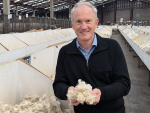
The recently signed free trade agreement with India is an invitation to strengthen relationships between the New Zealand and Indian strong wool industries, says Wool Impact chief executive Andy Caughey.
Strong competition and tightening supply have seen wool reach its highest prices paid at auction since 2011.
A collaboration between two New Zealand companies will see wool used as a renewable colour source for 3D printing.
OPINION: A bumper season all around.



Testing confirms H5 bird flu in a single northern giant petrel, found dead on a remote Cape Palliser beach in the Wairarapa, says Dr Mary van Andel, the Ministry for Primary Industries' (MPI) Chief Veterinary Officer.

"What's for dinner?" may sound like a simple question, but for many Kiwi parents, answering it has become a job in itself.
Fifty Eight years ago, on the 16th of August 1968, August Claas, the founder of the harvesting company and father of Helmut Claas, personally presented a Claas Senator combine harvester to Scottish farmer John Steven.
New Zealand consumers are paying more for beef mince than ever before, with the average retail price now sitting above $24 per kilogram, according to Rabobank.
State farmer Pamu has delivered its strongest operating result on record.
Four years since it was first detected in New Zealand, researchers and growers now know much more about management of maize pest fall armyworm (FAW).