Lanaco and Blueair Launch World-First NZ Wool Air Filter
New Zealand wool is reaching new heights as air filtration companies move away from synthetic products to biodegradable alternatives.
 increase font size

THE LIMITED offering of 6000 bales of South Island wool on offer saw a 90% clearance with most types increasing 2 to 4%, New Zealand Wool Services International 's general manager John Dawson reports.
Compared to the last sale on April 25 the weighted indicator for the main trading currencies hardly changed, firming 0.16%, having minimal impact on local prices.
Dawson reports ongoing supply issues due to severe weather events has disrupted wool flows with limited volumes now available over the coming weeks as winter approaches, pressuring exporters to find sufficient volumes to meet contracted shipping schedules.
Fine crossbred full fleece were 2 to 4% dearer. Longer fine crossbred shears were 3 to 4% stronger with shorter types ranging from 1 to 4% firmer.
Crossbred full fleece, good and poor styles lifted 3 to 4% with average styles improving 2%.
Coarse shears were 2 to 4% dearer. First Lambs ranged from firm to 4% stronger.
Long oddments were strongly contested, lifting 6 to 8%. Good colour short oddments were 4 to 6% with poor styles increasing 5 to 10%.
Main interest came from China, Australasia and India, supported by Middle East, Western Europe and United Kingdom.
The next sale on May 15 comprises about 8600 bales from the North Island.
New Zealand wool is reaching new heights as air filtration companies move away from synthetic products to biodegradable alternatives.

Will a stronger, more coordinated voice help rebuild confidence and improve returns in the wool sector?
OPINION: Confidence in the wool sector is rebounding as prices hit levels not seen in more than 15 years.
The recently signed free trade agreement with India is an invitation to strengthen relationships between the New Zealand and Indian strong wool industries, says Wool Impact chief executive Andy Caughey.
Strong competition and tightening supply have seen wool reach its highest prices paid at auction since 2011.



Canterbury milk processor, Synlait Milk has confirmed Leon Fung as its chief executive officer.
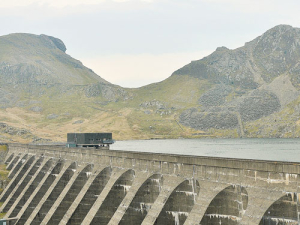
OPINION: Making it easier to collect rainwater and use it to grow crops and livestock is a no brainer.
As part of its Election 2026 coverage, Rural News asked political parties how they would help pull the arable sector out of the doldrums. Here's what they said:
Farmers are being encouraged to rethink how they manage waste on farm with the launch of ruralwastesorted.co.nz, a new website bringing together practical tips, real farmer experiences and resources.
New Zealand Winegrowers (NZW) is celebrating the India-New Zealand Free Trade Agreement (FTA) coming into force today, bringing New Zealand wine improved access to one of the world’s fastest-growing economies.
New Zealand’s red meat sector has welcomed the India-New Zealand Free Trade Agreement taking effect, which removes India’s 33% tariff on New Zealand sheepmeat.