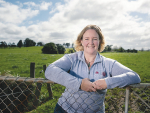
Federated Farmers Welcomes ACT’s New Farming Policies
Federated Farmers has welcomed new rural policies released by ACT, saying they align closely with its own election priorities.
 increase font size
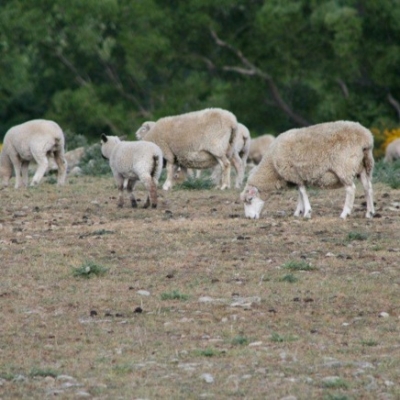
The prospects for 2015 would be a lot better if there was some rain falling, says Federated Farmers president William Rolleston.
Rolleston told Rural News the big question mark hanging over the industry concerns the dairy payout. All eyes will be on the global dairy trade auctions in the next few weeks and that result will be “reasonably telling”.
Meanwhile, Rolleston believes the outlook for sheep and beef farmers is not bad, though parts of South Canterbury are dry.
“They’re having to sell early and that’s not always the best use of prices,” he says.
Another big issue is water and Rolleston says this will play out differently across the country.
“Decisions on water are being made at a regional level not a national level. Over the next 12 months or so that will be in Waikato, Hawkes Bay, Canterbury and Southland. There is an opportunity for water to be shared more equitably, particularly as we see things developing here in Canterbury, and in Waikato. As the water resource gets to its fully allocated state we have to try to think of different ways of dealing with the issue of allocation.”
Rolleston says the concept of ‘first in first served’ no longer works and people are beginning to see a need to work out with fellow farmers in their catchment the best ways to deal with water issues.
With the dairy sector having a high profile and seen by many as dominating the primary sector, Rolleston believes that there needs to be a balance.
“A diverse agricultural economy is a resilient economy and we’d be worried if there was a dominance of any one sector,” he says.
Rolleston points out that in the early part of the last century Southland was full of dairy farms and then became full of sheep farmers.
Federated Farmers has welcomed new rural policies released by ACT, saying they align closely with its own election priorities.

Federated Farmers is backing Feilding High School’s call to keep Agriculture and Horticultural Science as a standalone subject in Year 11.
National’s pledge to introduce 19 new national standards shows the party is serious about getting Wellington out of farming, Federated Farmers says.
Mobile phone coverage and reliability are deteriorating in rural areas, and farming families are bearing the cost, according to a Federated Farmers survey.
Central Otago District Council (CODC) has voted against a plan to spread treated sewage sludge from Cromwell and Alexandra on farmland near Lauder, a decision Federated Farmers says reflects strong opposition from rural residents.



Federated Farmers has welcomed new rural policies released by ACT, saying they align closely with its own election priorities.

Rural Contractors NZ says proposed changes to land transport rules for agricultural vehicles are a welcome response by the Government to out of date regulations which have seen members hit with huge fines.
Alliance is calling for final applications for its 2027 Graduate Programme, with applications closing on Sunday 25 October.
Decades piloting planes has ensured vet and farmer David Hayes is focused on safety. So, after a serious accident while welding on farm, he is sharing his experience so others can learn from it.
Canterbury milk processor, Synlait Milk has confirmed Leon Fung as its chief executive officer.
OPINION: Making it easier to collect rainwater and use it to grow crops and livestock is a no brainer.