Federated Farmers Backs Year 11 Agricultural Science
Federated Farmers is backing Feilding High School’s call to keep Agriculture and Horticultural Science as a standalone subject in Year 11.
 increase font size

FEDERATED FARMERS says Britain's National Farmers Union (NFU) should work with New Zealand to boost British lamb consumption rather than attack New Zealand lamb.
"Using pity doesn't strike us as the best way to motivate British consumers to ditch free range grass fed New Zealand lamb for British lamb," says Rick Powdrell, Federated Farmers Meat & Fibre chairperson.
"Kiwi lamb is not only grown with a much lower carbon footprint than British lamb, but is cheaper in Britain despite being unsubsidised. Being naturally biased, I consider our lamb to have the best taste profile of any lamb on earth.
"If you reverse these arguments as applying to British lamb, it is not exactly a winning argument. It also misses an essential truth.
"New Zealand lamb isn't the competition but pork, chicken, fish and other meat proteins are.
"In Britain, between 2000 and 2012, beef, pig and poultry consumption grew as did total British meat consumption. The problem for British and Kiwi farmers alike is that British lamb consumption fell from 368,000 tonnes in 2008 to 277,000 tonnes in 2012.
"That is a fall of just under a quarter in a short space of time. We also know that the Welsh eat 2.1 kilograms of lamb per person per year, the English 2 kilograms, Northern Irish 1.3 kilograms but the Scots only eat a mere 800 grams.
"I'd stop protesting at the Royal Welsh Show and start in-store promotions of lamb in Inverness. It doesn't take a rocket scientist to realise there's a great opportunity to lift average lamb consumption benefitting all farmers.
"So instead of bagging New Zealand lamb, the NFU and British producers should be investing their energy into getting consumers to swap from other meat protein to lamb. That includes getting vegetarians to shift towards meat too.
"We shouldn't be scraping over the crumbs of the pie but getting a much bigger slice of it. That starts though interactive sites like New Zealand's fab www.loveourlamb.co.uk and by getting celebrity chefs and consumers on lamb's side.
"It's about social marketing and telling positive stories instead of acting like Eeyore.
"Positive messaging that lamb is the healthy and affordable luxury is the best way to build market share rather than ankle tapping farmers who are basically on the same team," Powdrell says.
Federated Farmers is backing Feilding High School’s call to keep Agriculture and Horticultural Science as a standalone subject in Year 11.
National’s pledge to introduce 19 new national standards shows the party is serious about getting Wellington out of farming, Federated Farmers says.
Mobile phone coverage and reliability are deteriorating in rural areas, and farming families are bearing the cost, according to a Federated Farmers survey.
Central Otago District Council (CODC) has voted against a plan to spread treated sewage sludge from Cromwell and Alexandra on farmland near Lauder, a decision Federated Farmers says reflects strong opposition from rural residents.
Federated Farmers has called on Central Otago District Council (CODC) to drop or vote down a plan to truck sludge from Alexandra and Cromwell to farmland near Lauder, warning it would compound an "outrageous" situation created by a separate council's decision weeks earlier.


Alliance is calling for final applications for its 2027 Graduate Programme, with applications closing on Sunday 25 October.
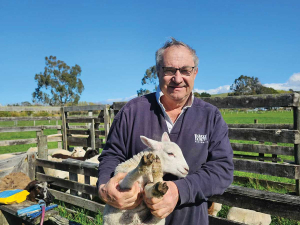
Decades piloting planes has ensured vet and farmer David Hayes is focused on safety. So, after a serious accident while welding on farm, he is sharing his experience so others can learn from it.
Canterbury milk processor, Synlait Milk has confirmed Leon Fung as its chief executive officer.
OPINION: Making it easier to collect rainwater and use it to grow crops and livestock is a no brainer.
As part of its Election 2026 coverage, Rural News asked political parties how they would help pull the arable sector out of the doldrums. Here's what they said:
Farmers are being encouraged to rethink how they manage waste on farm with the launch of ruralwastesorted.co.nz, a new website bringing together practical tips, real farmer experiences and resources.