NZ Rural Contractors Push for Urgent VDAM Rule Reform
While the Government has moved quickly to make commercial hauliers' lot easier during the current fuel crisis, they appear to be stuck in the creep box when it comes to the agricultural industry.
 increase font size
 Rural Contractors NZ chief executive Andrew Olsen.
Despite rural contractors being told in mid-December they could bring in 200 skilled machinery operators into the country, not one has been given any MIQ space.
Rural Contractors NZ chief executive Andrew Olsen describes getting MIQ space as like peeling an onion.
“It’s layer after layer and it brings tears of frustration for our members who are already working impossibly long hours and as yet have not even been able to lodge Expressions of Interest for staff positions, which Ministers had approved to come in.”
Olsen says despite the best efforts of MPI staff to help find MIQ beds for the approved operators, the indications now are that few, if any, will be available until March at the earliest for rural contractors.
“This will mean many of them will pass on the option to bring workers in. It’s just too late, too hard and too stressful for contractors who are working their guts out trying to help farmers get in crops and ensure animals can be fed.”
Olsen says RCNZ and Federated Farmers, supported by MPI, have done everything they could to help contractors meet a crushing labour shortage.
“We understand and respect that the resurgence of another Covid variant and border entry changes have put the squeeze on MIQ,” he adds. “That said, those risks would have been part of the assessment when we had Ministerial approval just on a month ago to bring in the desperately needed 200 machinery operators.”
Olsen says rural contractors whose work is essential to food production and our export economy, find themselves towards the back of the MIQ queue.
Olsen is now calling on the Ministers of Immigration and Agriculture and the Prime Minister’s Office to act.
“We received approval December 12 and now more than a month on we’re looking at another two months before the first arrivals,” he adds.
“It’s not good enough. The primary sector needs more support, now, and frankly the current situation our members find themselves in doesn’t cut it.”
Meanwhile, other ag sectors – including the meat sector and dairy farmers – are also calling on Government action in regard to allowing in more overseas workers.
Reports show that the dairy industry will be short of 1500 farm workers this season and the meat processing sector is facing similar shortages.
The Meat Industry Association (MIA) has been trying since about the middle of last year to get the Government to allow in more overseas halal slaughtermen. Nearly half the red meat processed in NZ is done in accordance with halal rituals.
MIA chief executive Simra Karapeeva says the sector needed about 50 migrant workers to keep it processing in the halal manner, but – so far – the Government has approved only 15.
“This is an appalling outcome for the country’s second largest export earner.”
Karapeeva says this all comes at a time when the country needs strong exports to help NZ through the Covid recovery.”
While the Government has moved quickly to make commercial hauliers' lot easier during the current fuel crisis, they appear to be stuck in the creep box when it comes to the agricultural industry.
Ensure your insurance is fully comprehensive and up to date because as a rural contractor you don’t know what’s around the corner.
Rural contractors are getting guidance on how to deal with recent rising fuel prices.
Rural contractors want the Government to include a national standard for air plans as part of its Resource Management Act reforms.
OPINION: The previous government spent too much during the Covid-19 pandemic, despite warnings from officials, according to a briefing released by the Treasury.


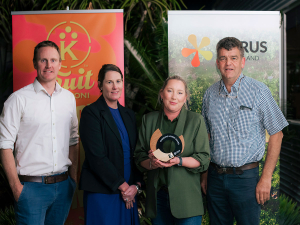
New Zealand's citrus growers were challenged to build their future on the value embedded in their fruit rather than the volume they produce, at Citrus New Zealand's annual gathering in Gisborne on 17 September.
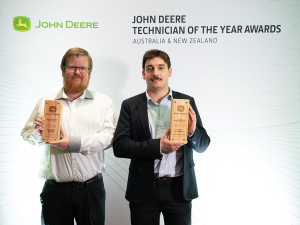
Leading John Deere technicians and apprentices from New Zealand and Australians were recognised at the recent sixth annual JD Technician of the Year Awards, held in Brisbane.
In Dacre, near Invercargill in New Zealand’s South Island, Bruce Dinnington is running a dairy operation unlike any other.
A free online platform aggregating governance vacancies across rural and regional New Zealand has been launched.
Environment Minister Nicola Grigg has announced details of a new rural plastics recycling scheme.
Agricultural drone operators say that a government decision to allow lower-risk drone work without certification won’t lower standards but drive innovation and efficiency.