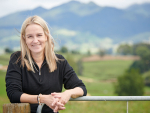
Susan O'Regan Appointed New Chair of QEII National Trust
Minister of Conservation Hon Tama Potaka has appointed Susan O'Regan as Chair of the Queen Elizabeth II National Trust (QEII) for a three-year term.
 increase font size

DairyNZ advises Waikato farmers on high risk soils to seek early support in light of the Waikato Regional Council's new effluent compliance monitoring process.
Development project manager for effluent, Dr Theresa Wilson, says farmers will now consider how the changes may impact them so they can prepare for the season.
"Nationally, farmers lowered the level of significant non-compliance below 10% for the first time, which is a good achievement and we're keen to see this trend continue.
"The way Waikato Regional Council process is supporting the Farm Dairy Effluent Standards and Code of Practice for system design, should also give farmers some of the clarity they have been asking for," she says.
"It's reassuring that the council will refer farmers who need support to people with demonstrated skills – the accredited effluent design companies. We have done a lot of work to lift standards and the quality of advice in this area through this programme and it is being acknowledged.
"We hope farmers contact DairyNZ for resources and accredited design companies for technical support if they have any questions around how they will perform."
Wilson says if farmers are unsure of their farm's soil risk, DairyNZ has a new soils guide to help them assess risk. "It will give farmers a better idea of where the council may be monitoring this season, so they can get prepared.
"Farmers can also self-assess their effluent system with the Waikato Effluent Compliance Checklist which is on the DairyNZ website, www.dairynz.co.nz/checklists."
Minister of Conservation Hon Tama Potaka has appointed Susan O'Regan as Chair of the Queen Elizabeth II National Trust (QEII) for a three-year term.

Striking a balance between meeting the needs of industry to speed up approval time for products but on the other hand ensuring that risks are properly assessed.
OPINION: The stats speak for themselves.
Farms across the upper North Island are trialling different pasture mixes as part of a research programme that aims to build greater resilience into farming systems.
The Government has announced it will pause key parts of Waikato Plan Change 1 (PC1) in a decision that is set to give Waikato farmers a reprieve from new consenting and farm-planning requirements while the wider resource management system is overhauled.


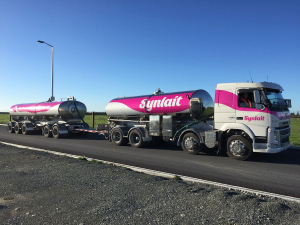
Synlait has swung to second-half profit as operations stabilise, but the dairy processor still posted a $75.4m annual loss.

LIC shareholders have elected a new North Island representative to the co-operative's Board, along with five representatives to its Shareholder Reference Group (SRG), following the company's Annual Meeting held in Invercargill.
Farmers across parts of Southland and South Otago are continuing to deal with difficult conditions after a prolonged run of wet weather, with pressure building around feed supply, stock management, pasture damage, farm infrastructure and everyday workloads.
Federated Farmers says it welcomes Labour's commitment to reviewing the Sharemilking Agreements Act, calling on other major parties to do the same.
For Canterbury dairy farmers Sian Meijer and Rick Wobben, wearable technology has become one of their most valuable on-farm tools - helping manage 1850 cows across an expansive, high-performing dairy operation while improving efficiency, mating outcomes and day-to-day decision making.
Fonterra has unveiled its annual results for the 2026 financial year, posting $27 billion in revenue and close to $20 billion returned to New Zealand farmer owners and unit holders.